Black-tea drinkers
If your mid-morning cup is usually a fuller black tea, look for an organic claim on the specific blend. Clipper lists organically grown black tea for its Organic & Fairtrade Everyday and English Breakfast products.


Choose an organic black tea if you want a familiar, fuller cup, an organic green tea for a lighter tea, or an organic peppermint or camomile infusion if you want a product labelled naturally caffeine-free. Check the organic claim on the exact product rather than treating Fairtrade or other sourcing labels as equivalent; organic labelling and caffeine suitability answer different questions.
Start with the kind of drink you want alongside your snack, then check the organic and caffeine claims on that particular product.
If your mid-morning cup is usually a fuller black tea, look for an organic claim on the specific blend. Clipper lists organically grown black tea for its Organic & Fairtrade Everyday and English Breakfast products.
If you prefer a lighter tea, Clipper describes its Organic & Fairtrade Green Tea as a delicate pure green tea and lists organically grown green tea as its ingredient.
If caffeine is the deciding factor, look for an explicit statement on the product. Twinings labels its Organic Pure Peppermint and Organic Pure Camomile infusions naturally caffeine-free; their mint and floral flavours are distinct from black tea.
Check the exact product's organic labelling first, then choose its tea type and caffeine status. Brewing directions matter once you have settled on a bag.
| Priority | What to check | Your needs |
|---|---|---|
| Organic claim | Check that the exact product is labelled organic and look at its ingredients and certification information. Defra's UK organic food labelling guidance, dated August 2025, distinguishes an organic food claim from general sourcing claims. | I want the tea or infusion itself to carry an organic claim, not just a Fairtrade, Rainforest Alliance or natural-sounding description. |
| Tea type | Read the ingredients to distinguish black tea, pure green tea and herbal infusions. Clipper lists organically grown tea in its black and green products; Twinings lists peppermint or camomile in its organic infusions. | For a familiar cup, I'd choose black tea. If I'm after a lighter tea or a mint or floral infusion, I'd choose that type deliberately rather than relying on the word organic to describe the flavour. |
| Caffeine | Look for an explicit caffeine-free or decaffeinated statement on the exact product. Twinings labels its Organic Pure Peppermint and Organic Pure Camomile naturally caffeine-free; an organic claim alone says nothing about caffeine. | Caffeine matters to me, so I need to check the product's caffeine wording as well as its organic label. |
| Preparation | Follow the chosen pack's water and infusion directions. For its Organic & Fairtrade Green Tea, Clipper advises letting boiled water cool for a minute, then infusing for 1–3 minutes. | I want a cup that fits the time I have for a mid-morning break, without assuming every tea bag uses the same method. |
Fairtrade and Rainforest Alliance refer to different claims from organic labelling. Defra's UK organic food labelling guidance, dated August 2025, sets out requirements for foods described as organic.
Check the organic wording and certification information for the exact tea-bag product, rather than relying on another label on the pack.
Organic black and green teas are different products from the herbal infusions that Twinings labels naturally caffeine-free. The organic claim does not establish caffeine status.
If avoiding caffeine is important, check for an explicit caffeine-free statement. If considering a decaffeinated tea, check its product information against your requirements.
Clipper advises a minute of cooling after boiling and a 1–3 minute infusion for its Organic & Fairtrade Green Tea. That product-specific direction should not be treated as an instruction for black tea or herbal infusions.
Read the directions on the tea you choose before preparing it.
An organic claim belongs to a particular product, not automatically to every tea sold under the same brand.
Clipper's product pages describe organic black and green tea-bag options.
Twinings lists organic peppermint and camomile tea-bag infusions.
Yorkshire Tea's range page lists decaf and hard-water blends alongside its other teas.
The LIPTON Teas brand page describes PG Tips Original, Gold and a decaffeinated option.
Typhoo displays Premium, Gold and Decaf tea bags on its site.
Tetley's UK page lists products including green-tea and decaf options.
These options cover black-tea bags and herbal infusions for a mid-morning break, including a decaf black tea. Check the exact pack's organic labelling and caffeine information where those details affect your choice.
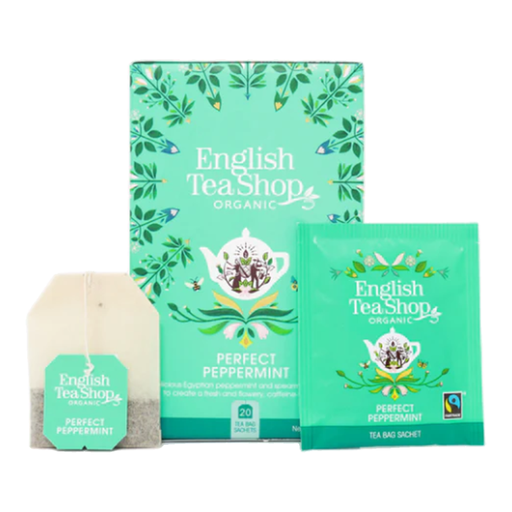 No image available
A mint option for a break in place of black or green tea. Check the pack's organic certification information, caffeine statement and brewing directions if these determine your choice.
 No image available
A decaf black-tea choice if you want a conventional tea style while limiting caffeine. Decaf does not state a residual caffeine amount; check the exact pack if that amount matters, as well as its organic certification information.
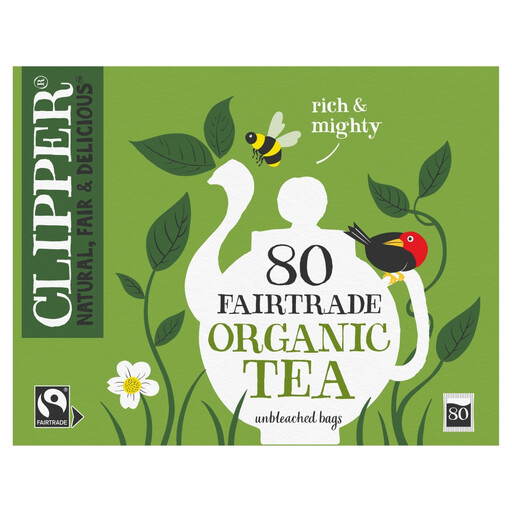 No image available
A black-tea option for a familiar mid-morning cup. Check the exact pack for organic certification information and, if relevant, its caffeine and brewing directions.
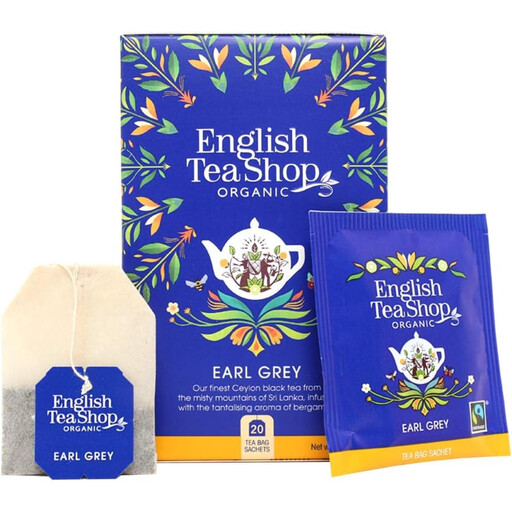 No image available
An Earl Grey option if you prefer a flavoured black tea for your break. Check the exact pack's organic certification and caffeine information where either matters to you.
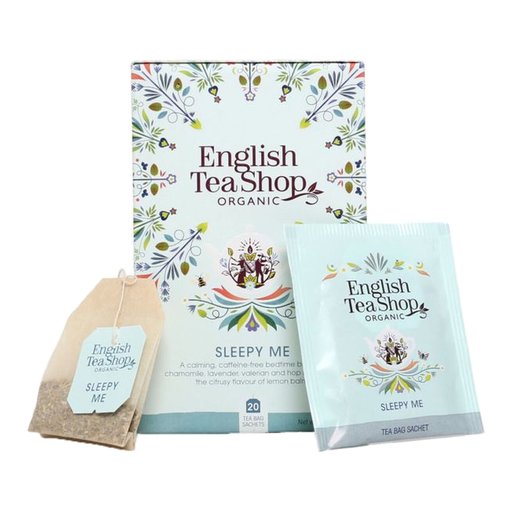 No image available
A herbal-infusion option rather than a conventional black or green tea; its product name does not establish any effect from drinking it. Check the pack's ingredients, organic certification information, caffeine statement and preparation directions for your mid-morning use.
Check the organic claim on the specific product, along with its ingredients and certification information. Defra's UK organic food labelling guidance, dated August 2025, says foods described as organic must meet organic production and certification requirements; words such as natural, Fairtrade or Rainforest Alliance are not substitutes for that claim.
No. Organic describes production and labelling, not caffeine content. If you want a product labelled naturally caffeine-free, Twinings makes that statement for its Organic Pure Peppermint and Organic Pure Camomile infusions; check the exact product you choose.
Use the directions for the particular product rather than one method for all three. For example, Clipper advises letting boiled water cool for a minute before infusing its Organic & Fairtrade Green Tea for 1–3 minutes. Check the chosen black tea or herbal infusion pack for its own directions.
No. Choose by the claim on the exact product, not the brand name. Clipper lists organically grown tea for its named Organic & Fairtrade black and green products, while Twinings lists organic ingredients for its Organic Pure Peppermint and Pure Camomile infusions. If you consider another brand or blend, check that particular pack.