What should you check?
Decide whether you want regular black tea, decaf black tea or a herbal infusion, then check the exact product’s organic claim, caffeine wording and ingredients.
Regular organic black tea
Consider it when: You want a conventional black-tea brew and regular tea fits your caffeine plans.
Bear in mind: Organic certification does not reduce caffeine; NHS pregnancy guidance estimates 75 mg in a cup of tea.
Organic decaf black tea
Consider it when: You want to keep a black-tea routine while reducing caffeine.
Bear in mind: Do not treat “decaf” as a zero-caffeine statement unless the exact product says so.
Organic herbal infusion
Consider it when: You want a product explicitly described as naturally caffeine-free and like its stated herbs.
Bear in mind: It is not black tea, and caffeine wording alone cannot establish whether a particular herb suits your circumstances.
| Priority | What to check | Your needs |
|---|
| Organic claim |
Look for “organic” on the exact tea product and check its certification or control-body information where shown. Under UK rules published by the Department for Environment, Food & Rural Affairs, organic food claims require compliance with production rules and certification by an approved control body. |
I want to know that the organic claim applies to the tea itself, rather than mistaking “natural”, Fairtrade or a packaging claim for organic certification. |
| Caffeine |
Distinguish regular tea, decaf tea and products expressly described as caffeine-free. NHS guidance says not to exceed 200 mg of caffeine a day in pregnancy; for breastfeeding parents who consume caffeine, it advises trying not to exceed 300 mg a day. |
If I am pregnant or breastfeeding, I need to consider caffeine from the whole day, not just whether one box of tea says “organic”. |
| Ingredients |
Check whether the bags contain black tea or named herbs, and read any product-specific cautions. Ask a midwife, GP or pharmacist about an ingredient if pregnancy, breastfeeding, medicines or allergies make it relevant. |
I may want a caffeine-free infusion, but I still care which herbs are in it and whether I would enjoy it instead of black tea. |
| Bag disposal |
Read the exact bag-disposal instructions and check what your council accepts. Clipper says its plant-based bags can go into household food waste; that is not a general home-composting instruction for every tea bag. |
At home, I want a bag format that fits our brewing routine and disposal arrangements without guessing from a broad “biodegradable” claim. |
Joybuy tea-bag options
These options include regular and decaf black tea alongside herbal infusions. Check each pack’s organic wording, ingredients and caffeine information against the route that matters to your household.
 No image available
Clipper Organic Fairtrade Decaf Everyday, 80 tea bags, 277 g
A decaf black-tea option for a household wanting to reduce caffeine while keeping an everyday tea routine. The Joybuy product description identifies an 80-bag decaf product; do not assume that decaf means caffeine-free, and check the organic details on the exact pack.
View on Joybuy
 No image available
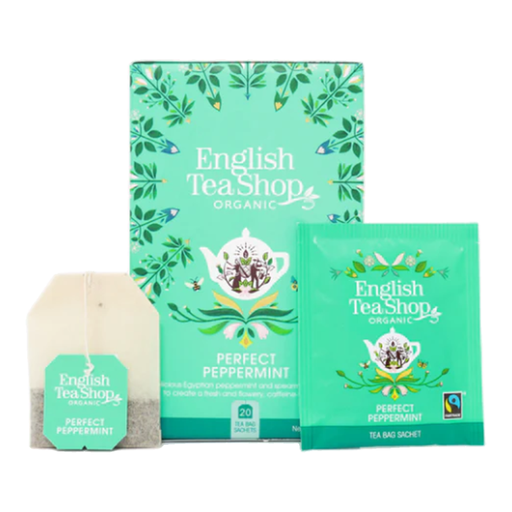
English Tea Shop Organic Perfect Peppermint, 20 g
A peppermint infusion to consider if you want a change from black tea. Check the exact pack’s ingredients, organic claim and caffeine wording; seek individual advice about the herbs if pregnancy, breastfeeding, medicines or allergies make that relevant.
View on Joybuy
 No image available
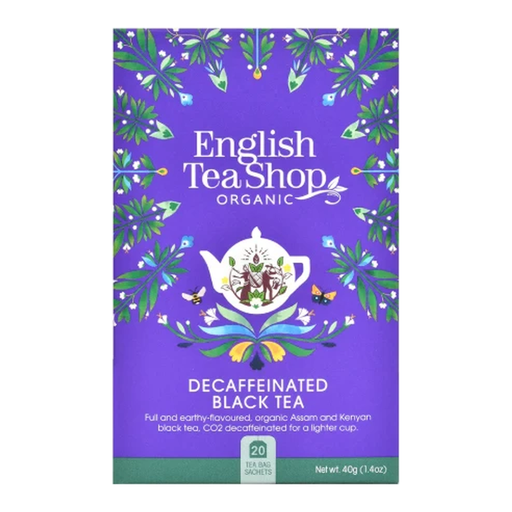
English Tea Shop Organic Decaffeinated Black Tea, 20 g
A decaffeinated black-tea option, but not one to select as a pregnancy option: its product description says it is not recommended for pregnant women. Check the exact pack’s organic and caffeine information for other circumstances.
View on Joybuy
 No image available
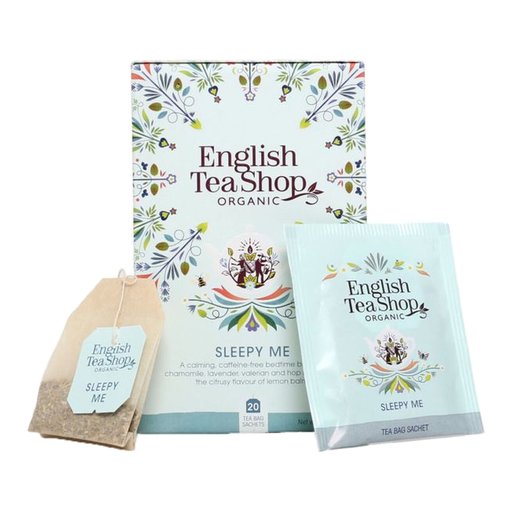
English Tea Shop Organic Sleepy Me, 20 sachets, 30 g
A portioned herbal option for someone considering an infusion instead of black tea. Its name does not establish a sleep effect or individual suitability; check the ingredients and caffeine wording, particularly if pregnancy, breastfeeding or medicines affect your choice.
View on Joybuy
 No image available
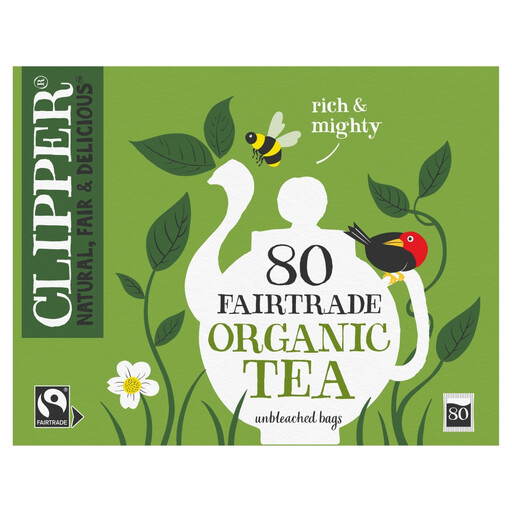
Clipper Organic Fairtrade Black Tea, 80 bags, 232 g
A regular black-tea option for an everyday brew. The Joybuy listing identifies organically grown black tea and describes it as containing caffeine; check the exact pack’s organic details and account for regular tea in your daily caffeine intake when relevant.
View on Joybuy
Questions about organic tea bags
How can I check an organic tea claim in the UK?
Look for an organic claim on the specific tea pack or listing, rather than relying on “natural” or Fairtrade wording. The Department for Environment, Food & Rural Affairs says UK organic food labelling requires the product to meet organic production rules and the product and suppliers to be certified by an approved organic control body.
Does organic tea contain less caffeine?
Not necessarily: organic describes production and certification, not caffeine content. Distinguish regular tea from decaf and from an infusion explicitly described as naturally caffeine-free; NHS pregnancy guidance estimates 75 mg of caffeine in a cup of tea.
What caffeine guidance applies during pregnancy or breastfeeding?
NHS guidance says not to have more than 200 mg of caffeine a day during pregnancy. For breastfeeding parents who consume caffeine, the NHS advises trying not to have more than 300 mg a day and estimates 75 mg in a mug of tea. Consider caffeine from other drinks and foods as well as tea.
Can biodegradable tea bags go in home compost?
Do not assume they can. Clipper says its plant-based bags can go into household food waste, which is a different disposal route from home composting. Follow the exact product instructions and check which materials your council accepts.
Can a herbal infusion replace black tea?
It can replace black tea as a drink if you prefer its flavour and ingredients, but it is not the same type of tea. Twinings describes its Organic Pure Camomile and Organic Pure Peppermint infusions as naturally caffeine-free; check individual ingredients and ask a midwife, GP or pharmacist if a particular herb raises a question for you.


