Black-tea drinkers cutting back on caffeine
Decaffeinated black tea keeps the type of brew they know. If organic status is part of the gift brief, check it on the chosen pack; decaffeinated does not mean caffeine-free.


Choose organic decaffeinated black tea if the recipient enjoys a familiar black-tea brew and wants less caffeine. If avoiding caffeine entirely matters more, look for an organic herbal infusion explicitly labelled caffeine-free, bearing in mind that it will taste different from black tea. Check organic and caffeine claims on the exact product rather than extending them across a brand’s range.
Decaffeinated black tea keeps the type of brew they know. If organic status is part of the gift brief, check it on the chosen pack; decaffeinated does not mean caffeine-free.
Find out whether the recipient wants less caffeine or avoids it altogether. An explicitly caffeine-free herbal infusion addresses the latter need, but changes the taste from conventional black tea.
A known preference makes a flavoured gift easier to choose: bergamot-led decaf Earl Grey remains a black tea, while chamomile and other herbal infusions offer a different kind of cup.
Start with the recipient’s usual tea and caffeine requirements, then check the organic claim and the format of the exact product you intend to give.
| Priority | What to check | Your needs |
|---|---|---|
| Organic status | Check the exact label or listing for an organic claim and certification details. UK government organic-labelling guidance requires qualifying production and certification; Tesco displays the control-body code GB-ORG-05 for its Clipper 40-bag Everyday Decaf listing. | I want the tea I give to carry its own organic claim, rather than relying on the brand’s reputation. |
| Caffeine | Distinguish decaffeinated black tea from an infusion explicitly described as naturally caffeine-free. Check the current pack if complete avoidance matters. | Is less caffeine enough for the recipient, or do I need a tea labelled caffeine-free? |
| Flavour | Choose between plain black tea, bergamot-flavoured Earl Grey and a herbal infusion. Clipper lists organic decaf versions of Everyday and Earl Grey tea; Pukka describes Three Chamomile as naturally caffeine-free. | For someone who usually drinks black tea, I would keep that familiar taste unless I know they enjoy Earl Grey or herbal flavours. |
| Format | Confirm the pack size and preparation instructions for the chosen tea. Similarly named products can have different bag counts. | I want a format the recipient will use, with enough detail on the pack to brew it as intended. |
Decaffeinated black tea can retain caffeine. The Twinings Everyday Decaffeinated product page gives conflicting residual-caffeine figures, so neither figure is a sound basis for choosing it for complete avoidance.
If no caffeine is the requirement, check for an explicit caffeine-free claim and read the ingredients of the exact herbal product.
UK organic-labelling rules concern the qualifying product, not every tea made by its brand.
Check the chosen pack’s organic wording and certification details. Tesco’s GB-ORG-05 listing, for example, concerns its specific Clipper 40-bag Everyday Decaf product.
Plain black tea, bergamot Earl Grey and chamomile are different gifts even when each fits a low- or no-caffeine brief.
Use the recipient’s usual tea as the starting point. Choose Earl Grey or a herbal flavour when you know they enjoy it.
Clipper’s 40-bag Everyday Decaf appears in the brand and Tesco product information, while a Joybuy listing names an 80-bag pack. Details attached to one pack should not automatically be applied to the other.
Confirm the bag count, ingredients and organic certification details on the exact pack before ordering.
These examples illustrate different tea choices; a brand’s inclusion does not establish that every product in its range is organic or caffeine-free.
Clipper lists Organic & Fairtrade Everyday Decaf and Earl Grey Decaf for shoppers seeking decaffeinated black tea.
Pukka is relevant when the recipient prefers herbal tea to a decaffeinated black-tea brew.
Twinings Everyday Decaffeinated is a Kenyan black-tea blend for someone who wants a conventional decaf cup.
Yorkshire Tea describes its Decaf blend as a black-tea option for people reducing caffeine.
These options include decaffeinated black teas and differently flavoured herbal infusions. Match the recipient’s usual taste first, then confirm organic certification and caffeine wording on the chosen pack.
 No image available
An everyday decaf black-tea option for a recipient who prefers a conventional brew. The Joybuy product name specifies 80 bags and 277g; confirm organic certification details on this pack rather than applying details from the separately listed 40-bag pack. Decaf is not a caffeine-free claim.
 No image available
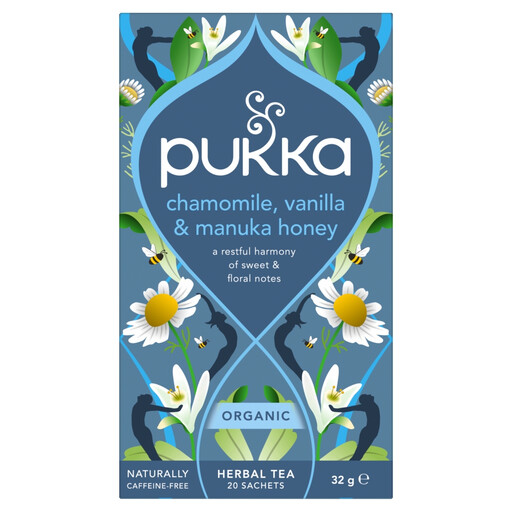
A herbal rather than black-tea choice for someone who enjoys chamomile and the named flavours. Check the exact pack’s caffeine and organic claims. The product information flags chamomile-family allergies; read its ingredients and warnings before giving it to someone with a relevant allergy.
 No image available
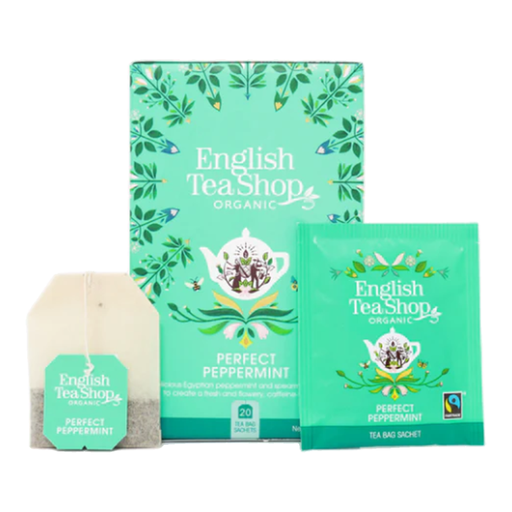
A peppermint-named option for a recipient who likes mint rather than a black-tea flavour. Check the exact pack for its ingredients, caffeine wording and organic certification details.
 No image available
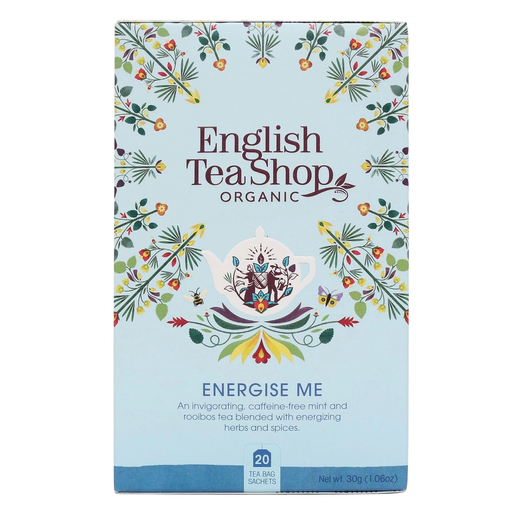
A herbal-blend option rather than a conventional decaf black tea. Check its ingredients, caffeine wording, organic certification details and preparation format against what the recipient usually drinks.
 No image available
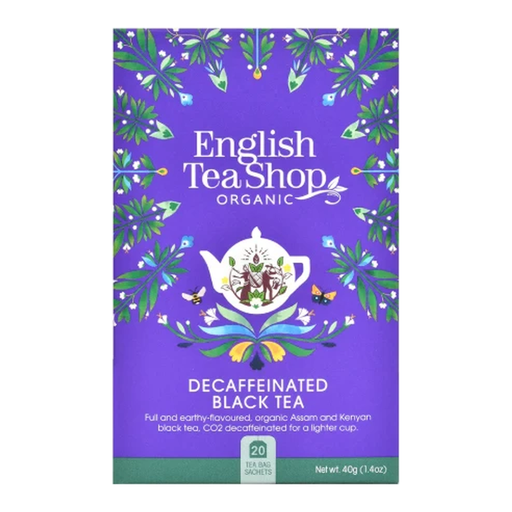
A decaf black-tea choice for someone who favours a familiar tea type over a herbal infusion. Confirm the organic certification details and preparation format on the exact pack; do not treat decaffeinated as caffeine-free.
Check the exact product’s organic wording and certification details. UK government organic-labelling guidance sets production and certification conditions for an organic claim; Tesco displays the control-body code GB-ORG-05 on its listing for Clipper Fairtrade Organic Decaf Tea, 40 bags.
No: decaffeinated black tea can retain caffeine. If complete avoidance matters, check the current product information and consider a herbal infusion explicitly described as caffeine-free; Pukka describes its Three Chamomile tea that way.
Do not assume that a decaf black tea meets a need for complete caffeine avoidance. An explicitly caffeine-free herbal tea addresses that distinction, but choose its flavour with care because it will not taste like black tea.
No. An organic claim applies to a qualifying product, not automatically to the brand’s entire range. Check the name, ingredients and certification details of the pack you plan to buy.
Follow the brewing directions on the selected pack, as instructions can differ. For its own tea, Yorkshire Tea advises brewing for 4–5 minutes and, when brewing directly in a mug, adding milk afterwards so it does not cool the water during infusion.