For an organic-only garden-party menu, choose a tin with an explicit organic designation and check the individual product information. Ocado lists Biona Organic Pineapple Pieces as a 400g can containing certified-organic pineapple and pineapple juice. If organic status is optional, choose the fruit cut and packing liquid for the dish, then compare drained weight where it is stated to plan how much fruit you can serve.
Who is choosing fruit for the party
Hosts with an organic-only menu
If the menu describes the fruit as organic, the claim needs to apply to the particular tin. The UK Department for Environment, Food & Rural Affairs says food may be labelled organic only when it meets the applicable organic production rules. Check the product designation rather than relying on the shop or brand name.
Hosts preparing bowls and desserts
Ready-cut pieces or chunks can go into a fruit bowl or topping, while slices and halves offer a different arrangement for a platter. The fruit cut and whether it comes in juice, syrup or another medium both matter to the planned dish.
Hosts planning serving quantities
When several tins are needed, the can size alone does not tell you how much fruit will be available after draining. Compare the stated drained weight where there is one, and plan how opened leftovers will be stored.
What matters when choosing a tin
Decide whether organic status is a requirement before selecting the fruit shape and packing liquid. For a garden-party dish, those choices affect which tins are suitable and how much usable fruit you need.
| Concern |
What to check |
Who this matters to |
| Organic status |
Check the exact tin’s organic designation and ingredient or certification information. An organic shop category does not establish the status of every product in it. |
If my party menu promises organic fruit, I need the claim to apply to the tin I serve, not just to its brand or retailer. About 42% of consumers would make verified organic status their primary concern. |
| Cut and packing liquid |
Match pieces, chunks, slices or halves to the dish; check whether the fruit is packed in juice, syrup or another medium. |
For a bowl or dessert, I want a cut that needs little preparation and a liquid that suits the recipe. Serving format and packing medium would come first for about 33% of consumers. |
| Usable quantity and storage |
Compare net and stated drained weight, and read the product’s instructions for opened contents. |
When I am serving several guests, I need enough fruit after draining and a plan for anything left over. Roughly 25% of consumers would put usable quantity and handling first. |
Common buying mistakes
-
Assuming a retailer’s organic section makes every tin organic
A retailer may list organic and non-organic products in different parts of its range. The organic claim must apply to the individual food product.
For an organic-only menu, check the exact tin’s designation and product information before including it in the dish.
-
Planning servings from can size alone
Can weight includes packing liquid. Sainsbury’s lists a 415g tin of Del Monte peach slices with a 250g drained weight, illustrating why those figures answer different portion-planning questions.
Use drained weight when it is stated and you intend to serve the fruit without its liquid; otherwise check the label before working out quantities.
-
Treating juice, syrup and fillings as interchangeable
These formats bring different packing liquids or textures to a dish. A tin chosen for a fruit bowl may not give the result intended for a dessert that uses its syrup or filling.
Choose the fruit cut and packing medium against the recipe before buying.
-
Leaving unused fruit in an opened tin
Opened fruit needs a storage plan if it will not all be served at once. Food-safety information published by Health Well advises against storing food in an opened tin.
Transfer leftovers to another covered container, refrigerate them and follow the product’s instructions for how long to keep them after opening.
Brands and retailers to consider
Fruit ranges differ by product: a brand’s presence here does not make every tin it sells organic. Check the individual label when organic status is essential.
Biona
Biona lists pineapple pieces, mini pineapple rings and mango chunks in its preserved-fruit collection. Ocado identifies Biona Organic Pineapple Pieces as a 400g canned product.
- Ocado lists certified-organic pineapple pieces and pineapple juice as ingredients for that specific tin.
- Check each other product separately; the pineapple listing does not establish the ingredients or organic status of every item in the collection.
Princes
Princes lists several tinned-fruit types, including pineapple, peaches, pears and mandarins.
- Its pineapple slices in juice are listed in 432g and 227g sizes, with pineapple, pineapple juice and citric acid in the ingredients.
- Fruit packed in juice is not necessarily organic; check the exact product if certification is required.
Del Monte
Sainsbury’s tinned-fruit category lists Del Monte products in several fruit types and formats, including peach slices in juice.
- The listed cuts and packing liquids give hosts choices for bowls, platters and desserts.
- Check the individual tin’s designation before using it for an organic-only menu.
Sainsbury’s
Sainsbury’s tinned-fruit category includes own-label fruit in juice, with choices such as peaches, pears and mandarins.
- Some listings state drained weight, which helps when planning fruit portions.
- Check organic status at product level rather than assuming it from the wider fruit range.
Tesco
Tesco’s tinned-and-pot-fruit category spans fruit types including mango, peaches, pineapple and pears.
- The category offers cuts and fruit types to compare against a planned dish.
- For an organic requirement, check the exact product identity and label; a category listing alone is not an organic claim for an own-label tin.
M&S
M&S lists rhubarb chunks and grapefruit segments in its tinned-fruit range and has a separate organic food category.
- The tinned-fruit listings provide distinct fruit choices for recipes that call for them.
- The separate organic category does not establish that a particular M&S tinned-fruit product is organic.
Joybuy fruit for bowls and platters
These Joybuy selections include fruit in juice for bowls or platters and mango in light syrup for a dish that calls for that packing liquid. If the menu requires organic fruit, check the designation on the individual product before choosing it.
 No image available
Del Monte Pineapple Slices in Juice 435g
Choose the sliced format when you want to arrange pineapple on a platter or dessert. This 435g tin contains slices in juice; check the drained weight for portions and the exact label if organic status is essential.
View on Joybuy
 No image available
Del Monte Peach Halves in Juice 415g
Peach halves offer larger pieces for a platter or dessert. The tin is labelled 415g and packed in juice; check the drained weight when calculating servings and the individual label for any organic claim.
View on Joybuy
 No image available
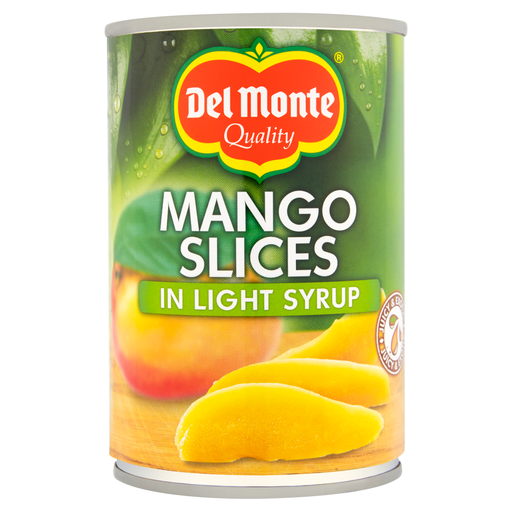
Del Monte Sliced Mango in Light Syrup 425g
Consider these mango slices for a dessert where light syrup suits the dish, rather than substituting them for fruit in juice without checking the recipe. The tin is labelled 425g; check its drained weight for portions and its exact organic designation if required.
View on Joybuy
 No image available
Princes Pineapple Chunks With Juice 432g
The chunk format suits a fruit bowl or topping when pineapple in juice fits the recipe. The tin is labelled 432g; check its drained weight for usable-fruit quantities and its product label before treating it as organic.
View on Joybuy
 No image available
Del Monte Pear Halves in Juice 415g
Pear halves are an option when larger pieces suit the platter or dessert. This 415g tin is labelled as fruit in juice; check the drained weight for portion planning and the exact designation if the fruit must be organic.
View on Joybuy
Questions before serving
How do I check whether a tin of fruit is organic?
Check the organic designation and product information for the exact tin, rather than relying on a retailer’s organic category. The UK Department for Environment, Food & Rural Affairs says an organic food label must meet the applicable production rules.
Should I choose fruit in juice for every garden-party dessert?
No: choose the packing medium to suit the dish. Fruit in juice works when that liquid fits the recipe, while syrup, jelly or a filling should be chosen when its different sweetness or texture is intended; check the fruit cut as well.
What should I do with tinned fruit left after serving?
Transfer unused fruit out of the opened tin into another covered container and refrigerate it, following that product’s storage instructions. Food-safety information published by Health Well advises against storing food in an opened tin; the Ocado listing for Biona Organic Pineapple Pieces specifies consumption within two days after opening.


