For a street party where organic food matters, choose tinned fruit only after checking the individual product’s organic claim and certification information: a retailer category, familiar brand or juice-packed can is not proof. Separately, choose the packing liquid and fruit cut for your menu, and use drained weight where stated to plan how much fruit you can serve.
Who is choosing?
Hosts making an organic claim
If you plan to describe the shared fruit table as organic, check each product rather than relying on a shop category or the words “in juice”. GOV.UK sets out product and supplier certification requirements for organic labelling.
Hosts avoiding syrup
For fruit bowls, toppings or desserts without syrup as the packing liquid, compare the wording on each can. Juice, light syrup and syrup are distinct options, regardless of organic status.
Hosts planning portions for a group
Choose halves, slices or chunks to suit how the fruit will be served. Compare pack sizes and stated drained weights when working out the quantity of fruit available after draining.
What matters when buying?
Check organic status on the individual product first if it is essential to your party plan. Then compare packing liquid and the amount and cut of fruit you intend to serve.
| Concern |
What to check |
Who this matters to |
| Organic status |
Check the individual product’s organic claim and certification or control-body information. A retailer’s organic category does not establish the status of every item in it. |
If I am calling the street-party fruit organic, I need to know that the claim applies to each can. About 42% of consumers put verified organic status first. |
| Packing liquid |
Read whether the fruit is packed in juice, light syrup or syrup; check the ingredients and nutrition panel if sugar content affects your choice. |
For a buffet where I want fruit without syrup as its packing liquid, that distinction matters more to me than the fruit brand. Roughly 33% of consumers prioritise the packing liquid. |
| Serving quantity and cut |
Match halves, slices or chunks to the dish. Compare drained weight where stated, rather than using can weight alone to estimate fruit portions. |
When I am filling a shared bowl or preparing toppings, I need a cut I can use and enough fruit after draining. Around 25% of consumers make serving practicality their primary concern. |
Checks that are easy to miss
-
Confusing “in juice” with “organic”
Juice describes the packing liquid; organic describes a separately regulated production claim. One does not establish the other.
Check the product’s organic labelling and packing liquid separately before adding it to the party menu.
-
Relying on an organic shop category
A category or filter helps you browse, but it does not establish an individual can’s certification. A marketplace seller may also appear in a retailer’s range.
Open the individual listing and check its organic claim, certification information, seller and packing medium.
-
Counting the liquid as a fruit portion
Can weight includes the packing liquid. Some product listings show a separate drained weight, which is more useful when planning fruit salads or toppings.
Compare stated drained quantities and choose the fruit cut before working out how many cans to use.
-
Treating a selling stall like a shared table
Selling food can raise food-business registration questions that do not follow simply from sharing fruit privately.
If the activity is a food business, the Food Standards Agency says it must be registered with the local authority at least 28 days before trading or food operations start. Ask the local authority about an activity whose status is unclear.
Brands and retailers to consider
These examples show why the individual product matters: a brand’s fruit format or a retailer’s browsing category does not establish that a particular can is organic.
Princes
Princes lists pineapple chunks in juice in 227g and 432g sizes.
- Its product page lists pineapple, pineapple juice and citric acid, so the packing medium and ingredients can be checked for that product.
- The cited pineapple-chunks page does not claim organic status; check the individual label before describing it as organic.
Del Monte
Del Monte lists 415g pear halves in juice for uses including desserts and fruit salads.
- The stated fruit cut and pack size help when choosing a format for a dish.
- Del Monte products can use different packing liquids. Check the selected can rather than assuming its contents or organic status from the brand.
Tesco
Tesco’s tinned-and-pot-fruit range includes different fruit formats and a Marketplace organic young-jackfruit listing.
- Individual listings allow comparison of fruit type, format and packing liquid.
- A Marketplace organic listing does not make Tesco own-label fruit, or other products in the category, organic. Check the product and seller.
Sainsbury's
Sainsbury's lists canned fruit in juice and light syrup alongside branded products.
- Some listings distinguish can weight from drained weight, helping with portion planning.
- An organic browsing filter does not establish certification for a particular can; check its own details.
Asda
Asda has an Organic subsection under Tinned Fruit.
- The subsection offers a starting point for finding products to inspect individually.
- Before selecting a can, check its product-level organic claim, certification information, ingredients and pack details.
Juice-packed fruit on Joybuy
These cans and the multipack suit street-party plans built around fruit packed in juice. If the fruit must be organic, check the individual product’s organic claim and certification information before choosing it; packing liquid alone does not establish organic status.
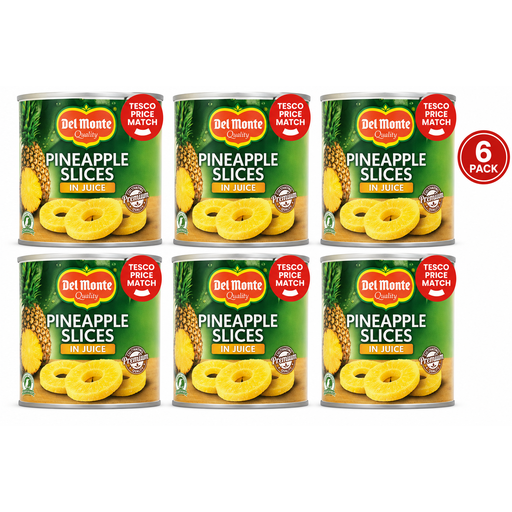 Image unavailable
Del Monte Pineapple Slices in Juice, 435g × 6
Consider this six-pack when the serving plan calls for several cans of pineapple slices. Each can is labelled 435g; check the drained quantity for portion planning and the individual labels if organic status is required.
View on Joybuy
 Image unavailable
Del Monte Pineapple Slices in Juice, 435g
Consider the single 435g can when you need pineapple slices without committing to a multipack. Check its drained weight for the amount of fruit and its label separately for any organic claim.
View on Joybuy
 Image unavailable
Del Monte Peach Halves in Juice, 415g
Peach halves offer a different cut for a dessert or shared fruit dish. The can is labelled 415g; use a stated drained weight, if available, to plan portions and check organic status independently.
View on Joybuy
 Image unavailable
Del Monte Pear Halves in Juice, 415g
Pear halves are an option for a fruit salad or dessert table; Del Monte describes this format for those uses. The can is labelled 415g. Confirm the drained quantity when planning portions and check the individual label if organic certification matters.
View on Joybuy
 Image unavailable
Princes Pineapple Chunks With Juice, 432g
Chunks provide a different cut from pineapple slices for a shared fruit dish. The can is labelled 432g; confirm its drained quantity for portion planning and check product-level certification before calling it organic.
View on Joybuy
Frequently asked questions
How can I tell whether a can of fruit is organic?
Check the individual product’s organic claim and certification or control-body information. GOV.UK says organic food labelling depends on meeting organic rules and certification of the product and its suppliers by an approved organic control body; a shop category is not a substitute for that product-level check.
Is tinned fruit in juice automatically organic?
No. “In juice” identifies the packing medium, not organic production. Check for a separate organic claim and certification information on the particular product.
Should I choose juice or syrup for a street-party fruit table?
If you want to avoid syrup as the packing liquid, choose a product labelled as fruit in juice and check its ingredients. The NHS suggests tinned fruit in juice rather than syrup when considering added sugar; neither option establishes organic status.
Which weight should I use to plan fruit portions?
Use the stated drained weight when you plan to serve the fruit without its liquid. Can weight includes the liquid, while the fruit cut also affects how readily you can use it for a bowl, salad or topping.
Does a street-party stall selling fruit dishes need registration?
If the activity is a food business, the Food Standards Agency says it must be registered with the local authority at least 28 days before trading or food operations start. Whether a particular stall is a food business depends on the activity; contact the local authority if that is unclear.


