What matters when buying?
For a toddler dinner, settle the requirement that would decide your choice first: an organic claim on the exact product, its packing liquid, or how you will serve and store it.
| Concern |
What to check |
Who this matters to |
| Organic status |
Look for an explicit organic claim on the exact product and read its ingredient list. Fruit described only as in juice is not thereby organic. |
I want an organic fruit option for dinner, so I need that claim on the tin I choose; about 42% of consumers would put organic verification first. |
| Packing liquid |
Identify juice, water or syrup, then compare the ingredients and sugars per 100g on the exact pack. Tesco Real Food advises juice or water instead of syrup to avoid extra sugar. |
If I am choosing between tins in different liquids, I want to compare what is packed with the fruit; about 33% of consumers would make that their primary concern. |
| Serving and leftovers |
Check piece size, firmness and any pips or stones; read the tin’s after-opening storage directions if a meal will not use it all. |
I need fruit I can prepare for my child and a plan for what remains in the tin; for about 25% of consumers, serving and leftovers would come first. |
Organic and conventional examples
These examples are ordered by fit with the organic requirement, followed by a separate conventional fruit-in-juice option. They are not an independent test or a market-wide ranking: Ocado identifies the Biona product’s organic ingredients, while Joybuy lists the Del Monte peaches in juice.
| Rank |
Product |
Main specifications |
Reason |
Platform |
| 1 |
Biona Organic Pineapple Pieces |
Pineapple pieces and pineapple juice listed by Ocado as certified-organic ingredients. |
Ocado’s listing supports the organic-product choice. The pieces still need checking and preparing for the individual child, in line with NHS guidance on food size and texture. |
Ocado |
| 2 |
Del Monte Peach Halves in Juice 415g |
Peach halves in juice; 415g tin. |
Joybuy lists this as a fruit-in-juice option for comparison when organic status is optional. Its in-juice description is not an organic claim. |
Joybuy |
Fruit-in-juice options on Joybuy
These Joybuy selections are tinned fruit described as in or with juice. Compare their fruit forms for preparation at a toddler dinner; if organic production is essential, check the exact pack for an organic claim before choosing.
 No image available
Del Monte Pineapple Slices in Juice 435g
Consider this tin if you want pineapple slices that you can inspect and adapt before serving. It is described as pineapple in juice; check the slices’ size and texture for your child.
If organic status is essential, check the current pack for an explicit claim.
View on Joybuy
 No image available
Del Monte Peach Halves in Juice 415g
Peach halves give you a stated form to check, cut or mash as appropriate before serving. The tin is described as peaches in juice and contains 415g.
An in-juice description is not an organic claim; check the pack if organic production is a requirement.
View on Joybuy
 No image available
Princes Pineapple Chunks With Juice 432g
Choose this form if you want pineapple chunks that you can inspect and cut or mash for your child as needed. The product is described as pineapple with juice in a 432g tin.
Check the exact pack for an organic claim if that is part of your purchase decision.
View on Joybuy
 No image available
Del Monte Pear Halves in Juice 415g
The pear halves are a form you can check and adapt to your child’s eating skills. This 415g tin is described as pears in juice; assess the halves’ size and texture before serving.
Check the current pack for an organic claim if organic production is essential.
View on Joybuy
 No image available
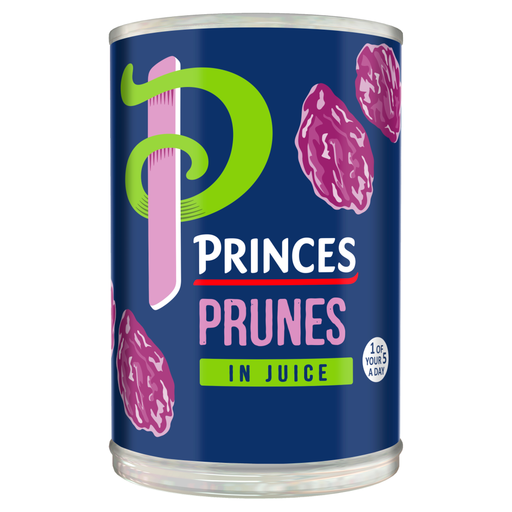
Princes Prunes With Juice 410g
This 410g tin offers prunes described as with juice, but its product information warns that it contains plum stones. Remove stones and assess the fruit’s size and texture before serving it to a child.
If you require organic fruit, check this exact pack for an explicit claim.
View on Joybuy
Questions about serving and storage
Can tinned fruit be part of a toddler dinner?
Yes. The NHS says fruit can be introduced from around six months in fresh, frozen, canned or dried form. Prepare the particular fruit for your child’s stage and eating skills rather than assuming pieces are ready to serve straight from the tin.
Does organic mean the fruit is ready for a toddler to eat?
No. In the UK, organic is a regulated production and labelling claim, according to the Department for Environment, Food & Rural Affairs; it does not establish a suitable piece size or texture. Check the packing liquid and ingredients separately, then prepare the fruit for your child.
Should I choose fruit in juice or syrup?
If avoiding the extra sugar associated with syrup is your priority, Tesco Real Food advises choosing tinned fruit in natural juice or water instead. Read the ingredients and sugars per 100g on each product you compare; fruit in juice can still show sugars on its nutrition panel.
What should I check before serving tinned fruit?
Check the fruit’s size, shape and texture, following NHS guidance for preparing food for young children. Remove hard pips or stones, cut or mash pieces as appropriate, and keep your child seated upright and supervised while eating.
How long can I keep fruit after opening the tin?
Follow the directions for the exact product. Joybuy’s Del Monte Peach Halves in Juice listing says to move unused contents to a suitable non-metallic container, cover and refrigerate them, and use them within 3–4 days; do not apply that period to a different tin.


