If organic status is essential for afternoon tea, choose fruit only after checking the individual product’s organic claim and certification details; a retailer category is not proof for a particular pack. If familiar peach or pear shapes matter more, compare the available tins in juice or syrup by their ingredients, packing liquid and suitability for the dessert. Neither packing liquid establishes organic status.
Who is choosing?
Certification-first tea hosts
If organic status decides the menu, you need to check the claim on the fruit itself rather than rely on a retailer’s category. Real Foods lists organic pineapple and mango options, while Asda has an organic tinned-fruit category; neither listing removes the need to check the particular product.
Hosts planning a familiar fruit dessert
Peach slices, pear halves or pineapple chunks may suit a cake topping, plated dessert or fruit bowl. Princes and Del Monte show why the fruit’s shape and packing liquid are useful starting points when organic certification is not essential.
Hosts comparing labels
If juice, syrup or light syrup could change how you serve the fruit, compare the exact ingredients and sugars per 100 g. The packing-medium description alone does not tell you whether a product is organic or how its nutrition values compare with another tin.
What matters when buying?
Decide whether organic certification is a requirement before choosing a fruit shape and packing liquid for the dish.
| Concern |
What to check |
Who this matters to |
| Organic status |
Check the individual pack or detailed listing for an organic claim and certification information, not just an organic category label. |
If the tea menu must use organic fruit, I need to establish that this particular product qualifies before planning the dish. About 36% of consumers would put verifiable organic status first. |
| Packing liquid and ingredients |
Compare juice, syrup or light syrup alongside the ingredient list and sugars per 100 g on each product. |
When cakes, jam or cream are already on the table, I want to know what liquid comes with the fruit and what its label declares. About 29% of consumers would make that their primary concern. |
| Serving format |
Match slices, halves or chunks to the dessert; check net and drained weights where shown. |
For a cake topping or plated dessert, I need pieces I can arrange without more cutting, and enough drained fruit to serve. Serving format would come first for about 21% of consumers. |
| Availability and quantity |
Check the chosen fruit and pack are available for your gathering, then compare usable quantities where drained weights are given. |
If I am planning tea for a particular day, I need the right fruit in a workable quantity rather than a last-minute substitution. About 14% of consumers would prioritise availability and quantity. |
What should you avoid assuming?
-
An organic category makes every listed tin organic
A category helps you find candidates, but the organic claim belongs to an individual product. GOV.UK guidance says food labelled organic must meet applicable organic production rules.
Before using a tin for an organic-only menu, check its own label or detailed listing for the claim and certification information.
-
Fruit in juice is organic or has no sugars
“In juice” describes the packing liquid. Princes lists grape juice made from concentrate among the ingredients of its peach slices in juice; the phrase does not establish organic status or replace the nutrition panel.
Compare the ingredients and sugars per 100 g of the exact products you are considering.
-
An organic version of a planned fruit will be available
Tesco’s tinned-fruit listing includes familiar conventional formats, while the Real Foods organic listing includes pineapple and mango. Those listings do not establish that the same fruit shapes are available in both ranges when you shop.
Confirm the individual organic product and its availability before building a peach- or pear-specific dessert around it.
Relevant brands and retailers
Princes
Princes lists peach slices, pear halves and pineapple chunks in juice, offering several shapes to consider for cakes and plated desserts.
- Its product pages show peach slices in 410 g and 220 g packs and pear halves in a 410 g pack.
- Juice-packed fruit should not be treated as organic without checking the individual product’s claim.
Del Monte
Del Monte’s prepared-pears range includes juice, syrup and light-syrup options for different dessert preparations.
- Its pear-halves-in-juice page identifies a 415 g format and describes dessert and baking uses.
- Choose by the particular pack’s label rather than assuming that a packing-liquid option carries an organic claim.
Tesco
Tesco’s tinned-and-pot-fruit listing includes branded and own-label options in familiar fruit formats.
- The listing includes products such as peach slices and pineapple slices in juice.
- A general fruit listing cannot establish the organic status of an individual tin.
Asda
Asda has an Organic category beneath Tinned Fruit, which can be a starting point for an organic-focused search.
- The category provides a way to look for relevant products.
- Check each product’s own label and certification details before treating it as organic.
M&S
M&S presents tinned fruit for desserts and a separate, wider organic-food range.
- Its tinned-fruit page describes rhubarb chunks and grapefruit segments for dessert use.
- An organic-food range does not establish that a particular tinned-fruit item is organic.
Joybuy fruit selections
These selections cover peaches and pears in juice or syrup for afternoon-tea desserts, plus a four-pack of peaches in juice. Check the individual product label before choosing any of them for an organic-only menu.
 No image available
Del Monte Peach Halves in Juice 415 g
Consider peach halves when larger pieces suit a plated dessert. This 415 g product is packed in juice; check its own label if organic status matters.
View on Joybuy
 No image available
Del Monte Pear Halves in Juice 415 g
Pear halves are an option for a plated dessert when you want the fruit in larger pieces. The pack is 415 g and identifies juice as the packing liquid; confirm any required organic claim on the individual product.
View on Joybuy
 No image available
Morrisons Peach Slices in Juice 220 g
Slices are worth considering when you want peach pieces for arranging on a dessert. This is a 220 g pack in juice; check the individual label for ingredients and any organic claim.
View on Joybuy
 No image available
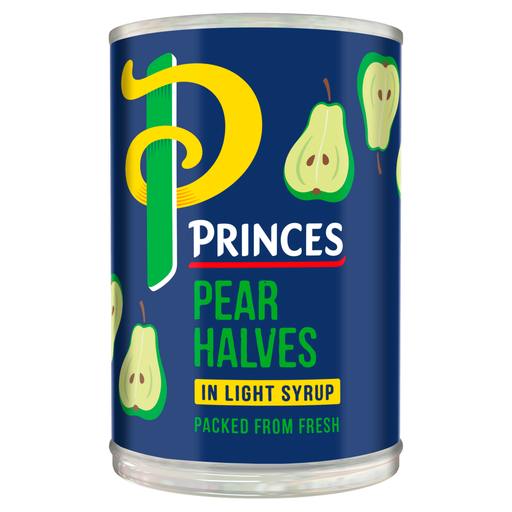
Princes Pear Halves in Syrup 410 g
Consider these pear halves when syrup suits the dessert you are preparing. The pack is 410 g; compare its ingredients and sugars per 100 g with juice-packed alternatives rather than treating the packing-liquid names as a complete comparison.
View on Joybuy
 No image available
Dole Peaches in Juice 4 × 113 g
The four-pack format may suit a tea table where fruit will be served in separate portions. Check whether those portions fit your presentation and confirm the individual label if organic status is required.
View on Joybuy
Questions about tinned fruit
How do I check whether tinned fruit is organic?
Check the individual pack’s organic claim and certification information, rather than relying on a search filter. GOV.UK guidance says food labelled organic must meet applicable organic production rules.
Does fruit in juice contain no sugars?
No such conclusion follows from “in juice”. For example, Princes lists grape juice made from concentrate in its peach slices in juice. Read the exact product’s ingredients and sugars per 100 g; juice also does not establish organic status.
Which fruit shape should I choose for a dessert?
Choose by how you intend to serve it: slices can be arranged on a cake, halves suit larger plated pieces, and chunks can be spooned into bowls. If excess liquid would affect pastry or sponge, drain the fruit before serving.
How should I store fruit after opening it?
Follow the storage directions on the particular pack. Princes’ peach-slices-with-yoghurt recipe gives a refrigerated period of up to three days for its prepared peaches; that recipe instruction is not a storage period for every tinned-fruit product.


