Who is this for?
The useful checks depend on whether organic production, a meal-sized portion or a particular dietary exclusion is driving your choice.
Campers seeking organic food
If organic production matters to you, look for an explicit organic description rather than relying on packaging that merely looks natural. GOV.UK says food labelled organic must have at least 95% organic farm-grown ingredients.
Plant-based campers planning a meal
Check the vegan claim separately from the organic claim, then read protein figures and the number of servings per can. Waitrose & Partners lists distinct per-can protein amounts for Mr Organic’s Black Bean and Tomato & Lentil soups.
Campers avoiding named allergens
Check the current ingredients and any free-from statement for the allergens you need to avoid. GOV.UK says prepacked foods containing any of the 14 regulated allergens must clearly identify them in the ingredients list; an organic description does not replace that check.
What should you check?
Start with the claims and ingredients that matter to you, then check whether the can size and preparation directions work at your campsite.
| Priority | What to check | Your needs |
|---|
| Organic status |
Look for an explicit organic description and check certification information where shown. GOV.UK says at least 95% of farm-grown ingredients must be organic for food labelled organic. |
Organic production matters to me, so I want the claim to apply to this particular soup, not just its branding. |
| Meal size |
Read the can size, servings and protein figures on the same basis. Waitrose & Partners lists 16g protein per 400g can for Mr Organic Black Bean Soup and 13.2g per can for its Tomato & Lentil Soup. |
If soup is my main campsite meal, I need to know how much of the can I expect to eat and what its label declares. |
| Dietary exclusions |
Check the current ingredients, allergen emphasis and exact free-from wording; check vegan suitability separately. Waitrose & Partners lists celery and mustard in Mr Organic Black Bean Soup. |
I need the statement on the specific tin to cover the allergens or ingredients I avoid. |
| Camp preparation |
Check the date, storage and heating directions before packing. If leftovers are likely, read the after-opening instructions and plan for any required container and refrigeration. |
My cooking equipment and storage arrangements need to work for the whole can, including anything left after the meal. |
| Salt basis |
Compare salt per 100g before comparing portions; check whether condensed soup figures are stated as consumed. The NHS describes more than 1.5g salt per 100g as high. |
When comparing tins of different sizes, I want to use the same nutrition basis and then consider the amount I will serve. |
Brands to consider
These brand examples illustrate different product claims and formats; check the particular tin rather than applying a claim to everything a brand makes.
Mr Organic
Waitrose & Partners lists organic Black Bean and Tomato & Lentil soups for shoppers comparing plant-based tins.
- Its listings declare 16g protein per can for Black Bean and 13.2g per can for Tomato & Lentil.
- The Black Bean listing includes celery and mustard; check the current pack if either matters to you.
Free & Easy
Its Organic Tomato Soup is an example to inspect when specific free-from wording drives the choice.
- Ocado lists the soup as free from wheat, gluten, dairy, mustard, celery, soya and nuts.
- Check the current label for the exact exclusion you need; an organic claim alone does not establish free-from suitability.
Heinz
A conventional tinned-soup reference if organic production is not a requirement.
- Tesco Groceries lists Heinz 400g soups among its tinned-soup products.
- Check organic status on the specific variant rather than assuming it from the brand.
Campbell’s
A condensed-soup reference for campers considering soup that can also be used in cooking.
- Campbell’s Soup UK describes its Cream of Tomato Condensed Soup as both soup and a recipe ingredient.
- Campbell’s Soup UK lists 0.91g salt per 100g as consumed for that product; compare its prepared basis with the label on any alternative.
Organic soup options on Joybuy
These Joybuy options are organic soups described in can sizes relevant to campsite meal planning. Check each pack’s ingredients and preparation directions against your own cooking and storage arrangements.
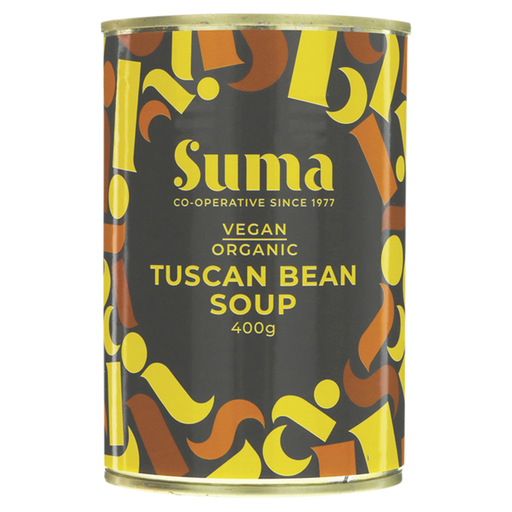 Image unavailable
Suma Organic Tuscan Bean Soup 400g
This 400g bean soup is an option when you expect to use a can at one campsite meal. Store it in a cool, dry place and follow the pack’s heating directions. It contains celery; check the current label if you avoid it, and check the organic certification details if those are essential to your choice.
View on Joybuy
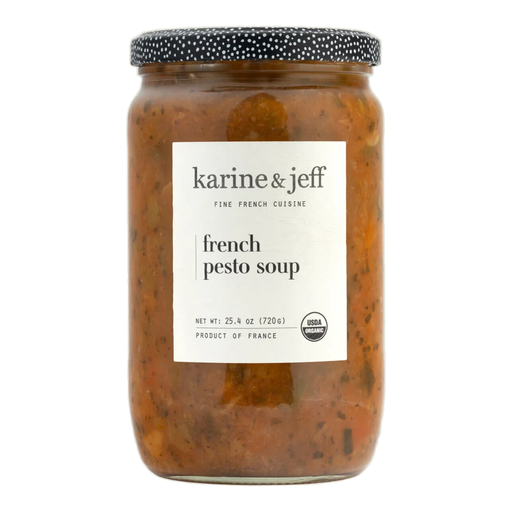 Image unavailable
Karine & Jeff Organic French Pesto Soup 680g
The 680g can calls for a plan for portions and any leftovers, particularly if you have no campsite refrigeration. Store it in a cool, dry place and check the current pack for after-opening and heating directions. It may contain wheat, soy and celery; check the label if you avoid them, and confirm the organic certification details if required.
View on Joybuy
Questions about camping with tinned soup
How can I check whether a tinned soup is organic?
Look for an explicit organic description on the product and check certification information where shown on the pack. For food labelled organic in the UK, GOV.UK says at least 95% of farm-grown ingredients must be organic.
Does organic soup also mean vegan or allergen-free?
No. Check vegan and free-from wording separately, alongside the current ingredients list. Waitrose & Partners lists celery and mustard in Mr Organic Black Bean Soup, while Ocado states specific free-from exclusions for Free & Easy Organic Tomato Soup.
What should I check before packing soup for camping?
Check the date, storage and heating directions, ingredients and allergens, can size and number of servings. If you might leave some soup uneaten, read the after-opening directions before deciding whether you can store it at camp.
Can I keep leftover soup in the opened tin?
Follow the directions for the exact product. Waitrose & Partners’ Mr Organic soup listings instruct you to transfer leftovers to a non-metallic container and refrigerate them after opening; without suitable storage, plan for a can you expect to finish.
How do I compare salt across different tins?
Compare salt per 100g on the same preparation basis, then consider the portion you expect to eat. The NHS describes more than 1.5g salt per 100g as high and 0.3g or less per 100g as low.


