Coeliac shoppers who prefer organic food
Check both claims on the exact soup. The Department for Environment, Food & Rural Affairs describes organic labelling in terms of production rules; it does not establish that a soup is gluten-free.


For coeliac shopping, check a tinned soup’s gluten-free status before considering whether it meets your organic preference: organic labelling does not establish gluten suitability. A soup stating both claims on the exact product offers a clearer starting point; without a gluten-free claim, assess the current ingredients and any precautionary allergen statement rather than relying on the word “organic”.
Check both claims on the exact soup. The Department for Environment, Food & Rural Affairs describes organic labelling in terms of production rules; it does not establish that a soup is gluten-free.
A gluten-free claim can make the initial shortlist simpler. Before using the soup, check the current can for ingredients and precautionary allergen information, particularly if you have bought that variety before.
Dietary filters can help locate candidates, but check each product’s organic status and allergen information on its own listing and pack. Sainsbury’s advises shoppers not to use its allergy and intolerance filters instead of checking the label.
For a coeliac shop, establish gluten suitability for the exact soup first, then check whether it also meets your organic preference.
| Priority | What to check | Your needs |
|---|---|---|
| Gluten status | Look for a gluten-free claim on the exact product. If there is no claim, examine the current ingredients and any precautionary statement about cereals containing gluten, following Coeliac UK’s label-reading guidance. | I need a soup I can assess for a coeliac diet, rather than assuming a vegetable-based or organic recipe is gluten-free. |
| Organic status | Confirm that the exact soup is labelled organic. Check its gluten information separately: Biona’s organic Minestrone Soup, for example, lists macaroni made from durum wheat. | Organic matters to me, but I still need to assess the soup’s gluten status before choosing it. |
| Current label | Use retailer filters to make a shortlist, then compare the listing with the can’s ingredients and allergen information. Recheck when switching flavours or buying a changed pack. | I want a quicker way to narrow the choice without overlooking a difference between the online listing and the soup delivered. |
| Storage and use | Check the can’s storage and heating instructions and its directions for leftovers. Follow the stated refrigerated-use period for that product rather than assuming one period applies to every soup. | If I will use only part of a can, I need to know how its maker says to store the remainder. |
Organic production rules and gluten-free labelling address different things. Biona’s organic Minestrone Soup lists durum-wheat macaroni, so an organic claim alone cannot settle the coeliac-shopping decision.
Check gluten suitability on the exact soup first; then decide whether its organic status meets your preference.
Ingredients and gluten-free declarations are product-specific. Biona says it does not declare some products gluten-free even when their ingredients do not contain gluten, because they may not be batch tested.
Check the variety and current pack whenever you change flavour or product.
A retailer category can help you find soups, but it cannot replace the ingredient and allergen information for the can you receive.
Compare the pack with the listing before use. If they differ, use the current pack information or ask the manufacturer.
Storage directions belong to the particular product. Mr Organic’s Leek & Potato Soup, for example, directs shoppers to transfer opened soup to a non-metallic container, refrigerate it and use it within 48 hours.
Read the directions on your own can before storing leftovers.
These examples show why the exact soup matters more than a brand-wide assumption about organic or gluten-free status.
Mr Organic has an organic tinned-soup range. Healthy Supplies lists its 400g Tomato & Lentil Soup as both organic and gluten-free; that designation should not be extended to every variety.
Ocado lists Free & Easy Dairy Free Organic Tomato Soup as organic and gluten-free. Those details concern the named tomato soup, not the brand’s entire range.
Biona illustrates why an organic soup still needs a product-level gluten check: its organic Minestrone Soup lists macaroni made from durum wheat.
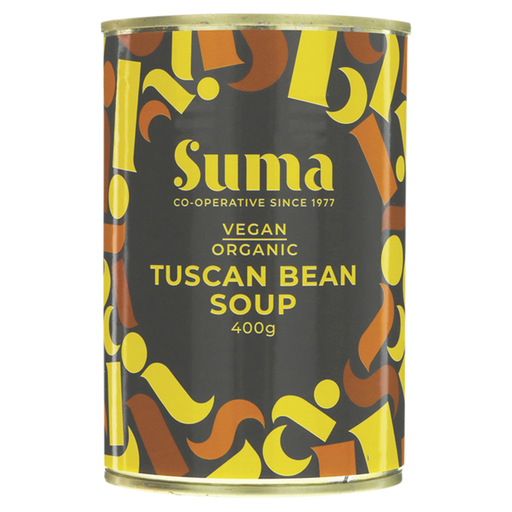
This organic tinned soup is an option to assess using its current can’s gluten information; its organic name alone does not establish suitability for a coeliac diet.
 No image available
This 400g organic bean soup is relevant if you want an organic cupboard option. For coeliac shopping, check the current can for a gluten-free claim, its ingredients and any precautionary allergen statement before deciding whether to buy it.
No. UK organic labelling concerns organic production, not whether a soup contains gluten. Check the exact product’s gluten-free claim or assess its current ingredients and precautionary allergen information; Biona’s organic Minestrone Soup lists durum-wheat macaroni.
If both are priorities, look for both on the exact soup. A gluten-free claim addresses the gluten question more directly than an organic claim, while the organic designation addresses a separate production preference. Check the current pack before use.
No. Use filters to find candidates, then read the exact can’s ingredients and allergen information. Sainsbury’s advises shoppers to check labels rather than rely on its allergy and intolerance filters.
Follow the directions on the particular can. Mr Organic’s Leek & Potato Soup, for example, specifies a non-metallic container, refrigeration and use within 48 hours after opening; do not apply that period to a different soup without checking its label.