First-shop organic cupboard builders
If you want soup to keep in the cupboard, check the organic claim on the product and compare its serving information, salt and ingredients before adding it to your first shop.


For a first food shop, choose an organic-labelled tinned soup if organic production matters to you, but decide whether it suits your meals by checking the recipe and pack as well as the organic claim. Compare allergens, salt per 100g, servings and pack format; a bean or lentil recipe may suit a plant-based lunch, while any free-from claim must match the ingredients you need to avoid.
If you want soup to keep in the cupboard, check the organic claim on the product and compare its serving information, salt and ingredients before adding it to your first shop.
If beans or lentils appeal to you, compare the ingredients and declared protein on the same basis for each recipe. Do not assume that every organic vegetable soup has the same nutritional profile.
If you need to avoid dairy, gluten, celery, mustard or another ingredient, read the current pack’s ingredients and allergen declaration. An organic claim does not establish dietary suitability.
Start with the claim and ingredients, then compare nutrition for the amount you expect to eat and check that the pack fits your storage plans.
| Priority | What to check | Your needs |
|---|---|---|
| Organic claim | Look for an organic claim on the product, rather than relying on words such as “natural”. Department for Environment, Food & Rural Affairs guidance says organic-labelled food must meet organic production rules and have at least 95% organic agricultural ingredients. | I want the organic claim to relate to the soup I am buying, not just a general description of the range. |
| Ingredients and allergens | Read the current ingredients list and emphasised allergens; check any vegan, gluten-free or named free-from statement against your requirements. GOV.UK guidance explains that required allergens are emphasised in the ingredients list of pre-packed food. | Does this particular recipe avoid the ingredients I need to exclude? An organic label alone cannot answer that. |
| Salt and servings | Compare salt per 100g on the same basis across soups. Check the stated servings and work out the amount for the portion you would eat. | A whole can might be my meal, even if its nutrition panel describes a smaller serving. |
| Lunch recipe | Check for beans or lentils in the ingredients and compare declared protein using matching units, such as per 100g. Check the serving size attached to any whole-can figure. | For a plant-based lunch, I would choose a recipe whose ingredients and portion size suit the meal I have in mind. |
| Pack format | Confirm whether the soup comes in a tin or a jar, its weight or volume, and the pack’s storage instructions after opening. | If I specifically need tins for my cupboard, I should check the format before choosing an organic soup in a different pack. |
Organic production rules do not set one salt or protein value for every soup. Ocado’s listings for the named Mr Organic, Free & Easy and RIFCo recipes show differing nutrition information.
Check the organic claim, then compare the nutrition panels for the recipes you would actually eat.
Ocado lists two servings in the 400g Free & Easy Carrot & Coconut and RIFCo Lentil & Coconut cans. Eating the whole can means consuming both stated servings.
Check the serving count and calculate the salt for the amount you plan to eat.
Organic status does not tell you whether a recipe contains an ingredient you must avoid. Ocado’s Mr Organic Black Bean & Vegetable listing, for example, declares celery and mustard.
Read the ingredients and allergen declaration on the current pack, even when a retailer filter suggests the soup is suitable.
Ocado lists Biona Hearty Lentil Soup in a 680g jar. That format matters if your first shop calls specifically for tins or if you are planning portions around a particular pack size.
Confirm the container and size before comparing recipes or planning where they will go in the cupboard.
Ocado lists organic Tomato & Lentil, Garden Pea & Vegetable, and Black Bean & Vegetable soup recipes.
Ocado lists its organic Carrot & Coconut Soup as vegan and free from dairy, gluten, wheat, mustard, celery, soya and nuts.
Ocado lists an organic Lentil & Coconut Soup described as vegan and gluten-free.
Ocado lists Biona Hearty Lentil Soup as an organic, vegan soup in a 680g jar.
Tesco Groceries lists Heinz soups in its general tinned-soup range.
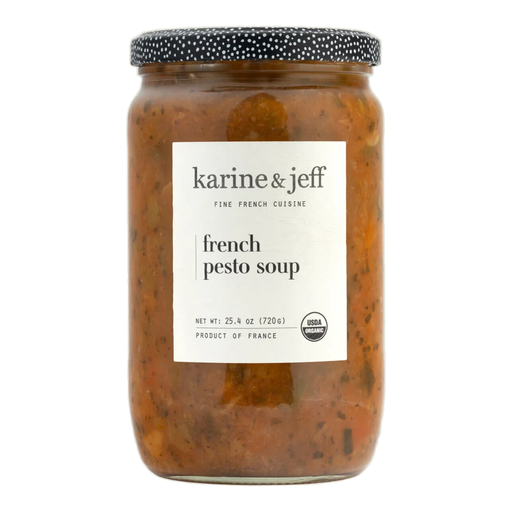
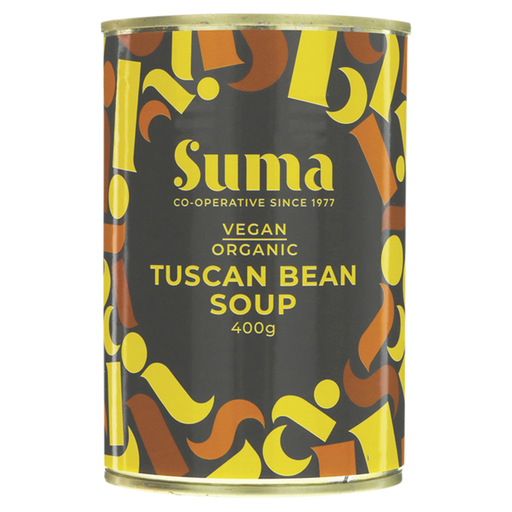
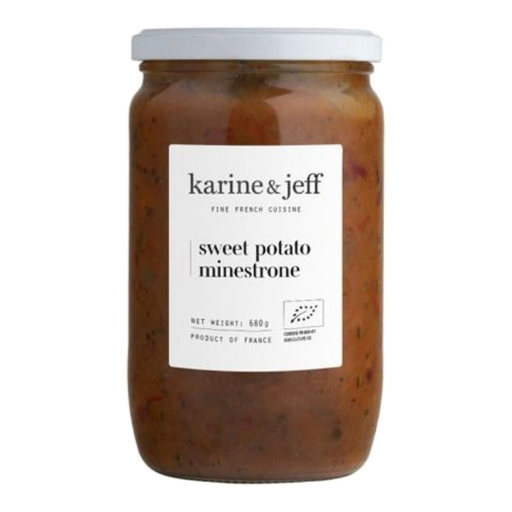
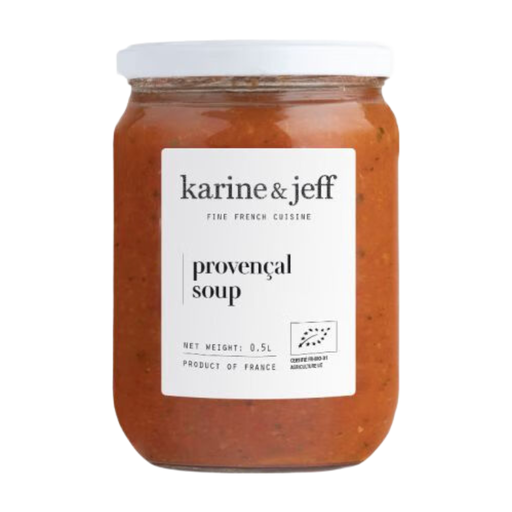
These organic-labelled soup options include bean recipes for a cupboard meal. Check the pack format of the Sweet Potato Minestrone and Provençal soups if your first shop specifically calls for tins.
 No image available
For a cupboard meal, consider how much of this 680g soup you would eat at once. Check the current pack for organic certification details, serving information and potential wheat, soya and celery allergens.
 No image available
Consider this 400g bean soup if that recipe suits your lunch plans. Check the current pack for organic certification details, serving information and celery if you need to avoid it.
 No image available
The 680g size calls for portion planning if you expect more than one meal from the pack. Confirm that the container is a tin if required, and check the current label for organic certification details, servings, milk and mustard.
 No image available
If this 500ml soup appeals for a cupboard meal, check whether its container is a tin before buying. Read the current label for organic certification details, servings and potential traces of wheat, soya, sesame, celery, mustard, milk and nuts.
An organic-labelled food must meet organic production rules; Department for Environment, Food & Rural Affairs guidance says at least 95% of its agricultural ingredients must be organic. Check the claim on the particular soup rather than treating “natural” as an equivalent term.
No. Organic status is separate from vegan and allergen suitability. Read the current pack’s ingredients and emphasised allergens; GOV.UK guidance sets out how required allergens appear on pre-packed food labels.
Compare their salt values per 100g, then account for the amount you expect to eat and the stated number of servings. GOV.UK guidance recommends no more than 6g salt a day for adults; that daily figure is context for the meal, not a claim that an individual soup passes or fails a product test.
Follow the storage instructions on the exact pack. Check whether the remaining soup needs transferring to another container and how long that recipe may be kept after opening, rather than applying one brand’s instructions to every soup.
Yes, if the format and portion size work for your plans. Ocado lists Biona Hearty Lentil Soup in a 680g jar, while its Free & Easy Carrot & Coconut and RIFCo Lentil & Coconut soups are listed in 400g cans; check storage and servings for the pack you choose.