Choose an organic-labelled tinned soup when organic production is a specific requirement for the canteen menu, then assess the exact recipe and portion you will serve. Organic labelling does not establish vegan suitability, allergen suitability or the salt content of a bowl: check those separately on the current can.
Who is this for?
The right checks depend on whether the canteen is prioritising an organic menu description, a plant-based option or accurate information for diners.
Canteen buyers with an organic-food brief
If the menu will call a soup organic, check the product’s current labelling and supplier information. The Department for Environment, Food & Rural Affairs says that food labelled organic in the UK must meet organic production rules; a general sustainability description is not the same claim.
Plant-based lunch planners
Compare the dietary statement and nutrition for the portion offered, rather than relying on the word organic. Waitrose & Partners lists Mr Organic Black Bean Soup and Tomato & Lentil Soup as suitable for plant-based diets, with 16g and 13.2g of protein per can respectively.
Teams serving diners with different allergen needs
Check the exact recipe and keep ingredient information aligned with the soup being heated and served. Heinz Organic Cream of Tomato contains milk, while the Mr Organic Black Bean recipe lists celery and mustard. The Food Standards Agency’s MyHACCP guidance calls for careful food-allergen controls.
What should you check?
Start with the menu’s organic requirement, then check dietary suitability, the planned portion and its salt content against the current pack.
| Priority |
What to check |
Your needs |
| Organic labelling |
Check that the exact product is labelled organic. Keep its current pack or supplier specification with the menu record; UK organic labelling must meet production rules, according to the Department for Environment, Food & Rural Affairs. |
If the menu calls this soup organic, I need that description to match the can being served. |
| Dietary suitability and allergens |
Read the ingredient list, allergen declaration and any vegan or vegetarian statement for the exact recipe. Check that the information used at service matches the delivered product. |
A plant-based option matters to me, but I also need clear information about ingredients such as milk, celery or mustard. |
| Lunch portion |
Check the can size and planned bowl size. Compare protein figures on the same portion basis; a per-can figure and a per-100g figure describe different amounts. |
Will each person receive a full can or a smaller serving? I want the nutrition figures to reflect the bowl on the menu. |
| Salt in the serving |
Use the pack’s salt figure and the amount served, rather than comparing only per 100g. Account for any bread or toppings when reviewing the lunch; UK Government guidance gives 6g a day as the recommended adult maximum. |
I need to know the salt contribution of the portion we actually serve, not just the label’s reference amount. |
Common buying mistakes
-
Assuming organic means vegan or allergen-free
Organic describes a production standard, not every ingredient in the soup. Tesco Groceries lists milk in Heinz Organic Cream of Tomato; the Mr Organic Black Bean recipe lists celery and mustard.
Approve dietary descriptions and allergen information from the current label for each recipe. Keep those details available to staff when the soup is served.
-
Using organic as a loose menu description
The Department for Environment, Food & Rural Affairs says products labelled organic in the UK must meet organic production rules. A general description of an ingredient or sourcing approach does not establish that the soup itself can carry the claim.
Match the menu wording to the exact product’s organic labelling and retain its current pack or supplier specification.
-
Comparing salt per 100g but serving more
A whole 400g can contains four times the amount of salt stated per 100g. A smaller bowl has a different total, so the reference figure alone cannot describe either serving.
Calculate the amount for the soup actually ladled into each bowl, then consider the other components of that lunch.
-
Using an online listing in place of the delivered can
The can received for service is the one whose ingredients, allergens and storage instructions matter to diners.
At receipt, check the product identity, current label, best-before date and storage directions before using it for the planned menu.
Brand and range references
These examples illustrate different recipe and dietary checks; a brand name alone does not establish the properties of every soup in its range.
Mr Organic
Waitrose & Partners lists Tomato & Lentil and Black Bean tinned soups from Mr Organic as plant-based options.
- Waitrose & Partners gives protein figures of 13.2g per can for Tomato & Lentil and 16g per can for Black Bean.
- The Black Bean recipe lists celery and mustard; check the current label for the recipe selected.
Heinz
Heinz Organic Cream of Tomato is a creamy tomato option listed by Tesco Groceries.
- The Tesco Groceries ingredient listing specifies tomatoes at 85% for this recipe.
- It contains cream made from milk, so this recipe is not a dairy-free choice.
M&S
The Marks & Spencer tinned-soup range can be browsed using vegetarian and vegan dietary filters.
- Those filters can help narrow a search when a stated dietary category matters to the menu.
- Check any individual product’s label before describing it as organic or suitable for a particular diner.
Joybuy soup options
These Joybuy-listed tinned soups are options to examine for an organic-themed canteen menu. Check each delivered can before using an organic menu description or confirming dietary suitability.
 No image available
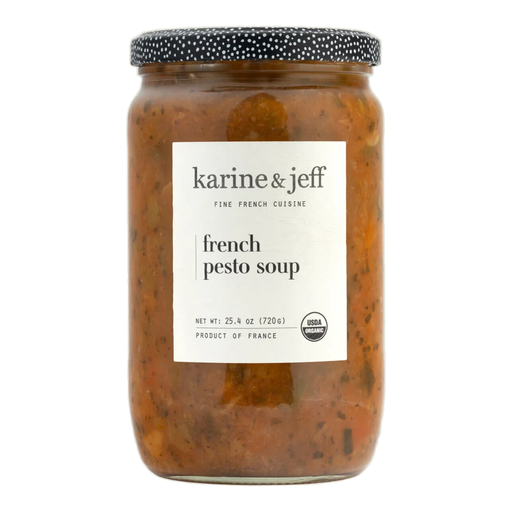
Karine & Jeff Organic French Pesto Soup 680g
For lunch service using a 680g can, decide how many portions it will provide and check the salt figure for each portion. Confirm the organic wording, plant-based suitability and possible wheat, soya and celery traces on the delivered pack before describing it on the menu.
View on Joybuy
 No image available
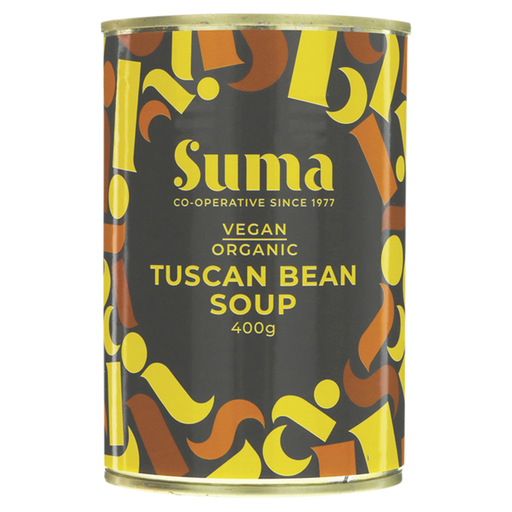
Suma Organic Tuscan Bean Soup 400g
This 400g bean soup is an option to assess for a canteen lunch. Check the delivered pack’s organic wording and celery information, and calculate salt for the portion served. Confirm an explicit vegan-suitability statement before offering it as a vegan option.
View on Joybuy
Questions about canteen soup
What should a UK canteen check before calling a tinned soup organic?
Check that the exact soup is labelled organic and retain its current pack or supplier specification for the menu record. The Department for Environment, Food & Rural Affairs says food labelled organic in the UK must meet organic production rules; a general description such as natural does not establish an organic claim.
Is organic tinned soup automatically suitable for vegans or diners with allergies?
No. Tesco Groceries lists milk in Heinz Organic Cream of Tomato, while the Mr Organic Black Bean recipe lists celery and mustard despite being presented as plant-based. Check the current ingredients, allergen declaration and dietary statement for every soup served.
How should a canteen compare the salt in two soups?
Compare the amount in the portion that will actually be served. Use each current label’s salt figure and serving weight on the same basis, then consider any bread or toppings included with the lunch. UK Government guidance gives 6g a day as the recommended maximum for adults.
Can leftover soup from an opened tin be served later?
Follow the storage and use-after-opening instructions on that product’s current pack, alongside the canteen’s food-storage procedures. Do not apply one soup’s refrigeration period to a different recipe.


