Late-night cupboard-meal shoppers
If soup will be your supper rather than a starter, the portion size and nutrition panel matter alongside flavour. Check what one serving means for the amount you expect to eat.


For a late-night supper, choose an organic-labelled tin by checking the exact recipe’s ingredients, protein, salt and allergens rather than treating “organic” as a guide to its nutritional profile. Compare salt per 100g, then consider how much of the tin you will eat; a bean-based soup, a tomato soup and a free-from recipe meet different needs.
If soup will be your supper rather than a starter, the portion size and nutrition panel matter alongside flavour. Check what one serving means for the amount you expect to eat.
If an organic claim is central to your choice, look for it on the exact product and check the current pack. “Natural” or “plant-based” does not mean the same thing as organic.
Check each recipe’s ingredients, dietary claims and allergen wording. An organic claim alone does not establish that a soup is vegan or suitable for a particular allergy.
Start with the organic claim and any dietary requirements, then compare nutrition on a common per-100g basis and against the portion you plan to eat.
| Priority | What to check | Your needs |
|---|---|---|
| Organic status | Look for an organic claim on the exact soup. UK government organic-labelling guidance says at least 95% of its agricultural ingredients must be organic for food to carry the claim. | I want an organic soup, not one described only as natural or plant-based. |
| Supper portion | Check the tin size, main ingredients, and protein and fibre figures per 100g. Compare the figures for the amount you expect to serve. | If soup is my whole supper, I want to know what the portion contains rather than choosing by flavour alone. |
| Salt | Compare salt per 100g between recipes, then use the tin size to work out the salt in your planned portion. NHS guidance says adults should have no more than 6g of salt a day. | Salt matters to me, so I need the figure for the quantity I will actually eat. |
| Dietary suitability | Read the current ingredients, highlighted allergens and any precautionary allergen wording. Check for the specific vegan or free-from claim you need. | I need a soup that fits my particular restriction; an organic label cannot answer that question for me. |
Organic labelling does not tell you a soup’s salt or protein content, or whether it is vegan or free from a particular allergen.
Check the organic claim, then read the nutrition panel and ingredients for the flavour you intend to buy.
Salt figures can differ between organic recipes. Suma Store lists 0.58g salt per 100g for Suma Organic Tomato Soup, while Natural Collection lists 1.45g per 100g for Suma Organic Mushroom Soup.
Compare the per-100g figures and account for the amount you plan to eat, particularly if that is the whole tin.
Dietary and free-from claims apply to particular recipes, not every soup carrying the same brand or an organic label.
Read the current pack’s ingredient list, highlighted allergens and precautionary wording, including when buying a familiar flavour again.
These examples show why the exact recipe matters; a feature of one tin should not be assumed for another product from the same brand.
Its organic soup listings include Tomato & Lentil and Garden Pea & Vegetable recipes.
Suma’s organic tomato and mushroom soups illustrate different nutrition and free-from details within one brand.
Its Organic Tomato Soup has retailer listings relevant to shoppers checking specific dietary claims.
These bean-based tinned soups are options to consider when soup will be your late-night supper. Compare their stated per-100g figures and check the current pack for the organic claim and dietary details you need.
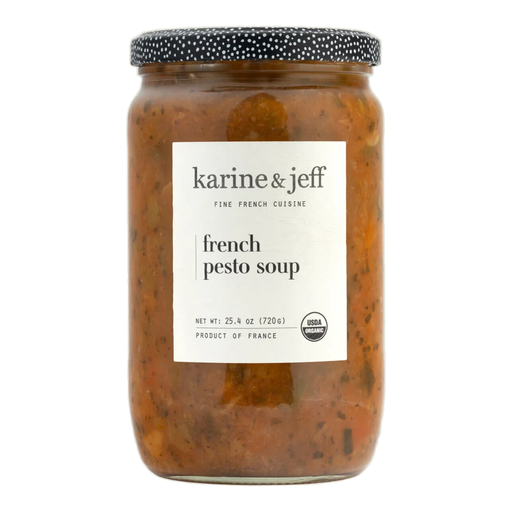 No image available
This 680g white-bean and vegetable soup is worth comparing if you expect soup to make up your supper. Its listing states 2.7g protein, 3.3g fibre and 0.5g salt per 100g. It also gives a precautionary may-contain statement for wheat, soy and celery; check the current pack if these affect your choice, along with its organic labelling.
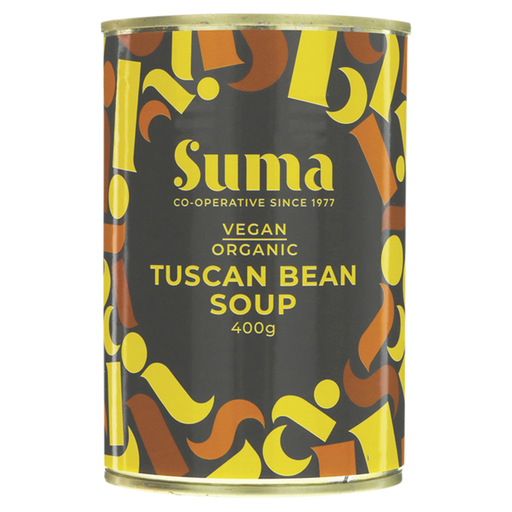 No image available
This 400g bean soup is another cupboard-meal option to compare by portion. Its listing states 2.6g protein, 2.0g fibre and 0.70g salt per 100g, and identifies celery as an allergen. Check the current pack for its organic labelling, allergen information and instructions for storing any leftovers.
Look for the claim on the exact product and check its current label. UK government organic-labelling guidance says food labelled organic must have at least 95% organic agricultural ingredients; descriptions such as “natural” or “plant-based” are not substitutes for an organic claim.
No. Suma Store lists 0.58g salt per 100g for Suma Organic Tomato Soup, while Natural Collection lists 1.45g per 100g for Suma Organic Mushroom Soup. Compare the exact recipe’s per-100g figure and the portion you will eat; NHS guidance says adults should have no more than 6g of salt a day.
Compare the tin size and the protein, fibre and salt figures for the amount you intend to eat. Bean, pea or lentil ingredients can help you identify recipes to examine, but the nutrition panel tells you what the particular soup contains.
An organic claim does not establish either suitability. Check the exact soup’s current ingredients, allergen declaration and any precautionary wording, and look for the specific vegan or free-from claim relevant to your needs.