What should you check?
Start with the delivered tin’s label, then compare the portion you intend to serve with the recipient’s dietary and texture requirements.
| Priority |
What to check |
Your needs |
| Organic labelling |
Check the organic description on the current pack and that the product is a tin, not a chilled soup. UK government guidance says food labelled organic must have at least 95% organic agricultural ingredients. |
I’m choosing an organic cupboard soup, so I need to confirm what the delivered product actually says. |
| Meal fit |
Compare ingredients, protein and other nutrition values for the portion served. Consider the soup alongside the person’s other food and any individual nutrition plan. |
If this is meant to stand in for a meal, I need to know whether the planned portion fits the recipient’s care arrangements, not just whether the tin is convenient. |
| Salt per portion |
Read the salt value per 100g, the pack size and any stated serving size. Calculate it for the amount actually served rather than assuming a full tin is one portion. |
I may serve a whole tin or split it, so the figure that matters to me is the salt in that portion. Leeds Teaching Hospitals NHS Trust advises that tinned soups can be high in salt. |
| Texture and allergens |
Check ingredients, allergen statements and whether the soup has pieces or thin liquid. Where a swallowing plan applies, use the texture and fluid consistency specified for that person. |
A smooth-looking soup is not automatically suitable for someone with dysphagia. I also need to check the exact recipe if an ingredient must be avoided. |
| Storage and serving |
Read the pack’s storage, preparation and after-opening instructions. Check how much of the tin will be served and how any remainder must be kept. |
I want a cupboard option that works for the planned meal and can be handled according to its own label after opening. |
Brand references
These examples illustrate different organic soup recipes to compare; a brand name alone does not establish the ingredients or suitability of another product in its range.
Mr Organic
Waitrose & Partners lists a 400g Mr Organic Tomato & Lentil Soup for shoppers comparing a pulse-based recipe with smooth tomato soup.
- Waitrose & Partners states 13.2g protein for this Tomato & Lentil product.
- Check the current tin’s salt, ingredients and consistency against the portion and recipient’s requirements.
Heinz
Tesco lists Heinz Organic Cream of Tomato Soup as a 400g vegetarian tomato-soup option.
- The cream-of-tomato recipe provides a different choice from a bean or lentil soup.
- Check the current pack for milk, nutrition and allergens, and confirm stock before depending on a particular tin.
Suma
Real Foods lists Suma organic tinned soups, including a 400g vegan minestrone.
- Vegetable and bean-style recipes give shoppers alternatives to cream-of-tomato soup.
- Check each recipe’s own allergen statement, nutrition panel and texture; range-wide assumptions may not fit the recipient.
Free & Easy
Real Foods lists Free & Easy organic tinned soups in several recipes.
- Individual listings include vegetable-based flavour choices.
- Verify any vegan or free-from wording, allergens and nutrition on the exact product rather than applying one listing’s details to the whole range.
Organic soup options on Joybuy
These are organic bean and vegetable soup options for cupboard-meal planning. Compare their pack sizes and current labels with the portion and any dietary or texture requirements; they are not substitutes for an individual care plan.
 No image available
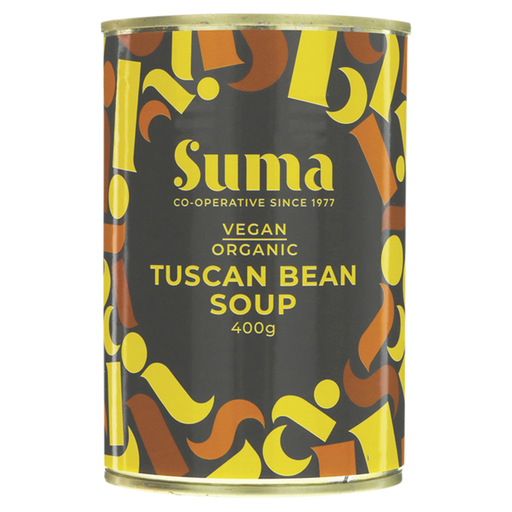
Suma Organic Tuscan Bean Soup 400g
This 400g bean-soup option fits a cupboard-meal shortlist; compare the salt in the amount served, check the current pack if celery is a concern and follow any prescribed texture plan.
View on Joybuy
 No image available
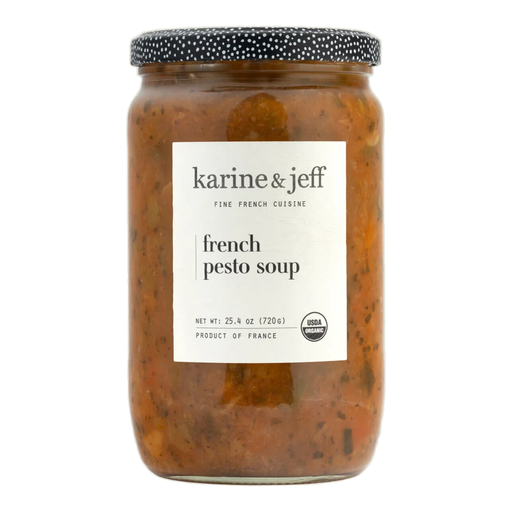
Karine & Jeff Organic French Pesto Soup 680g
For this 680g soup, work from the amount actually served when comparing nutrition values. Check the current allergen statement if wheat, soy or celery matters, and follow any prescribed texture plan.
View on Joybuy
 No image available
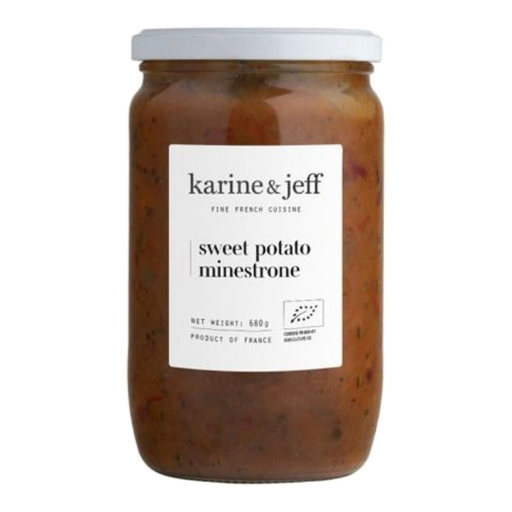
Karine & Jeff Organic Sweet Potato Minestrone 680g
This 680g minestrone is another cupboard-meal option; check the serving amount and current pack for milk and mustard, and assess its consistency against any prescribed texture plan.
View on Joybuy
Questions about choosing soup
How can I check whether a tinned soup is organic?
Check the organic wording on the current product label, not just a category listing. For UK food labelling, Department for Environment, Food & Rural Affairs guidance dated 20 August 2025 says at least 95% of a food labelled organic’s agricultural ingredients must be organic.
Does organic mean a soup is suitable for someone receiving care?
No. Organic labelling does not tell you whether the portion, ingredients or texture fit that person’s needs. Compare the current nutrition and allergen information with their meal arrangements and any individual care plan.
Can someone with dysphagia have a standard tinned soup?
Only if it fits their individual swallowing plan. NHS guidance describes possible changes to food texture and fluid thickness, while Royal Berkshire NHS Foundation Trust says food ideas should be used alongside tailored speech and language therapy and dietetics advice.
How should leftover soup be stored?
Follow the opened product’s own storage instructions, including its container, refrigeration and use-by directions. Do not assume that the instructions for one soup apply to another recipe or pack.
Is a tin of soup enough as a complete meal?
Do not assume that it is, particularly when someone has a poor appetite or an individual nutrition plan. Humber and North Yorkshire Health and Care Partnership identifies people requiring care as being at increased risk of poor nutritional status; consider the planned portion alongside the person’s other meals and any advice from their care team.


