Choose an organic-labelled soup that fits the eater’s tastes and dietary requirements, then check its salt per 100g and how it will be served. Organic does not mean low salt: the NHS defines low salt as 0.3g or less per 100g. A soup intended for school also needs to fit that school’s rules on packed lunches, containers and heating.
Who is this for?
Families planning school-day lunches
Soup needs to suit the child’s flavour preferences and dietary requirements as well as the place where it will be eaten. For a packed lunch, check the school’s rules and whether heating and a suitable container are available.
Students making lunch at home
A cupboard soup can be an option when there is time and equipment to prepare it. Check the can’s instructions rather than assuming every product can be heated in the same way.
Shoppers checking salt or dietary claims
Organic status, salt content and claims such as vegan or gluten-free answer different questions. Compare nutrition information per 100g and inspect the current ingredients and allergen statement for the particular soup.
What matters when choosing?
Start with the label and the eater’s requirements, then check whether the soup will work at the time and place it is needed.
| Priority | What to check | Your needs |
|---|
| Organic label |
Look for an organic claim on the product label, rather than relying on words such as plant-based. The Department for Environment, Food & Rural Affairs says a food labelled organic must meet certification rules and have at least 95% organic agricultural ingredients. |
I want the soup itself to be labelled organic, not just an individual ingredient. |
| Salt |
Compare the nutrition panels per 100g, then consider the amount to be eaten. The NHS defines low salt as 0.3g or less per 100g; an organic claim does not establish the salt level. |
If salt is a deciding factor for me, I need the current figure rather than a judgement based on the word organic. |
| Diet and allergens |
Check product-specific vegan, gluten-free or dairy-free claims alongside the current ingredients and allergen statement. Do not use the recipe name as an allergen check. |
Someone eating the soup needs a particular ingredient excluded, so I need to check this can’s label. |
| School-day use |
Read the preparation and storage instructions. If the soup is going to school, check its rules on food, containers and heating; Food Standards Scotland advises following the label’s instructions after opening. |
Will lunch be eaten at home, or can the soup be carried and served under the school’s arrangements? |
What can make a soup unsuitable?
-
Assuming organic means low salt
Organic and low-salt labels describe different attributes. Healthy Supplies lists 0.73g salt per 100g for Free & Easy Organic Lentil & Red Pepper Soup, above the NHS low-salt definition of 0.3g or less per 100g.
Compare the current per-100g figures on the soups you are considering, as well as the amount likely to be eaten.
-
Planning a school lunch without checking how it will be served
A soup suitable for heating at home may not fit a school lunch routine if heating or the intended container is not permitted.
Ask the school about its packed-lunch arrangements before relying on soup for that day.
If ordering through Tesco Marketplace, check the delivery arrangements too: its cited Free & Easy listing says the product is sent by courier and cannot be collected from a store.
-
Using a dietary claim as the whole allergen check
Vegan or organic wording does not tell you everything in a product’s allergen information. Claims on one recipe should not be assumed to apply to another.
For an allergy, check the current physical pack and seek product-specific information from the manufacturer when needed.
-
Overlooking the eater’s spice preference
The Tesco Marketplace description of RIFCo Organic Mexican Bean Soup names chilli and black pepper. That matters if the intended eater dislikes spiced soup.
Check the ingredients and try the recipe at home before making it a regular school-term choice.
Brand and retailer references
Free & Easy
Its listed organic 400g soups include Sweet Potato & Quinoa and Lentil & Red Pepper.
- The Sweet Potato & Quinoa listing states low-salt, vegan, gluten-free and dairy-free claims; the Lentil & Red Pepper listing states vegan and gluten-free claims.
- These are claims about the named products, not the whole range. Check the current pack for nutrition, ingredients and allergens.
RIFCo
Its listed Organic Mexican Bean Soup is a 400g tomato-and-pinto-bean recipe with peppers, chilli and herbs.
- The named ingredients help shoppers decide whether this recipe suits the eater’s flavour preference.
- Check the current allergen information and Marketplace delivery terms before ordering.
Tesco
Tesco lists tinned soups in its grocery range and also hosts the cited organic soups through Tesco Marketplace.
- The Marketplace listings provide product-specific descriptions for the cited Free & Easy and RIFCo soups.
- The cited Free & Easy Marketplace listing says it is sent by courier and cannot be collected from a Tesco store; check the terms for the product being ordered.
M&S
M&S lists tinned soups and describes hob or microwave preparation for its canned soups.
- Its range offers a place to compare tinned-soup recipes and their product instructions.
- Check the particular product label if organic status is required; a general tinned-soup range does not establish it.
Joybuy soup options
These Joybuy options are organic-labelled soups to consider for home lunches or a school-day routine where serving arrangements permit. Check the current label before relying on an organic, salt or allergen claim; the Provençal option also needs a packaging check if a tin is essential.
 No image available
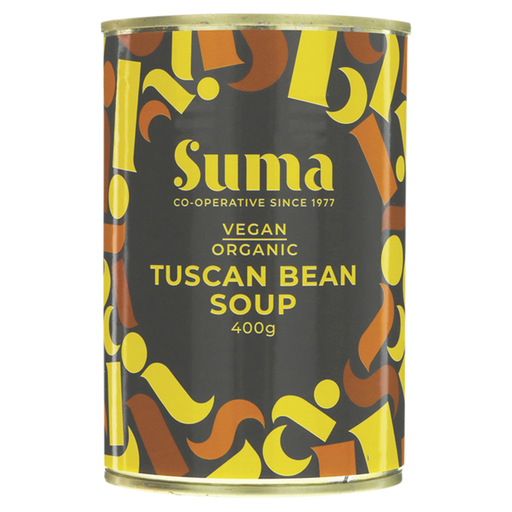
Suma Organic Tuscan Bean Soup 400g
A 400g bean soup to consider when the eater wants this style of recipe. Compare salt per 100g on the current label, and check its celery allergen information before serving if relevant.
View on Joybuy
 No image available
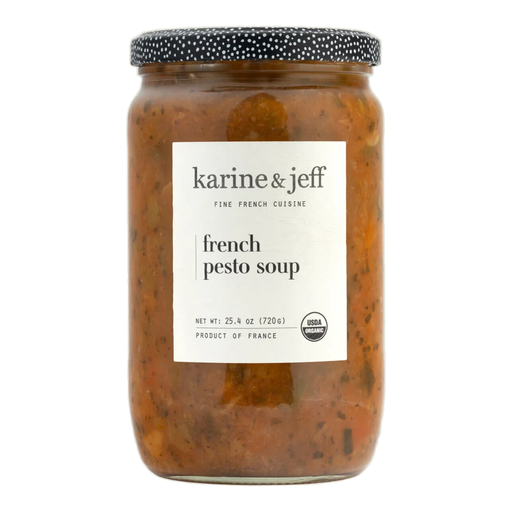
Karine & Jeff Organic French Pesto Soup 680g
The 680g size is worth checking against the amount needed for lunch. Compare its salt per 100g with other soups and inspect the current may-contain statement for wheat, soya and celery if relevant.
View on Joybuy
 No image available
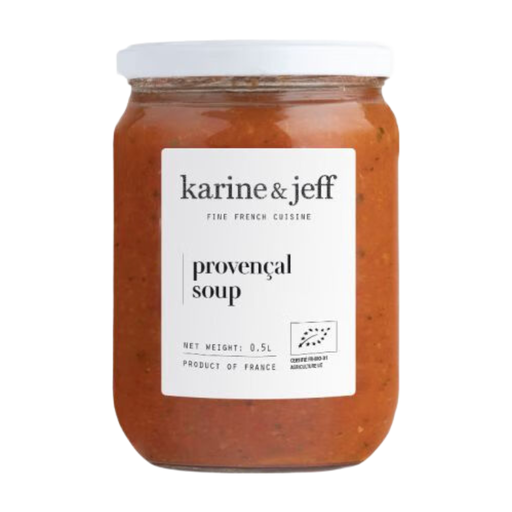
Karine & Jeff Organic Provençal Soup 500ml
For a routine that specifically calls for tinned soup, confirm the 500ml product’s packaging before buying. Check its heating directions, salt per 100g and current allergen statement, particularly if trace ingredients matter.
View on Joybuy
Common questions
Does organic tinned soup automatically have less salt?
No. Organic status and salt content are separate checks. The NHS defines low salt as 0.3g or less per 100g, so compare the current nutrition panels on that basis.
Is organic soup suitable for someone with an allergy?
An organic claim does not establish allergen suitability. Check the current ingredients and allergen statement for the exact product, even when its listing also makes vegan or gluten-free claims; ask the manufacturer for product-specific clarification when needed.
Can soup go in a school packed lunch?
Check the individual school’s packed-lunch, container and heating rules before sending it. Department for Education guidance on school food addresses food and drink provided in state-funded schools in England; it does not establish what every school permits in a packed lunch.
What should I do with soup left after opening a can?
Follow that product’s storage and use-after-opening instructions. Food Standards Scotland advises checking the label for whether refrigeration is needed once a food is opened and for any stated time limit.


