Couples planning a low-prep dinner
If soup is the first course, choose its flavour alongside the rest of the menu. If it is the main part of dinner, check the pack size and serving guidance before deciding what else to serve.


Choose a tomato, basil or red-pepper soup if it will be a starter; consider a bean-based recipe if soup needs to play a larger part in dinner. A 400g tin is a pack size, not a promise of two dinner portions, so check the serving guidance and plan what else to serve. Check the organic label, ingredients and allergens for the exact recipe.
If soup is the first course, choose its flavour alongside the rest of the menu. If it is the main part of dinner, check the pack size and serving guidance before deciding what else to serve.
A bean-based recipe offers a different ingredient profile from a simple tomato soup. Check its spice level, nutrition information and allergens rather than assuming every bean soup will suit the meal.
Organic and vegan descriptions do not establish allergen suitability. For example, the Suma Tuscan Bean listing declares celery; check the current label for everyone you are serving.
Decide what role the soup will have in dinner, then check the exact recipe and pack rather than choosing by flavour name alone.
| Priority | What to check | Your needs |
|---|---|---|
| Organic label | Look for the organic designation and certification information on the product label. The UK Department for Environment, Food & Rural Affairs says organic food labelling requires certification by an approved control body and at least 95% organic agricultural ingredients. | I want to check the organic claim on the soup I will actually serve, rather than treating ‘natural’ or plant-based wording as equivalent. |
| Role in dinner | Compare a tomato-and-basil or red-pepper recipe for a starter with the ingredients in bean-based options. Check whether a spiced recipe fits the menu. | For a small opening course, I would choose a flavour that works with the main dish. If soup is the centre of dinner, I need to plan the rest of the plate too. |
| Dietary fit | Read the current ingredient list, allergen declaration and dietary statements for the exact variety. The Suma Tuscan Bean listing declares celery; Ocado’s Biona Minestrone listing declares celery and wheat/gluten, although that soup comes in a jar. | Everyone at the table needs to be able to eat the chosen recipe; an organic or vegan label does not answer every allergen question. |
| Portions | Compare net quantity and any serving guidance with the number of courses planned. A 400g tin does not, by itself, establish how many dinner portions it provides. | Will this be a starter for two, or will we need bread, salad or another dish alongside it? |
Organic labelling concerns how a food is produced and labelled, not whether its recipe contains allergens. Suma Tuscan Bean Soup declares celery, while Ocado’s listing for Biona Organic Minestrone declares celery and wheat/gluten.
Read the current pack’s ingredient and allergen information before buying and again before serving someone else.
Pack quantity is not a serving recommendation. Eat Wholesome’s Italian Tomato & Basil soup, for example, lists 1.1g protein per 100g; its 400g size alone cannot establish its role in a two-person meal.
Decide whether soup is a starter or a larger course, check the pack’s serving guidance and plan any accompanying food.
Bean soups differ in flavour and declared salt. Ocado lists Mr Organic Spicy Mixed Bean at 0.87g salt per 100g, while the Joybuy listing for Suma Tuscan Bean states 0.70g per 100g and declares celery.
Compare spice, salt and allergens on the varieties you are considering, especially if the menu calls for a mild first course.
Opened-soup instructions vary by product. The Suma Tuscan Bean listing says to transfer the contents to a suitable container, refrigerate them and use them within two days.
Follow the purchased pack’s storage instructions. The Food Standards Agency advises keeping a fridge at 0–5°C and refrigerating cooked food within one to two hours of cooling.
These examples show why it matters to compare individual recipes and packaging; a brand name does not establish the contents of every variety.
Ocado lists 400g organic soups including Creamy Red Pepper and Spicy Mixed Bean.
Suma Wholefoods lists organic 400g Tomato & Basil, Tuscan Bean and Minestrone soups in its wholesale range.
Ocado lists its Organic Italian Tomato & Basil Soup as a 400g vegan can.
Ocado lists Biona Organic Minestrone in a 680g jar rather than a tin.
Suma Wholefoods lists an organic Free & Easy Tomato Soup in 400g tins within its wholesale range.
These two organic-labelled, bean-based tins are options to consider when soup will play a larger part in a date-night dinner. Check their different pack sizes and allergen information against your menu.
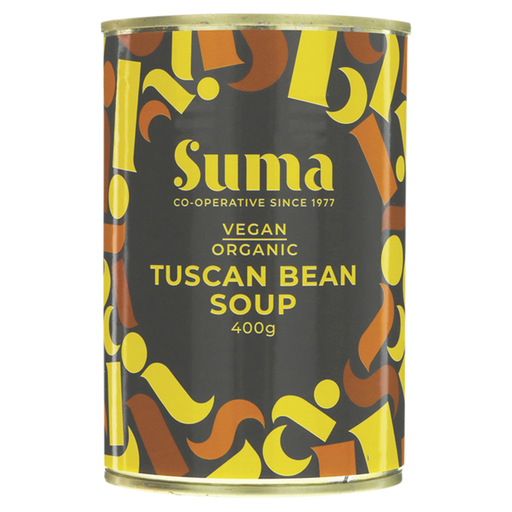 Image unavailable
Consider this bean-based tin when soup is a substantial part of the menu, while checking whether 400g fits the portions you intend to serve. The listed recipe contains 14% beans, declares celery and gives 2.6g protein and 0.70g salt per 100g. Check the current pack’s organic certification details and allergen declaration.
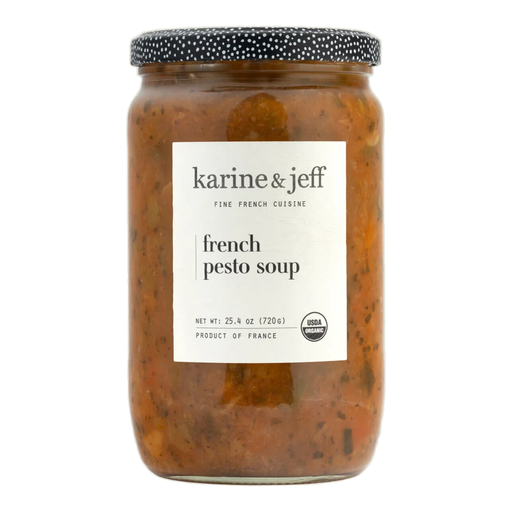 Image unavailable
Consider this larger tin when planning a shared vegetable-and-bean soup course. Its description lists white beans, vegetables and pesto-style herbs in a 680g can; that quantity is not a stated serving count. The allergen notice says it may contain wheat, soy and celery. Check the current pack’s organic certification details, allergen information, serving guidance and opened-soup storage instructions.
Check the organic designation and certification information on the product label. The UK Department for Environment, Food & Rural Affairs says organic food labelling requires the product and its suppliers to be certified by an approved organic control body; at least 95% of a food product’s agricultural ingredients must be organic.
Not on those descriptions alone. The Suma Tuscan Bean listing declares celery, while Ocado’s Biona Organic Minestrone listing declares celery and wheat/gluten. Read the current ingredient and allergen information for the exact soup before serving it.
A 400g tin can be divided into two smaller starter portions, but pack weight alone does not establish two dinner servings. Check the soup’s serving guidance and decide whether bread, salad or another dish is needed for your planned menu.
Follow the pack’s instructions and refrigerate leftovers in a suitable container rather than leaving them in the tin. The Suma Tuscan Bean listing says to use refrigerated leftovers within two days. The Food Standards Agency advises keeping fridges at 0–5°C and eating leftovers within two days or freezing them.