Students packing a quick lecture-day lunch
A ready-to-eat tin can go with bread, crackers, rice or a salad without cooking. Choose a portion you expect to finish, particularly if you will not have somewhere to refrigerate leftovers.


For a lecture-day lunch, choose a tin you can finish at one sitting and check whether “organic” describes the olive oil rather than the fish. Spring-water tuna suits a lunch without added olive oil; choose an organic-olive-oil product when that ingredient matters to you. Check the fish allergen declaration and the instructions for any leftovers.
A ready-to-eat tin can go with bread, crackers, rice or a salad without cooking. Choose a portion you expect to finish, particularly if you will not have somewhere to refrigerate leftovers.
Check which ingredient carries the organic claim. Ocado’s listings for Fish4Ever Azores tuna fillets and skipjack tuna steaks identify organic olive oil, with total organic-ingredient figures of 33.5% and 34.1% respectively; those figures do not describe the fish as organic.
Compare the stated pack and drained weights, then consider whether a single tin or a multipack fits how often you prepare lunch. A larger container is less convenient if you cannot refrigerate what remains after opening.
Start with the ingredient you want, then choose a portion and packing liquid that work for the day you will eat it.
| Priority | What to check | Your needs |
|---|---|---|
| Organic ingredients | Read the full ingredient list and any stated organic-ingredient percentage. Distinguish tuna in organic olive oil from a claim about the tuna itself. | I want the organic claim to apply to an ingredient I care about, rather than assuming it describes the whole tin. |
| Lunch portion | Check the tin size and ready-to-eat directions. If you might leave some, read the opened-pack storage instructions before taking it to campus. | A portion I can finish at lunch is simpler when I will be away from a fridge. |
| Packing liquid | Compare spring water, brine and oil on the exact product labels. Check ingredients and salt per 100g rather than assuming two tins have the same contents. | I would choose spring water for a lunch without added oil, or organic olive oil when I specifically want that ingredient. |
| Pack contents | Check both the stated pack weight and drained weight where shown. A tin, jar and multipack may contain different portions of fish and packing liquid. | I want to know how much tuna is in each portion before choosing a format for sandwiches or a salad. |
| Allergens and storage | Read the fish allergen declaration. For leftovers, follow the pack’s refrigeration instructions; the cited Fish4Ever labels say to use opened contents within two days. | If I cannot refrigerate leftovers, I would take an unopened portion that I can finish that day. |
| Weekly tuna intake | The NHS advises people who are pregnant or trying for a baby to have no more than four cans of tuna or two tuna steaks a week. Count tuna eaten at other meals too. | If that NHS guidance applies to me, a lecture lunch is part of my weekly total. |
Ocado’s Fish4Ever listings identify organic olive oil as an ingredient and give different total organic-ingredient percentages for different tins. The wording does not, by itself, say that the wild-caught fish is organic.
Read the ingredient list and the claim on the particular pack. Choose the oil-packed option if organic olive oil is the attribute you want.
An unopened tin is convenient to carry, but opened tuna needs different handling. Fish4Ever’s cited labels require refrigeration and use within two days of opening.
Open the tin when you are ready to eat. If you cannot refrigerate unused contents promptly, choose a portion you can finish.
Organic olive oil does not change the fact that tuna contains fish. It also does not change the NHS weekly tuna guidance for people who are pregnant or trying for a baby.
Check the allergen declaration and nutrition panel separately, and consider your total tuna intake if the NHS guidance applies to you.
Its cited tuna products include spring-water options and tins with organic olive oil. Fish4Ever says it adds certified organic ingredients to wild fish when making products with oils, sauces or recipes.
Tesco’s cited own-brand listing includes a 4 x 145g multipack of tuna chunks in spring water.
The cited No Drain tuna chunks line is a format to consider when draining a tin at lunch would be awkward.
Tesco’s cited listing includes Princes Tuna Chunks in Spring Water in a 4 x 145g multipack.
This tuna-in-organic-olive-oil option is for a lunch where that particular ingredient matters. Check the current pack label for the ingredient details and choose a portion you can finish or refrigerate after opening.
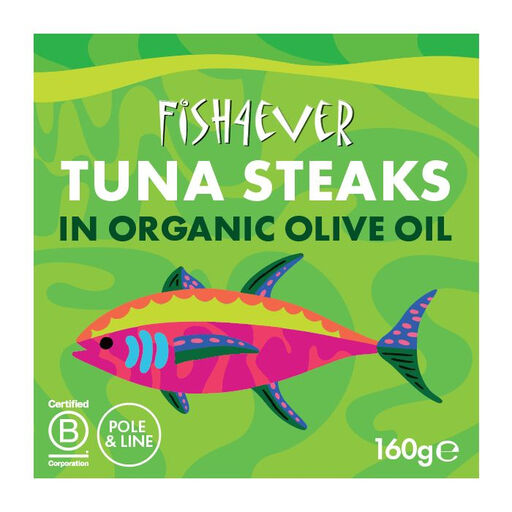 Image unavailable
For a lecture lunch built around tuna packed in organic olive oil, this 160g tin can be used with bread, rice or a salad. Joybuy’s ingredient description identifies skipjack tuna, organic olive oil and sea salt; it does not describe the fish itself as organic.
Refrigerate after opening and consume within two days, following the product directions. Check the current pack for its organic-ingredient percentage.
No such conclusion follows from the oil claim alone. Ocado’s listings for Fish4Ever Azores fillets and skipjack steaks identify organic olive oil and state total organic-ingredient percentages of 33.5% and 34.1% respectively. Read the complete label to see exactly what the claim covers.
Choose according to the ingredients you want in the finished lunch: spring water avoids added olive oil, while an organic-olive-oil product provides that specified ingredient. Check the individual tin’s ingredient list, salt information and portion size; packing liquids vary by product.
Do not treat opened tuna as shelf-stable. The cited Fish4Ever labels instruct you to refrigerate it after opening and consume it within two days; Chelmsford City Council also warns against keeping opened tuna at room temperature. Carry the tin unopened and open it when you are ready to eat, or refrigerate any unused contents promptly.
The NHS advises no more than four cans of tuna a week or two tuna steaks a week for people who are pregnant or trying for a baby. Count tuna from all meals, including lecture lunches, towards that weekly limit.
Tuna contains fish. The cited product labels declare fish as an allergen, so read the complete current label before choosing a tin if you have an allergy or intolerance.