Organic-claim checkers
You want to know whether organic describes the olive oil, the whole product or another specific ingredient, rather than assuming it describes the tuna.


Check what the organic claim covers before choosing tinned tuna for a working-from-home lunch. Ocado lists Fish4Ever examples with 17.5% and 33.5% organic ingredients; those figures do not establish that the tuna itself is organic. If organic olive oil is your priority, an oil-packed tin may fit, while no-drain and spring-water formats address different preparation needs.
You want to know whether organic describes the olive oil, the whole product or another specific ingredient, rather than assuming it describes the tuna.
You want tuna that is straightforward to put in a sandwich, salad or jacket potato during a short lunch break.
You look for a stated fishing method, traceability or certification on the particular tin, alongside a format that works for lunch.
For a working-from-home lunch, establish the scope of any organic claim on the exact tin, then compare preparation, sourcing information and the quantity you will use.
| Concern | What to check | Who this matters to |
|---|---|---|
| Scope of the organic claim | Read the ingredients and any stated organic-ingredient percentage. Check what the certification covers. | If I am seeking organic tuna, I need to know whether the claim applies only to its packing oil. About 33% of consumers put clarity about the organic claim first. |
| Lunch preparation | Check whether the tin is no-drain and whether the packing medium suits your lunch. | With little time to prepare lunch, I would rather open and use the tuna without draining it. About 27% of consumers primarily want less preparation. |
| Documented sourcing | Look for a fishing-method, traceability or certification claim that applies to the exact product. | When choosing tuna regularly, I want a specific sourcing claim I can check, not an assumption based on the brand. Sourcing information is the primary concern for about 27% of consumers. |
| Pack and portion planning | Compare the number of tins and drained weight where stated, particularly across different packing media. | If I plan several lunches ahead, I need to know how much usable tuna each pack contains. About 13% of consumers put predictable portions first. |
Ocado lists Fish4Ever examples with 17.5% and 33.5% organic ingredients. An ingredient-level claim does not, by itself, establish an organic claim for the tuna.
Read the ingredient wording and certification details. If you require a broader organic claim, check that the product documentation supports it.
Pole-and-line, MSC and traceability claims concern sourcing; they do not establish that a food product is organic. GOV.UK says food described as organic must be inspected and certified.
Check organic status and sourcing claims separately on the exact tin.
Net weight, drained weight and the number of tins describe different quantities, particularly when comparing oil- and water-packed products.
Check the drained quantity where stated and choose a pack size that fits the lunches you plan to make.
Storage instructions matter when a tin contains more than one lunch portion. The checked Fish4Ever and John West listings specify refrigeration and use within two days after opening.
Follow the instructions on your tin; where directed, transfer leftovers to a covered non-metallic container before refrigerating them.
A specialist tinned-fish brand with tuna products packed in organic olive oil.
Offers no-drain and standard spring-water tuna formats for quick lunches.
Offers tuna chunks and other formats, including spring-water multipacks.
A supermarket range that includes own-label and branded tinned tuna.
Offers own-label and branded canned tuna.
Offers own-label tinned tuna with product-level ingredient and storage information.
An own-label option for shoppers comparing stated sourcing and ingredients.
This tuna-in-organic-olive-oil selection is relevant if the named organic ingredient matters to your home lunch; it does not establish that the tuna itself is organic.
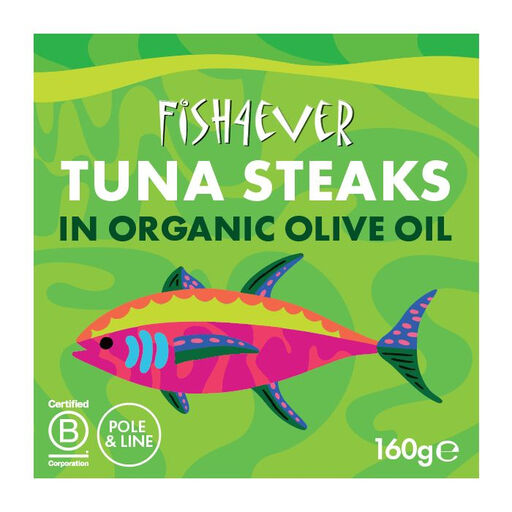 No image available
Consider this tin for a lunch where organic olive oil is the priority. Its listed ingredients are skipjack tuna (65%), organic olive oil (33.5%) and sea salt (1.5%); the organic-oil claim does not establish that the tuna is organic. Check the current label if fishing method matters to you. Refrigerate after opening and use within two days, as directed in the product information.
No. The wording identifies an organic ingredient, not necessarily an organic claim for the tuna or whole product. Ocado lists Fish4Ever examples with 33.5% and 17.5% organic ingredients; check the exact product's label and certification details if you need a broader claim.
A no-drain format removes the draining step; John West describes its no-drain spring-water tuna as suitable for use straight from the tin. Standard spring-water and olive-oil tins offer different packing media, so check the ingredients and drained weight of the pack you choose.
Follow the instructions on that product. The checked John West and Fish4Ever listings specify refrigeration and use within two days after opening; transfer leftovers to a covered non-metallic container where the label directs you to do so.
Fish is declared in the listed tuna ingredients. If you need to avoid an allergen, check the current label of the exact product rather than relying on a description of another pack.