Hosts serving guests with different dietary needs
Keep each soup’s packaging available so guests can check ingredients and allergens. Plan portions and heating around the products you choose and the equipment at the event.


Choose soup by the dietary requirements of the guests you expect, then check the current tin for its organic labelling, ingredients and allergens. A vegan bean soup may suit a plant-based menu; where gluten-free or dairy-free food is needed, choose a product with the relevant claim rather than relying on its organic status. Check servings, heating directions and storage instructions before planning quantities and service.
Keep each soup’s packaging available so guests can check ingredients and allergens. Plan portions and heating around the products you choose and the equipment at the event.
Check the current tin’s organic labelling rather than judging by its design or a brand name. Organic status does not answer questions about allergens or other dietary requirements.
Check vegan, gluten-free and dairy-free claims separately for each soup, alongside its ingredients and allergen information.
Start with the requirements that could rule out a soup for a guest; then work out quantities, heating and leftover handling from each tin’s instructions.
| Priority | What to check | Your needs |
|---|---|---|
| Organic claim | Check that the tin is labelled organic and look for its control-body information. UK organic food labelling rules described by the Department for Environment, Food & Rural Affairs require at least 95% of agricultural ingredients in food labelled organic to be organic. | I want the soup’s organic claim to be clear on the product I will serve, not just suggested by its packaging. |
| Dietary suitability | Read the current ingredients and allergen information. Check for the particular vegan, gluten-free or dairy-free claim a guest needs; organic does not establish any of these. | If a guest needs a free-from option, I need to identify the right tin before serving and keep its label available. |
| Portions | Compare can size with the product’s declared servings, where given. Ocado lists two servings for the 400 g RIFCo Sri Lankan Lentil & Coconut soup; that serving count does not apply to every 400 g tin. | There needs to be enough soup for the guests who want it, taking any accompaniments into account. |
| Heating and leftovers | Check the tin’s heating method against the equipment available. Follow its own instructions for transferring, refrigerating and using opened soup; storage periods can differ between products. | I need a way to heat the soup at the event and to identify and handle any leftovers correctly. |
Organic labelling addresses a different question from vegan status and allergen information. A soup could have an organic claim yet be unsuitable for a particular guest.
Check the physical tin for ingredients, declared allergens and any specific dietary claim the guest requires.
Can weight alone does not tell you how many servings a product declares. Ocado lists two servings for RIFCo Sri Lankan Lentil & Coconut Soup, but that is not a rule for other soups.
Use each product’s serving information and the rest of your menu when deciding how many tins to prepare.
Without the original packaging, guests may be unable to check which ingredients and allergens belong to a serving. Mixing soups also makes their different opened-product instructions harder to follow.
Keep labels available during service. Identify leftovers by product and opening time, and follow the relevant tin’s storage instructions.
Tesco Groceries lists a Free & Easy organic soup through a Marketplace seller. A listing does not replace the current tin when checking what will be served.
Confirm the exact product and seller before buying, then check the physical tin’s organic, ingredient and allergen information.
These are product-specific references for comparing labels and serving requirements, not a statement that every soup from these brands has the same properties.
Ocado lists Spicy Mixed Bean Soup, while Waitrose & Partners lists Tomato & Lentil Soup as an organic option.
Ocado lists RIFCo Organic Free From Sri Lankan Lentil & Coconut Soup.
Tesco Groceries lists Free & Easy Organic Lentil & Red Pepper Soup 400 g through a Marketplace seller.
These two bean-and-vegetable tinned soups provide can-size and ingredient details to check against your street-party plans. Confirm organic labelling, guest suitability and serving instructions on the tins before use.
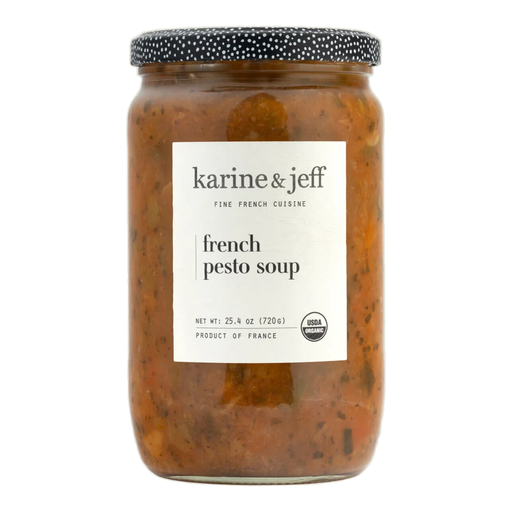 No image available
The 680g can contains white beans and vegetables, and the product description calls the recipe plant-based. It says the soup may contain wheat, soy and celery. Check the current tin’s organic control-body information, allergens, servings, heating directions and instructions for opened soup before planning service.
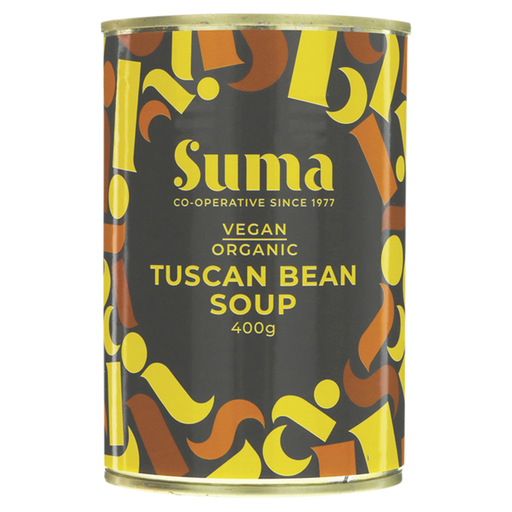 No image available
This 400g can contains beans and vegetables, with celery listed as an allergen. The product information says to transfer opened soup to a suitable container, refrigerate it and use it within two days. Check the current tin’s organic control-body information, dietary claims, servings and heating directions before serving.
Look for organic labelling and control-body information on the current tin. The Department for Environment, Food & Rural Affairs states that food labelled organic must meet organic production rules, including a requirement for at least 95% of its agricultural ingredients to be organic.
No. Check the current ingredients, allergen information and the exact dietary claim needed. For example, Ocado describes RIFCo Sri Lankan Lentil & Coconut Soup as gluten-free and dairy-free; its organic label alone would not establish either property.
Yes. Keep each product’s packaging available so its ingredients and allergens can be checked against the soup being served. The Food Standards Agency’s guidance for community events in England, Northern Ireland and Wales says food provided at events such as street parties must comply with food law and be safe to eat.
Follow the selected product’s instructions rather than applying one rule to every soup. The Mr Organic listings describe transferring opened soup to a non-metallic container and refrigerating it for up to 72 hours; the RIFCo listing specifies a non-metallic container and consumption within 24 hours. Check the current tin before storing leftovers.