Careful organic-label readers
You want to distinguish a claim about organic olive oil from a claim about the finished tuna product. That distinction matters if the word organic is the reason you are considering a particular tin.


For wild-caught tinned tuna, check what an organic claim applies to before choosing a tin: organic olive oil does not make the tuna itself organic. If responsible wild-fish sourcing matters most, look for the MSC ecolabel on the exact pack; then choose the format and packing medium that suit your BBQ dish. The Department for Environment, Food & Rural Affairs sets conditions for organic food labelling, while the Marine Stewardship Council's label concerns wild-seafood sourcing.
You want to distinguish a claim about organic olive oil from a claim about the finished tuna product. That distinction matters if the word organic is the reason you are considering a particular tin.
You are preparing salads, wraps or sharing dishes and want to check the wild-fish sustainability claim on the product you will serve, rather than relying on a brand-wide description.
You need a format that works in your chosen dish. Chunks, steaks, packing medium, drained quantity and instructions for opened tins can all affect preparation.
For summer BBQ dishes, establish what any organic wording covers, check wild-fish sourcing if it is a priority, and choose a tin that fits the way you will prepare and serve the tuna.
| Concern | What to check | Who this matters to |
|---|---|---|
| Scope of the organic claim | Read the product wording and ingredients to see whether organic refers to the finished product or to an ingredient such as olive oil. A whole-product organic claim must meet UK organic production and certification rules, according to the Department for Environment, Food & Rural Affairs. | For a BBQ salad, I want to know whether organic describes the fish or just the oil it comes in; about 45% of consumers put accurate organic claims first. |
| Wild-fish sourcing | Look for the MSC ecolabel on the exact tin if independently certified wild-seafood sourcing is your priority. Catch-method and traceability wording describes different attributes. | When serving wild-caught tuna to a group, I want to check its sourcing claim on the pack; roughly 33% of consumers make that their primary concern. |
| BBQ preparation | Match chunks or steaks and water, brine or oil to the dish. Compare drained weight where stated, and read the instructions for storing opened tuna. | If I am mixing a large salad or assembling a platter ahead of serving, the format and storage directions shape my choice; around 22% of consumers prioritise preparation practicality. |
The organic wording may describe an ingredient, not the wild-caught fish. Fish4Ever explains that organic production is a farming standard, and a Fish4Ever tuna product sold by Abel & Cole identifies its olive oil as organic.
Read the full product name, ingredients and certification wording. Choose tuna in organic oil if that ingredient is what you want, without treating it as a certified-organic-tuna claim.
Catch-method descriptions, traceability statements and the MSC ecolabel do not make identical claims. A claim shown for one product should not be carried over to another format or pack.
If wild-fish sustainability is your priority, check the exact tin for the MSC ecolabel and read its product-specific sourcing information.
Tuna packed in water, brine or oil can leave different amounts to use after draining. Chunks and steaks also suit different presentations.
Compare drained weight where shown. For a mixed salad, check the nutrition label on the relevant drained basis; for a platter, confirm that the product is the steak or fillet format you intend to serve.
Instructions for an unopened tin do not cover what to do once it has been opened. The storage directions can affect when you prepare a BBQ dish.
Follow the instructions on the tin you buy. Sainsbury's directs shoppers to transfer its tuna chunks in brine to a non-metallic container after opening, refrigerate them and use them within one day.
John West lists tuna chunks in brine with an MSC claim and also offers no-drain formats for dishes such as salads and wraps.
Princes lists chunks, steaks and other tinned-tuna formats. Its tuna steaks in spring water list tuna and spring water as ingredients.
Tesco lists own-label tuna chunks in spring water, brine and sunflower oil, as well as steak formats.
Sainsbury's lists an own-label tuna-chunks-in-brine multipack for preparing salads and other shared dishes.
These Joybuy choices cover tuna chunks for cold salads and wraps, plus a tuna-steak product whose listing calls for cooking. Choose the preparation format first, then check the exact pack for any organic or MSC claim that matters to you.
 Image unavailable
The chunks and six-pack format suit a mixed BBQ salad for a group. The product is packed in spring water; check the tin for its drained weight and any sourcing or organic claim you require. The supplied storage guidance calls for refrigeration after opening and use within two days.
 Image unavailable
The no-drain chunks offer a preparation option for salads or wraps when you want to open and mix in the tuna. The pack contains three 100g cans in spring water. Check this particular pack for its sourcing label or any organic claim; refrigerate opened tuna and follow its stated two-day use guidance.
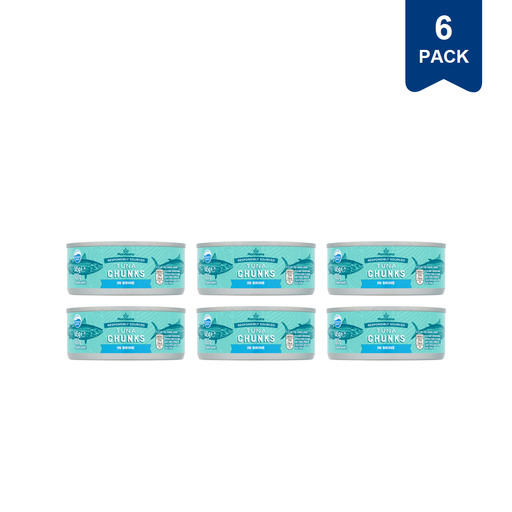 Image unavailable
This six-pack of brine-packed chunks is a format for mixing tuna through a shared salad or sandwich filling. Compare its drained weight and salt information on the pack if those details matter to your recipe. The supplied guidance warns that bones may remain and calls for refrigeration after opening and use within two days; check the pack for any organic or MSC claim.
 Image unavailable
The 160g tin offers spring-water chunks for a salad, wrap or sandwich filling. If comparing nutrition between tins, use the basis printed on each current pack rather than assuming the figures refer to drained tuna. The supplied information flags possible traces of soybeans and wheat and directs you to refrigerate opened contents and use them within two days; check the tin for the sourcing claim you need.
 Image unavailable
Consider this brine-packed steak format only if your BBQ plan includes cooking the tuna, rather than adding it straight to a cold salad. The supplied listing says to cook it thoroughly and not eat it raw; it also says the product is not suitable for children under four because of its texture. Refrigerate opened contents and use them within 24 hours, and check the exact pack for any sourcing or organic claim.
Being wild caught, responsibly sourced or packed in organic oil does not itself establish an organic claim for the tuna. The Department for Environment, Food & Rural Affairs says products labelled organic must meet organic production rules and certification requirements; organic aquaculture concerns farmed aquatic food, not a sustainability label for wild catch.
No. The organic wording can apply to the oil alone. Abel & Cole describes a Fish4Ever product as wild-caught skipjack tuna preserved in organic olive oil, so read the ingredient and certification wording before deciding what part of a product carries the claim.
Check the exact tin for the MSC ecolabel. The Marine Stewardship Council presents it as a wild-seafood sustainability label, not organic certification; a brand name or a sourcing statement on another product does not establish that your chosen tin carries it.
Follow the storage directions on the tin you buy and plan preparation around them. For its tuna chunks in brine, Sainsbury's directs shoppers to transfer opened contents to a non-metallic container, refrigerate them and use them within one day; another product may give different instructions.