Organic-ingredient lunch planners
If an organic claim is central to your choice, distinguish certification of an ingredient such as olive oil from a claim about the entire tuna product.


If organic ingredients matter most, check exactly what the organic claim covers: tuna packed in certified organic olive oil does not, by that wording alone, establish an organic claim for the whole product. For an office lunch, weigh that distinction against the packing liquid, portion size, draining needs and instructions for any leftovers.
If an organic claim is central to your choice, distinguish certification of an ingredient such as olive oil from a claim about the entire tuna product.
If you assemble salads, wraps or grain lunches at work, the portion size and whether a tin needs draining can affect how easily you use it.
If you choose between plain, oil-packed and flavoured tuna, compare the exact packs’ ingredients and per-100g nutrition figures rather than treating the formats as interchangeable.
Start with the claim that matters to you, then choose a tin you can use and store conveniently at work.
| Priority | What to check | Your needs |
|---|---|---|
| Organic claim | Read the precise claim and certification details. Defra’s UK organic food labelling guidance distinguishes requirements for labelling a food organic; certification of organic olive oil identifies a claim about that ingredient, not automatically the whole tuna product. | I want to know whether the organic claim applies to the oil or to the food as a whole. |
| Lunch preparation | Check the portion size, whether draining is required and the instructions for opened contents. Sainsbury’s describes its Dill & Pickle Tuna as ready to eat without draining; the Fish4Ever olive-oil product instructs users to refrigerate it after opening and consume it within two days. | There may be no convenient place to drain a tin at work, and I would rather not carry an opened remainder home. |
| Ingredients and nutrition | Compare packing liquid, added ingredients and fat, salt and protein on the exact packs, using the same per-100g or per-serving basis. Check drained weight where it is given. | I want the tuna and its packing liquid to suit the salad, wrap or grain lunch I am making. |
| Tuna during pregnancy | Account for tuna eaten across the week, regardless of its packing liquid or organic-ingredient claim. The NHS advises pregnant people to have no more than four cans of tuna or two tuna steaks a week. | If I am pregnant, several tuna lunches could count towards the same weekly limit. |
Pole-and-line fishing and organic certification describe different aspects of a product. Fish4Ever makes a pole-and-line claim for its skipjack tuna, while the Joybuy product information identifies the olive oil as organic.
Read the exact organic wording and the certification details before deciding what the claim covers.
The packing liquid and any added ingredients are part of what you buy, but may not be part of the tuna you use in a sandwich or salad.
Check the ingredients, drained weight where supplied, and nutrition figures on a comparable per-100g or per-serving basis.
An unopened tin can be stored differently from its opened contents. The Fish4Ever olive-oil product instructs users to refrigerate it after opening and consume it within two days.
Choose a portion you expect to use, or plan how you will keep any remainder chilled within the pack’s stated period.
An organic ingredient or a convenient format does not change the NHS advice to limit tuna during pregnancy.
If pregnant, count tuna eaten across meals against the NHS limit of four cans or two tuna steaks a week.
Its 160g skipjack tuna steak product is packed in olive oil identified as organic, making the exact scope of the claim worth checking.
A conventional format reference for lunches where draining is inconvenient.
A conventional tuna reference when comparing chunks and other packed-lunch formats.
An own-label reference for comparing tuna chunks and steaks, including spring-water formats.
An own-label reference for a flavoured tuna lunch that needs no draining.
These conventional spring-water and flavoured tuna options offer different ways to assemble an office lunch. If an organic claim is essential, check the exact claim and certification wording on the product you choose.
 No image available
The no-drain format suits a lunch assembled where draining a tin would be inconvenient. The pack contains three 100g tins; check its label for any organic claim if that is a requirement.
 No image available
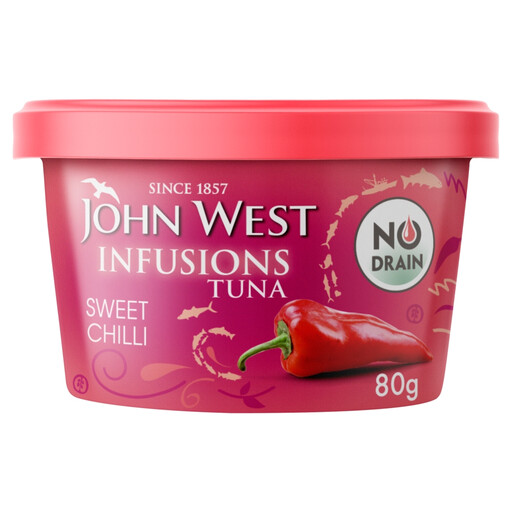
An 80g sweet chilli tuna option for a packed lunch. Check the ingredients and nutrition panel if choosing a flavoured tin, and confirm any organic claim on the pack.
 No image available
Six 145g tins provide portions for separate spring-water tuna lunches. Check the pack if draining at work is a concern, and assess any organic claim on its own wording.
Not by that wording alone. Joybuy’s Fish4Ever product information identifies its olive oil as organic and names Ecocert Portugal PT-Bio-02; check the full product claim before extending that description to the tuna or the food as a whole.
Follow the product’s storage instructions and keep prepared tuna chilled. The Fish4Ever olive-oil product instructs users to refrigerate it after opening and consume it within two days; a sealed container is practical if you prepare the lunch in advance.
Choose according to the meal and how you will prepare it: an olive-oil product brings oil into a salad or grain lunch, while a spring-water or no-drain format may suit a different recipe or a desk without a place to drain a tin. Compare the exact products’ ingredients and nutrition panels rather than assuming all tins in a format are alike.
The NHS advises pregnant people to have no more than four cans of tuna or two tuna steaks a week. Count tuna across meals; its packing liquid or an organic-ingredient claim does not change that limit.
Check the current pack’s full ingredient and allergen statement, including any flavourings or sauces. Tuna is fish, and additional ingredients vary between products.