For a UK second-home cupboard, choose tinned tuna as an organic product only when the exact product’s label and certification support that claim; organic olive oil in the tin does not, by itself, establish that the tuna product is organic. If an organic claim is not essential, compare tins by their unopened storage instructions, usable quantity and portion size, and check any fishery-sourcing label separately.
Who is this for?
Strict organic-label shoppers
You need the organic claim to apply to the food product, not just to its olive oil or another ingredient. UK organic-labelling rules from the Department for Environment, Food & Rural Affairs make certification an important check.
Second-home cupboard planners
You need tins that suit the time between visits, with unopened storage instructions and portion sizes that fit the people using the home.
Sourcing-focused tuna buyers
You are prepared to choose conventional tuna when its fishery-sourcing credentials meet your needs, while keeping those credentials distinct from an organic claim.
What matters when choosing?
Settle what you mean by organic before choosing a packing liquid or tin format: an organic ingredient, an organic product claim and an MSC fishery-sourcing label answer different questions.
| Concern |
What to check |
Who this matters to |
| Whole-product organic claim |
Check whether the exact product carries an organic claim supported by certification, rather than identifying only its olive oil as organic. |
If organic must apply to the tinned tuna product, an ingredient-level claim will not settle the choice. About 36% of consumers put whole-product organic status first. |
| Storage between visits |
Read the unopened storage directions and the instructions for any tuna left after opening. |
When visits are infrequent, I need tins I can store as directed and portions I can finish or refrigerate promptly. For about 29% of consumers, storage and avoiding opened leftovers are the primary concern. |
| Fishery sourcing |
Look for an MSC mark on the chosen product if that certification matters to you; assess brand-wide sourcing statements separately. |
If I am happy to buy conventional tuna, I still want to know what supports its sourcing claim. Fishery credentials come first for about 21% of consumers. |
| Usable quantity |
Compare the number of tins, tin size and stated drained weight, then match them to meals at the property. |
With only a few people visiting, a larger tin may leave more than we will use after opening. Roughly 14% of consumers make portion and pack fit their main priority. |
Buying pitfalls
-
Reading “organic olive oil” as “organic tuna”
The ingredients for a Fish4Ever tuna product listed by Abel & Cole identify the olive oil as produced to organic standards; that wording alone does not establish an organic claim for the tuna product.
If the whole product must be organic, check the exact label and certification information. Otherwise, describe the choice as tuna packed in organic olive oil.
-
Choosing a large pack without planning opened portions
Several unopened tins may suit a second-home cupboard, but the contents of a large tin may outlast a short visit. The ASDA tuna listing, for example, directs buyers to refrigerate unused contents after opening and use them within two days.
Match individual tin size to the meals you expect to make, and follow the chosen product’s storage instructions.
-
Treating fishery sourcing as organic certification
The Marine Stewardship Council’s tuna certification concerns fishery sourcing. It does not establish that a tinned tuna product meets UK organic-labelling requirements.
Check an MSC mark and any organic claim independently if both matter to your decision.
Brands to consider
John West
Tesco and Sainsbury’s list John West tinned tuna in spring water, brine and oil, alongside drained formats.
- Multipacks and no-drain formats give shoppers different portion and preparation options.
- Check the label of the exact tin for any organic or MSC claim; a brand listing does not establish either for every product.
Princes
Princes lists tuna chunks, steaks, drained tuna and sandwich tuna among its range.
- Princes says it has completed its commitment for all its tuna to be MSC certified; check the chosen tin for the product-level mark you require.
- That fishery-sourcing statement is not an organic claim.
Tesco
Tesco lists own-label and branded tinned tuna, including chunks, steaks and drained options in different packing liquids.
- Different pack formats let second-home shoppers match tins to planned meals.
- Check an individual product’s label before treating it as organic tuna.
Sainsbury’s
Sainsbury’s lists own-label tuna in spring water, brine, sunflower oil and olive oil, as well as branded multipacks.
- The listed packing liquids and pack formats offer choices for different recipes and household sizes.
- An oil variant should not be assumed to have a whole-product organic claim.
Asda
ASDA Groceries lists a 4 × 145g own-label skipjack tuna multipack in brine.
- Its product directions specify cool, dry storage before opening and refrigerated storage for unused contents.
- This listed product should not be treated as organic tuna without a supported claim on the exact label.
M&S
M&S lists tinned tuna chunks, steaks and larger formats, and says its fish is responsibly sourced and traceable.
- Its range includes different tin sizes for planning meals at the property.
- The brand’s sourcing statement does not establish an organic claim for a particular tuna product.
Tinned tuna selections on Joybuy
These tins offer spring-water formats for cupboard planning and one tuna-steak option packed in organic olive oil. Check the exact label if your requirement is an organic claim for the tinned tuna product.
 Image unavailable
Morrisons Fad Free Tuna Chunks in Spring Water, 6 × 145g
Six separate tins suit a cupboard stocked for several visits. The product information directs unopened tins to be kept cool and dry; transfer unused tuna to a non-metallic container, refrigerate it and use it within two days of opening. Check the exact label if whole-product organic status is essential.
Joybuy
 Image unavailable
John West Tuna Chunks in Springwater, 4 × 125g
This four-tin pack is an option when meals call for separate 125g cans. The product information specifies cool, dry storage before opening; refrigerate unused tuna and liquid in a non-metallic container and consume within two days. Check organic and sourcing claims on this exact product if either is a requirement.
Joybuy
 Image unavailable
John West No Drain Tuna Chunks in Springwater, 3 × 100g
Three 100g no-drain tins may suit visits when smaller individual portions are useful. The product information says to store unopened tins in a cupboard and to refrigerate any leftovers, consuming them within two days. The no-drain description is not an organic or fishery-certification claim.
Joybuy
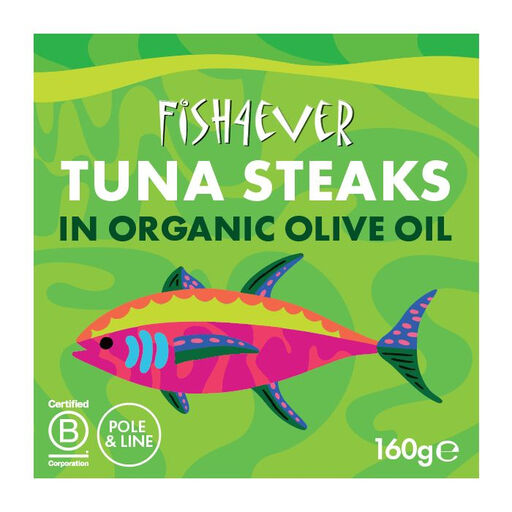 Image unavailable
Fish4ever Tuna Steaks in Organic Olive Oil, 160g
Choose this single tin if tuna packed in organic olive oil meets your requirement. The product information identifies the oil as organic, not the tuna product as a whole; check its label and certification if whole-product organic status matters. Store unopened in a cool, dry place, and refrigerate and consume leftovers within two days.
Joybuy
 Image unavailable
Morrisons Fad Free Tuna Chunks in Spring Water, 145g
A single 145g tin lets you stock a smaller quantity for an occasional visit. Keep it cool and dry before opening; move unused contents to a non-metallic container, refrigerate and consume within two days. Check the exact label if you need an organic product claim.
Joybuy
Common questions
Does organic olive oil make a tin of tuna organic?
No: organic wording for the olive oil alone does not establish an organic claim for the tinned tuna product. UK rules published by the Department for Environment, Food & Rural Affairs require the product and suppliers to meet the applicable certification requirements before the product is labelled organic. Check the exact product label rather than relying on the packing-oil description.
How should I store tinned tuna at a second home?
Follow the directions on the tins you buy. For example, ASDA Groceries directs buyers of its listed tuna chunks to store unopened tins in a cool, dry place, then transfer unused contents to a suitable non-metallic container, cover and refrigerate them, and use them within two days.
Does an MSC label mean tuna is organic?
No. The Marine Stewardship Council’s certification addresses fishery sourcing, while UK organic-labelling rules govern organic claims. If both matter, check the chosen tin for each claim separately.


