For a gym-bag snack, choose an organic yoghurt whose storage instructions you can follow until you eat it. If protein per 100g matters most, compare plain strained yoghurts and plan how to portion and chill a larger pot; if carrying a ready-made portion matters more, an organic fruit multipack may be easier to pack, but check its sugars and protein rather than assuming the two formats are nutritionally alike. If you cannot keep a yoghurt that requires refrigeration chilled, choose a different snack for that journey.
Who is this choice for?
Gym-goers comparing protein
If yoghurt is part of your snack around training, compare protein per 100g on the exact pots you are considering. A larger plain strained pot also needs portioning if you do not want to carry the whole tub, and its refrigeration instructions still apply.
People who prefer individual pots
A multipack avoids decanting yoghurt before you leave. Check the nutrition panel and storage directions for that particular fruit yoghurt: an organic claim does not tell you its sugars or protein content.
Shoppers who require organic yoghurt
Check the organic wording and certification details for the exact product. A familiar brand name, or descriptions such as natural and live, cannot establish the organic status of every yoghurt in a range.
What should you check before buying?
Start with the exact product’s organic claim and storage directions. Then compare nutrition in the same units and decide whether its portion is practical to carry.
| Priority |
What to check |
Your needs |
| Organic status |
Read the exact pack’s organic claim and certification details. Defra’s guidance for Great Britain explains the certification requirements; natural or live wording is not a substitute for checking the product. |
I want the particular yoghurt I buy to meet my organic requirement, not just to come from a brand I recognise. |
| Protein |
Compare protein per 100g, then consider how much you will actually pack. Tesco Groceries lists 10.0g per 100g for Yeo Valley Organic 0% Greek Recipe Yogurt; Sainsbury’s lists 3.4g per 100g for Rachel’s Organic Luscious Fruit Multipack. |
If protein is a reason for choosing yoghurt, I need the figure for my chosen product and a portion I can carry. |
| Sugars and fat |
Use the per-100g panel and the pot size rather than the organic claim alone. Tesco Groceries lists 3.5g sugars per 100g for the Yeo Valley 0% Greek Recipe yoghurt, while Sainsbury’s lists 12.5g per 100g for the Rachel’s fruit multipack; check fat and saturates on the exact pack too. |
For a fruit or whole-milk yoghurt, I want to know what is in the portion I will eat, not make assumptions from its flavour or front label. |
| Storage |
Read the product’s storage instructions and plan the journey from fridge to eating. Tesco Groceries states that its listed Yeo Valley organic yoghurts must be kept refrigerated; an insulated bag needs an appropriate cold source if you use one to carry chilled yoghurt. |
Will I have a way to keep this yoghurt chilled while it is in my gym bag? If not, I need a different snack for the journey. |
| Portion and container |
Compare an individual pot with the work of portioning a larger tub. The listed Rachel’s pack contains four 110g pots; the listed Yeo Valley strained and natural yoghurts come in 450g and 950g tubs respectively. |
I would rather take a ready-portioned pot, or I am happy to transfer yoghurt into a clean, sealed container before leaving. |
What can make a gym-bag yoghurt impractical?
-
Assuming organic tells you the nutrition
Organic status does not give yoghurt a fixed protein or sugar content. The listed Rachel’s fruit multipack has 3.4g protein and 12.5g sugars per 100g, while Tesco Groceries lists 10.0g protein and 3.5g sugars per 100g for the Yeo Valley 0% Greek Recipe yoghurt.
Decide which nutrition figures matter to your choice, then compare the exact products per 100g and per portion.
-
Treating refrigerated yoghurt as a cupboard snack
The listed Yeo Valley yoghurts say to keep them refrigerated. Putting a pot in a gym bag does not meet that instruction.
Plan chilled transport with an appropriate cold source, or take another snack when you cannot keep the yoghurt chilled.
-
Choosing a large tub without planning a portion
The listed Yeo Valley strained yoghurt is a 450g pot and its natural yoghurt is a 950g tub. Neither is an individual gym-bag portion.
Transfer the amount you want into a clean, sealed container and keep it chilled, or choose a suitable individual pot.
-
Assuming every product from a familiar brand is organic
Natural, low-fat and high-protein descriptions do not establish an organic claim for a particular yoghurt.
Check the exact product’s organic wording and certification details before buying it to meet an organic requirement.
Which brands are useful to compare?
These references help you check particular yoghurts and product ranges; a brand’s inclusion does not mean every product it makes is organic.
Yeo Valley Organic
Tesco Groceries lists both an organic natural yoghurt and an organic 0% Greek Recipe yoghurt from Yeo Valley.
- The listed 0% Greek Recipe yoghurt has 10.0g protein and 3.5g sugars per 100g; the natural yoghurt lists organic whole milk and live cultures as its two ingredients.
- The listed products are 450g and 950g pots that must be refrigerated, so consider how you will carry a portion.
Rachel’s Organic
Rachel’s Organic describes an organic yoghurt range, and Sainsbury’s lists its Luscious Fruit Multipack as four 110g pots.
- Individual pots avoid decanting from a larger tub.
- Sainsbury’s lists 12.5g sugars and 3.4g protein per 100g for this fruit multipack; do not treat its nutrition as equivalent to that of a plain strained yoghurt.
Tesco
Tesco Groceries’ product listings provide pack sizes, ingredients, nutrition panels and storage wording for the Yeo Valley products discussed here.
- The listings let you compare the named natural and strained yoghurts in the same per-100g units.
- Read the pack you buy, as product information can change.
Onken
Onken’s Natural yoghurt is a comparison to consider if organic status is not essential to your choice.
- Onken describes the product as whole-milk yoghurt with no added sugar and lists 4.5g protein per 100g.
- Its natural and no-added-sugar descriptions do not establish an organic claim for that product; check the exact pack if organic status matters.
Müller
Müller’s UK range includes Corner, Light and high-protein yoghurt products.
- The range offers different formats and nutrition panels to compare when choosing a yoghurt snack.
- Low-fat or high-protein wording does not establish that a particular Müller yoghurt is organic.
Activia
Activia’s UK range includes natural yoghurt, 0% fat products, kefir and pots in several formats.
- Its range gives shoppers different formats to check against their portion and storage needs.
- A product’s range or culture description does not establish organic status; check the exact yoghurt.
Joybuy yoghurt option
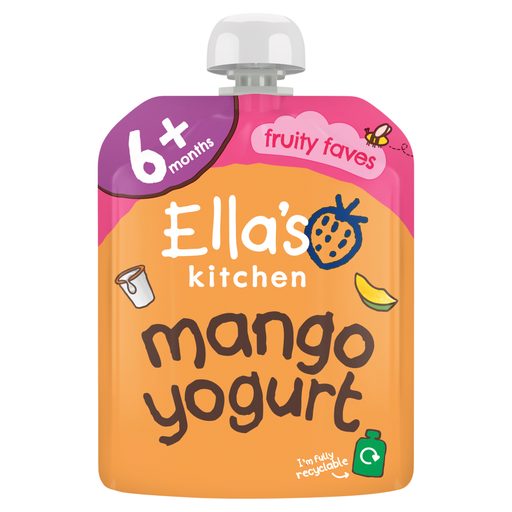
The Joybuy option here is a 90g organic-labelled yoghurt pouch intended for babies aged 6+ months. It is a different format from the larger chilled yoghurts considered above, so check its intended use, organic details and own storage directions for your gym-bag plans.
 No image available
Ella’s Kitchen Organic Mango Greek Style Yoghurt Pouch, 6+ Months, 90g
The 90g pouch is already portioned, but it is presented for babies aged 6+ months rather than specifically as a gym snack. Check the exact pack’s organic certification details and directions before relying on it for that use. It contains milk; after opening, refrigerate any unused portion for up to 24 hours.
View on Joybuy
Common questions
How can I check whether a yoghurt is organic?
Check the organic claim and certification details for the exact product on its pack. Defra’s guidance for Great Britain explains organic food certification; descriptions such as natural or live, and the brand name alone, do not answer the question for a particular yoghurt.
Can I carry organic yoghurt in a gym bag without a cold source?
Follow that product’s storage instructions rather than assuming organic yoghurt can travel at room temperature. Tesco Groceries states that its listed Yeo Valley organic yoghurts must be kept refrigerated. If you cannot keep a refrigerated yoghurt chilled until you eat it, take a different snack.
Does organic fruit yoghurt contain less sugar than plain yoghurt?
Not necessarily: compare the exact nutrition panels per 100g and the portions you will eat. Sainsbury’s lists 12.5g sugars per 100g for Rachel’s Organic Luscious Fruit Multipack, while Tesco Groceries lists 3.5g per 100g for Yeo Valley Organic 0% Greek Recipe Yogurt.
Does organic mean a yoghurt is free from milk?
No. The listed Yeo Valley and Rachel’s organic yoghurts contain milk. If you need to avoid an ingredient, check the ingredients and allergen statement on the exact pack rather than using its organic claim as a guide.
Does no added sugar mean a yoghurt contains no sugar?
No. Yoghurt can contain naturally occurring lactose even when no sugar has been added. Read the sugars figure in the nutrition panel and consider the size of the portion you will eat.


