Families packing snacks for outings
Individual pots or pouches are pre-portioned, but check the ingredients and whether you can follow the pack’s chilled-storage instructions while away from home.


For half term snacks, a plain organic tub suits portions served at home, while a no-added-sugar child portion can be easier to pack if you can keep it chilled. Compare flavoured organic pots separately: an organic claim does not tell you whether sugar has been added. Check the ingredients, sugars per 100g and per pot, milk allergen declaration and storage instructions before choosing.
Where the snack will be eaten helps narrow the choice between a family tub and individual portions.
Individual pots or pouches are pre-portioned, but check the ingredients and whether you can follow the pack’s chilled-storage instructions while away from home.
Plain organic yoghurt and products labelled no added sugar are different starting points from flavoured recipes. Read the ingredients as well as the sugars figure, which can include naturally occurring sugars.
A larger natural yoghurt tub can be spooned into bowls and served with whole fruit if wanted. Check its ingredients, nutrition information and instructions for use after opening.
Start with the organic claim and ingredients, then compare the serving format against where the snack will be eaten.
| Priority | What to check | Your needs |
|---|---|---|
| Organic claim | Look for an explicit organic claim and the pack’s certification details. UK Department for Environment, Food & Rural Affairs guidance dated 20 August 2025 distinguishes organic labelling from general descriptions such as natural. | I’m choosing organic yoghurt, so a natural-sounding product name alone is not enough. |
| Ingredients and sugars | Check for added sugar and fruit purée in the ingredients. Compare the nutrition figures per 100g and per pot on the same basis; the total sugars figure alone does not distinguish added sugar from naturally occurring lactose. | If I want a plain or no-added-sugar snack, I’ll check the exact flavour rather than assume every organic pot has the same recipe. |
| Portion and storage | Check the pot, pouch or tub size, chilled-storage instructions and directions for use after opening. A tub needs a bowl or separate container for serving away from home. | For a day out, a pre-portioned pack may be easier to carry, provided I can keep it as the label directs. At home, I can portion a larger tub myself. |
| Milk and alternatives | Read the milk allergen declaration. If choosing a dairy-free yoghurt, University Hospitals Birmingham NHS Foundation Trust advises checking its label for calcium fortification. | Where a child avoids dairy, I need to check the exact product against their dietary requirements rather than assume an organic dairy yoghurt is suitable. |
Organic and no-added-sugar claims answer different questions. Tesco lists 3% organic sugar in the ingredients for Yeo Valley Organic Little Yeos Fruity Favourites.
Check the ingredients for the exact flavour, then compare its sugars per 100g and per pot with a plain or no-added-sugar option.
Plain yoghurt contains naturally occurring lactose; a total sugars figure does not identify how much sugar comes from each ingredient. NHS guidance treats the sugars in plain yoghurt differently from sugars families are advised to cut down on.
Read the ingredients alongside the nutrition panel. If you choose plain yoghurt, whole fruit can be added when serving.
Individual pots are convenient to portion, but the Yeo Valley Organic Little Yeos example sold by Tesco still needs refrigeration.
Check the pack’s storage instructions before taking it out, and compare its recipe with a natural tub if you will be serving snacks at home.
The dairy yoghurt examples declare milk. Organic labelling does not change that allergen declaration.
Check the exact label if a child avoids milk and follow their existing professional dietary advice. For a dairy-free alternative, check whether the label states that it is calcium-fortified.
These examples show why the exact product label matters more than the brand name when comparing organic claims, ingredients and pack formats.
Its listed organic yoghurts include a natural 950g tub, no-added-sugar Little Yeos portions and flavoured child pots.
Rachel's Organic describes a range that includes natural and multipack yoghurts.
Tesco’s yoghurt listings provide product-specific ingredients, nutrition and storage information for comparing formats.
Onken Natural 1kg offers a natural-yoghurt label comparison, not an organic claim to rely on.
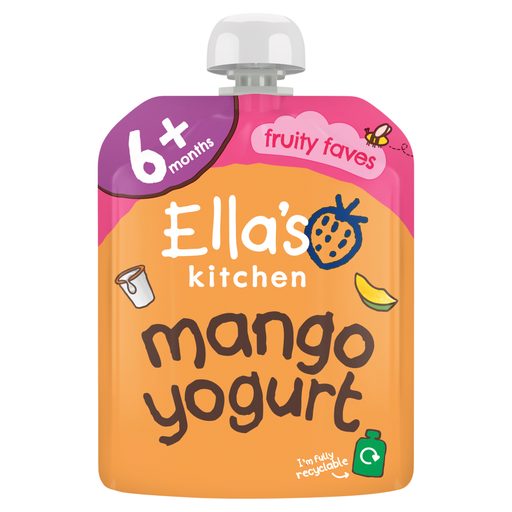
This 90g mango yoghurt pouch is a pre-portioned option for a half term snack; check its organic labelling on the pack and plan to serve it from a spoon or bowl.
 No image available
The pouch format may suit a snack away from home if you can follow its storage and serving directions. It is labelled for ages 6+ months and declares milk; check the pack’s organic certification and ingredients. The listing directs you to serve it from a spoon or bowl, refrigerate any unused portion after opening and use it within 24 hours. Keep the cap away from children under 36 months.
Look for an explicit organic claim and check the product’s labelling details, rather than relying on words such as natural or farm. For the UK, Department for Environment, Food & Rural Affairs guidance dated 20 August 2025 says organic labelling requires organic production rules to be met and certification by an approved organic control body.
No. Tesco lists 3% organic sugar in Yeo Valley Organic Little Yeos Fruity Favourites, while its Little Yeos No Added Sugar pack carries a separate no-added-sugar claim. Check the ingredients and nutrition information for the exact product.
A plain tub is practical when you can portion yoghurt into bowls at home or take a suitable container. Check its ingredients and after-opening instructions; NHS sugar guidance says families do not need to worry about the sugars in plain yoghurt in the same way as sugars they are advised to cut down on.
Read both ingredient lists, then compare nutrition figures on the same basis, such as per 100g, and check the stated amount per pot. NHS food-labelling guidance explains that pre-packed foods provide nutrition information per 100g or 100ml, sometimes with a per-portion figure too.
Follow the chilled-storage instructions on the exact pack and check what to do with any opened portion. Tesco lists refrigeration instructions for both the Yeo Valley Natural 950g tub and Little Yeos portions, so a small pot should not be assumed to be suitable for unrefrigerated carrying.