Who is each style for?
The useful distinction at breakfast is between a plain green-tea cup and a blend whose additional ingredients you actively want.
Breakfast-tea switchers seeking organic green tea
If you are alternating with black breakfast tea but want a lighter flavour beside eggs, beans and toast, start by checking a plain green tea’s exact organic label and ingredient list. It will not have the same malty character as traditional breakfast tea.
Drinkers who prefer added flavours
A matcha-green blend is worth considering if you welcome other flavours with a savoury meal. Read the exact ingredients: Pukka’s Mint Matcha Green, for example, includes mint as well as green tea and matcha.
People following iron-deficiency dietary advice
Tea timing matters independently of brand or organic status. In its guidance for iron deficiency anaemia, University Hospitals Coventry and Warwickshire NHS Trust advises not drinking tea within one hour before or after meals.
What should you check?
Check organic labelling on the exact tea first, then choose its flavour style and follow that product’s brewing instructions.
| Priority |
What to check |
Your needs |
| Organic status |
Look for an organic claim on the exact pack or product listing, not just a brand-range description. Defra’s UK organic-food labelling guidance says the product and its suppliers must be certified by an approved organic control body for the product to be labelled organic. |
I want the green tea I buy—not merely another tea from the same brand—to meet my organic requirement. |
| Flavour style |
Compare ingredient lists for plain green tea and blends. Clipper lists green tea as the ingredient in its Organic & Fairtrade product; Pukka’s Mint Matcha Green includes mint, sencha and matcha. |
A restrained cup may suit me beside a savoury breakfast, or I may prefer the added flavours of a blend. |
| Brewing |
Follow the instructions for the exact product. For Clipper Organic & Fairtrade Green Tea, Tesco’s product information says to leave boiled water to cool for a minute and infuse for 1–3 minutes. |
I want a brewing routine that fits breakfast without assuming green tea uses the same instructions as my usual black tea. |
| Tea with meals |
For iron deficiency anaemia, University Hospitals Coventry and Warwickshire NHS Trust advises avoiding tea within one hour before or after meals in its dietary guidance. |
If I am following iron-deficiency dietary advice, the timing of tea around breakfast matters more than the brand I choose. |
Brand and product references
Brand ranges can contain different teas, so use these references to identify the exact product or blend you want to check.
Clipper
Clipper Organic & Fairtrade Green Tea is a plain-tea option: Clipper lists its ingredient as green tea, and its tea-shop listing describes the product as light and delicate.
- The product is explicitly presented as organic, with organically grown green tea listed in the tea-shop ingredients.
- A light green tea will not reproduce the malty flavour associated with black breakfast tea.
Pukka
Pukka states that all its products are certified organic. Its named green-tea blends offer an alternative to a leaf-only cup.
- Mint Matcha Green includes mint, sencha and matcha; Supreme Matcha Green combines several green teas with matcha.
- Check the exact blend’s ingredients if you do not want additional flavours with breakfast.
Twinings
Twinings says the Soil Association checks its organic teas and infusions in the UK. That range-level statement should not be applied automatically to every Twinings green tea.
- The brand describes a separately identified organic range.
- Its Pure Green Tea product information identifies green tea but does not identify that exact product as organic; check the pack if organic status is essential.
Tesco
Tesco’s own-brand Green Tea 20 Pack is a separate product reference when comparing green-tea listings, not an organic-labelled choice on the cited product information.
- Its listing describes tea bags made from plant-based compostable materials.
- Packaging information does not establish organic status; check the exact tea’s labelling before using it to meet an organic requirement.
Pukka matcha-green teas on Joybuy
These Pukka options are matcha-green blends for shoppers considering added flavours with breakfast, rather than the plain-green-tea route. Pukka states that its products are certified organic; check the organic labelling and ingredients on the exact pack you choose.
 No image available
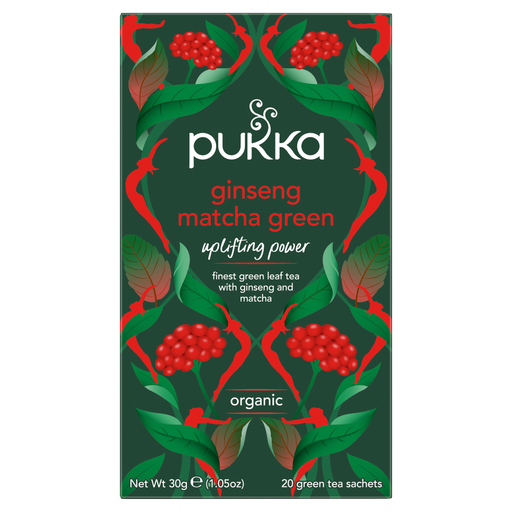
Pukka Ginseng Matcha Green 30g
Consider this matcha-green blend if you want something other than plain tea beside breakfast. It is the 30g Ginseng Matcha Green variant; check the pack’s full ingredients and brewing instructions to see whether it suits your meal.
View on Joybuy
 No image available
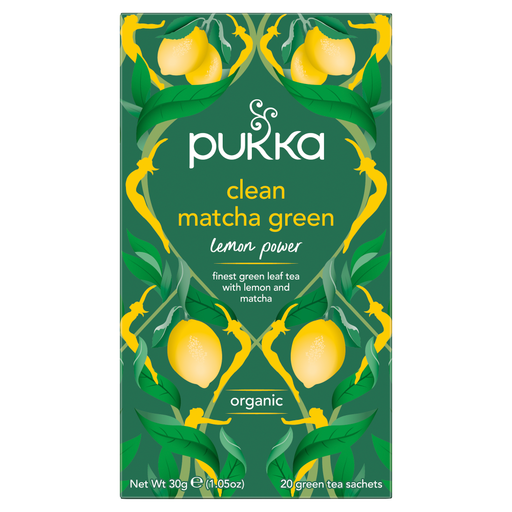
Pukka Clean Matcha Green 30g
This is another matcha-green blend to consider if a plain green-tea cup is not what you want with breakfast. The title identifies the 30g Clean Matcha Green variant; compare its exact ingredients and brewing instructions with the flavours you prefer.
View on Joybuy
Questions about organic green tea
How can I check whether a green tea is organic in the UK?
Check the organic labelling on the exact product, rather than relying on a brand’s general range description or another badge. Defra’s UK organic-food labelling guidance says that a product and its suppliers must be certified by an approved organic control body for the product to be labelled organic.
Should I choose plain green tea or a blend with a Full English?
Choose plain organic green tea if you want a cup without added flavours beside the savoury meal. If you prefer additional flavours, check the blend: Pukka’s Mint Matcha Green, for example, includes mint, sencha and matcha.
How should I brew organic green tea for breakfast?
Use the instructions for the exact tea. Tesco’s listing for Clipper Organic & Fairtrade Green Tea says to leave boiled water to cool for a minute, then infuse the tea for 1–3 minutes; do not assume those directions apply to every green-tea blend.
Does tea timing matter for iron deficiency anaemia?
Yes, in the dietary guidance from University Hospitals Coventry and Warwickshire NHS Trust: it says tea or coffee with a meal can greatly decrease iron absorption and advises avoiding either drink within one hour before or after meals. Follow any different advice given by your clinician or dietitian.


