
24/7 Customer Support

Free returns

Same-day & Next-day Delivery

Quality Guaranteed

Unlock Your Welcome Offers: FREE Delivery | Up to 80% OFF | Free 30-day JoyPlus trial
Download the APP
Choosing the right bed for your dog is more than just a matter of comfort; it's an investment in their health and well-being. The market is flooded with options, and the term "orthopaedic" is often used loosely. Many well-meaning owners in the UK find themselves with a product that flattens in months or is impossible to keep clean, ultimately wasting money and failing to provide the support their companion needs.
Before you make a decision, it's crucial to understand the common pitfalls. Many beds feature invitingly plush surfaces that conceal a flimsy, unsupportive filling. Others are advertised as washable, but in reality, only a thin cover can be cleaned, leaving the core to accumulate dirt and odours. A third common issue is the "one-size-fits-all" approach, which rarely provides the specific support needed for a senior dog with arthritis or a large, heavy breed.
This guide will help you navigate these challenges by breaking down the essential features to look for, ensuring you select a bed that truly benefits your dog.
The term "orthopaedic" implies support for the joints and skeleton. For a dog bed, this is determined almost entirely by its core material. Simply being soft is not enough.
A dog bed can become a hub for dirt, fur and allergens. Proper hygiene is essential, but "washable" can be a misleading term.
A truly practical washable dog bed should feature a dog bed with removable cover. Look for sturdy zips that allow you to easily take the cover off for machine washing. A bed where the entire unit must be washed is often too bulky for a standard UK washing machine and can take days to dry, risking mildew. The inner foam core itself is typically not washable, so a protective, easily cleaned outer layer is non-negotiable for long-term use.
Beyond the core materials, the overall design contributes significantly to a dog's comfort and sense of well-being.
Many dogs, particularly those prone to nervousness, appreciate a bed with raised edges. A dog sofa bed style with high bolsters provides a place for them to rest their head and creates a den-like enclosure. This sense of security can make it an effective calming dog bed or anti-anxiety dog bed. For safety and stability, especially on hardwood or laminate flooring, a non-slip base is also a crucial feature to prevent the bed from sliding when your dog gets in and out.
To help you choose, we've matched some products to common owner profiles, focusing on how they address the key considerations of support, practicality and design.
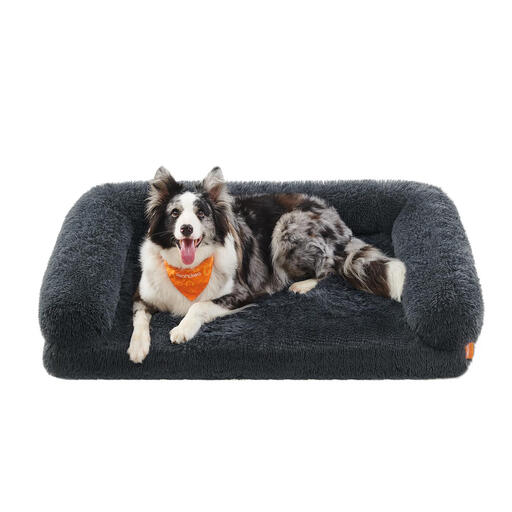
Why This Fits Their Persona: This owner needs a robust, genuinely supportive bed for a dog with joint issues or a heavy frame. Their priority is long-term health and comfort over superficial features. This large dog bed is designed specifically for this purpose.
It uses orthopaedic egg carton foam as its core, directly countering the pitfall of beds with unsupportive, fluffy filling. This provides true joint relief rather than just a soft surface.
The entire outer cover is removable via a zip for easy machine washing. The high edges provide excellent head and neck support, ideal for larger dogs.

Why This Fits Their Persona: This owner has a dog that benefits from a secure, enclosed space. They are looking for a bed that not only offers physical comfort but also helps soothe their pet's anxiety.
While it has a very plush, inviting surface, it doesn't sacrifice support. The base contains egg-crate foam to promote spinal alignment, avoiding the trap of plush tops hiding flimsy construction.
The combination of a fluffy faux fur cover and a supportive foam base is designed to have a calming effect. It also features a fully removable, machine-washable cover and a non-slip base.
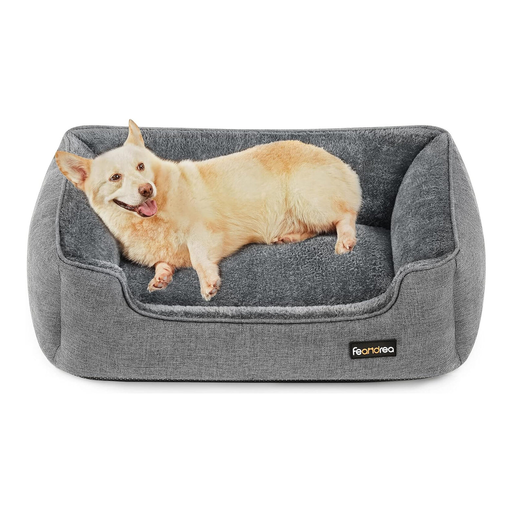
Why This Fits Their Persona: The owner of a medium-sized dog wants a durable, comfortable and practical bed without needing the highest level of specialised orthopaedic support. Easy cleaning and a secure design are their main priorities.
It directly solves the "unwashable" bed problem. The cover is fully removable with two zips, making it simple to machine wash for proper hygiene, unlike beds where only a small part is cleanable.
The high, soft edge provides a sofa-like feel for security and head support. It also features a non-slip rubber dot base to keep it stable on smooth floors.
We have compiled a complete, real-time list of products that fully satisfy these strict selection criteria and UK safety regulations.
While any dog can benefit from a supportive bed, certain signs indicate a greater need. Look for stiffness when getting up, reluctance to jump or use stairs, lagging behind on walks or favouring one limb. Senior dogs, large breeds prone to joint issues (like Labradors and German Shepherds) and dogs recovering from injury will particularly benefit from the enhanced support.
Always follow the manufacturer's care label. Generally, it is advisable to machine wash the cover in cold water on a gentle cycle using a mild, pet-safe detergent. To prolong its life, you can air dry the cover or use a dryer on a low heat setting. Ensure the cover is completely dry before reassembling the bed to prevent mildew.
The lifespan of an orthopaedic dog bed depends on the quality of the foam and the size and activity level of your dog. A high-quality foam base should resist flattening and provide consistent support for several years. A bed with a cheap, low-density filling may lose its shape and support in under a year. Regularly inspecting the bed for sagging or damage is a good way to know when it's time for a replacement.