
24/7 Customer Support

Free returns

Same-day & Next-day Delivery

Quality Guaranteed

Unlock Your Welcome Offers: FREE Delivery | Up to 80% OFF | Free 30-day JoyPlus trial
Download the APP
Outdoor decorative string lights can transform a patio, balcony, garden fence or wedding venue with relatively little effort. However, attractive product photos do not always reveal whether a light set is suitable for British weather, large spaces or regular seasonal use.
Before buying, look beyond bulb count and promotional wording. The most useful comparison points are weather protection, power source, cable length, bulb construction and replacement options.
Terms such as “weatherproof” and “water-resistant” can be used broadly. Check the product’s IP rating and read what it covers. An IP65 rating generally indicates protection against dust and water jets, but it does not mean the lights or control box should be submerged. Connections may still need protection from puddles and direct water exposure.
For covered patios, IP44 G40 outdoor string lights may be suitable when positioned away from standing water. More exposed garden installations may benefit from a higher-rated option, such as IP65, provided the manufacturer’s instructions are followed.
A high LED count does not automatically mean stronger or more useful illumination. A short strand with closely spaced micro LEDs creates a different effect from long patio string lights with larger G40 bulbs. Consider the total length, bulb spacing and intended role:
Solar string lights reduce the need for sockets and extension cables, but charging depends on available daylight. Battery-operated string lights offer flexible placement, although batteries require periodic replacement. Plug-in connectable string lights can cover larger spaces, but buyers must respect the stated connection limit and protect outdoor joins.
Also check whether bulbs are replaceable, whether a timer or dimmer is included and whether the solar panel or battery compartment can be accessed easily.
For outdoor decorative string lights, identify the IP rating for the complete product and note any separate guidance for the plug, transformer, solar panel or battery compartment. Keep electrical connections off the ground where possible, avoid direct submersion and do not place lights close to open flames or high-heat sources.
A CE or RoHS label may appear on products sold in the UK, but this should not replace sensible installation. Follow the supplied instructions, use outdoor-rated accessories where needed and disconnect mains-powered lights when not in use.
Measure the area before ordering. A 45-metre strand can suit a large garden, marquee or event layout, while a 4- or 5-metre strand may work better for a mantelpiece, wreath or small balcony.
Connectable string lights are useful for larger installations, but the maximum connection limit matters. For example, some Vivreal G40 sets support expansion up to 500 bulbs. This is a product specification, not permission to exceed the stated limit. Overloading can create a safety risk.
Choose the power type according to where the lights will be used:
A timer can reduce unnecessary running time. Dimmable string lights also allow users to lower brightness for dining or increase visibility during gatherings, subject to compatibility with the supplied controller or dimmer.

Why This Fits Their Persona: A 20-metre strand provides practical coverage for a balcony, small patio, fence or covered garden seating area without immediately committing to a very long installation.
The listing specifies 23 shatter-resistant G40 LED bulbs, replaceable bulbs, dimmable brightness and an IP44 outdoor rating, making the key limitations easier to assess before purchase.
20 m length; connectable design supporting up to 500 bulbs; replaceable LED bulbs.

Why This Fits Their Persona: This longer format suits homeowners, venue stylists and organisers who want one coordinated lighting layout across a substantial patio, garden or event area.
Its listed IP65 rating and shatter-resistant bulbs address two common concerns: exposure to rain and fragile glass-style bulbs. Direct submersion should still be avoided.
45 m coverage; 75 warm white replaceable LED bulbs; connectable up to 500 bulbs.

Why This Fits Their Persona: Garden owners who want cordless lighting for trees, railings, fences or borders can arrange two flexible strands without routing a mains cable.
The stated charging requirement is 6–8 hours of direct sunlight, with an estimated 8–14 hours of illumination. This makes the daylight dependency clear rather than hiding it.
Two 12 m strands; 120 warm white LEDs per strand; eight modes and IP65 protection.
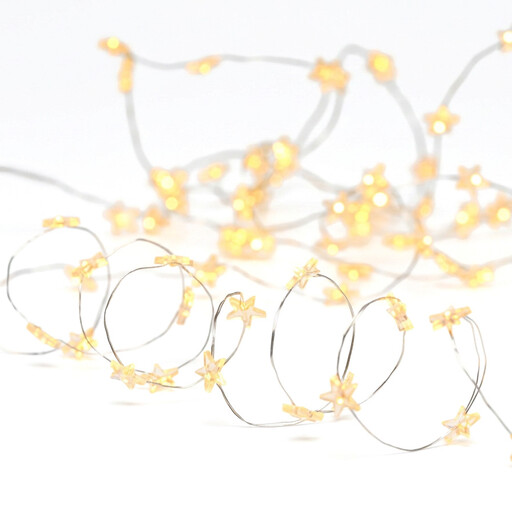
Why This Fits Their Persona: A flexible accent strand is suitable for wreaths, garlands, staircases, table displays and seasonal window decoration, indoors or outdoors as directed.
The product details specify a 6-hours-on/18-hours-off timer and warn that the battery compartment must remain closed outdoors, helping prevent avoidable running and weather-related issues.
80 warm white star LEDs; 4 m lit length; flexible silver wire and timer control.
We have compiled a complete, real-time list of products that fully satisfy these strict selection criteria and UK safety regulations.
Running cost depends on the power source, wattage, usage time and electricity tariff. LED lights generally use less electricity than comparable traditional bulbs, but the exact cost varies by product. Solar lights use stored solar energy, while battery-operated string lights shift the ongoing cost to replacement batteries.
Only use lights with an outdoor-suitable rating and follow the manufacturer’s instructions. IP-rated products should not be submerged, and plugs, connectors, solar panels and battery boxes may have separate restrictions. For winter storage or severe weather, bringing removable components indoors can help protect them.
Lifespan depends on bulb quality, weather exposure, installation tension, operating hours and storage. Shatterproof bulb lights, replaceable LED bulbs and careful handling can make ongoing maintenance easier. Check whether spare bulbs are included or available before buying, particularly for large patio and garden installations.