
24/7 Customer Support

Free returns

Same-day & Next-day Delivery

Quality Guaranteed

Unlock Your Welcome Offers: FREE Delivery | Up to 80% OFF | Free 30-day JoyPlus trial
Download the APP
Choosing outdoor garden lights involves more than finding a fitting with a high lumen figure or an attractive product photograph. The right option depends on where it will be installed, how much illumination is needed and whether the design can cope with typical UK weather.
As the Joybuy Product Recommendation Officer, I focus on filtering out vague marketing language so you can compare practical features before spending money. This guide covers common buying traps, essential specifications and suitable options for paths, patios, entrances, driveways and security lighting.
A high lumen figure does not automatically mean better lighting for every location. A powerful floodlight may be appropriate for a driveway or garage entrance, but it can create glare when aimed towards a neighbouring property or a frequently used patio.
For decorative areas, lower-output 3000K warm white lighting may create a softer atmosphere. For security applications, a wider beam, adjustable heads and a suitable mounting height can be more useful than brightness alone.
Outdoor lights must have protection against water and dust, but the level varies. An IP65 waterproof garden light has a different protection rating from an IP44 or IP54 fitting. However, the rating does not remove the need for correct installation, sealed cable connections and suitable positioning.
Check the product’s stated IP rating, installation instructions and intended use. Do not place a wall-mounted light where it may be submerged or exposed to conditions outside its specification.
Solar pathway lights usually use ground stakes and automatic dusk-to-dawn operation, making them convenient for tenants and DIY users. A hardwired LED outdoor wall light requires a junction box, suitable wiring and safe isolation of the electricity supply.
A product that looks simple to install may still require a qualified electrician if it connects to the mains. Check whether bulbs are replaceable, whether a transformer is included and whether the required mounting hardware is supplied.
The IP code indicates resistance to solid particles and water. For exposed garden, patio and driveway positions, look for a rating appropriate to the location and follow the manufacturer’s installation instructions.
Materials also influence long-term upkeep. Die-cast aluminium can provide a firm housing for wall-mounted fittings, while powder-coated finishes may help protect the exterior from everyday exposure. Solar lights with stainless steel poles and weather-resistant housings are useful for lawn edges and pathways, provided their panels receive adequate sunlight.
Colour temperature is measured in Kelvin:
Lumens describe the amount of visible light produced. Compare lumen output alongside beam direction, head adjustment and mounting position. For example, 10 lumens per solar path light is intended for gentle route marking rather than lighting a large garden.
A fixed light may illuminate one narrow area, whereas an adjustable twin-head spotlight can direct light across two zones. Motion controls can reduce unnecessary operation, while solar charging avoids direct mains electricity use but depends on daylight and panel placement.
For hardwired fittings, integrated LED technology means there is no separate bulb to replace in the usual way. For solar models, check expected illumination time, charging requirements and battery details. Shade from walls, trees or neighbouring buildings can reduce performance during darker months.
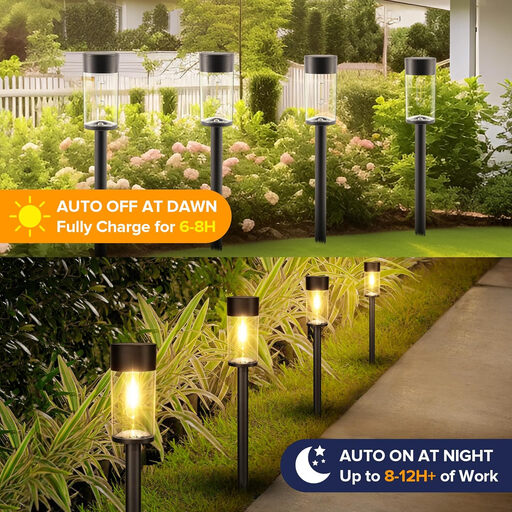
Why This Fits Their Persona: These solar pathway lights suit renters, first-time buyers and anyone wanting simple garden path lights without mains wiring. They can mark a walkway, lawn border or driveway edge when positioned in a suitably sunny location.
The IP65 rating is stated for the product, and the automatic light sensor removes the need for daily switching. Remember that the solar panel needs around 6–8 hours of direct sunlight for charging.
Two lights per pack; 3000K warm white output; 10 lumens per light; ground-stake installation; automatic dusk-to-dawn operation.
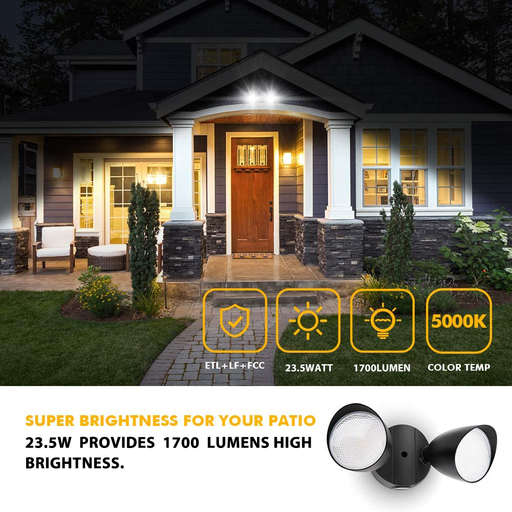
Why This Fits Their Persona: Homeowners and property managers who want directional outdoor landscape lighting may value the two-head format for covering a patio, garage approach, garden and entrance from one wall position.
Each head is stated to rotate through 360 degrees, helping reduce the limitation of a fixed beam. The listing gives IP54/IP65 weather-resistant specifications; confirm the applicable rating and installation guidance before fitting.
Die-cast aluminium housing; impact-resistant PC lenses; integrated LED beads; black powder-coated finish; 220–240V AC specification; wall-mounted design.
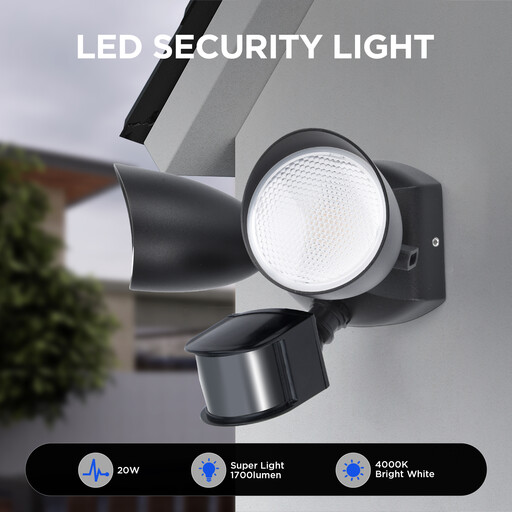
Why This Fits Their Persona: This option is aimed at users prioritising functional illumination around a garden, patio or building exterior, particularly where a sensor and broader twin-head arrangement are useful.
The stated 1700-lumen output is accompanied by a 20W LED specification and sensor, giving more useful comparison points than an unspecified “high brightness” description.
20W integrated LED; 1700 lumens; 4000K light colour; sensor; integrated twin heads; black outdoor wall-light format.
Before installing a hardwired fitting, switch off and isolate the relevant circuit. Follow the supplied instructions and use waterproofed connections suitable for outdoor use. If you are not confident working with mains electricity, arrange installation by a qualified electrician.
For solar pathway lights, set the switch to “ON” before initial use and place each panel away from persistent shade. Keep panels and lenses clean with a soft cloth. For wall-mounted lights, periodically check for loose fittings, dirt build-up and signs of water ingress.
We have compiled a complete, real-time list of products that fully satisfy these strict selection criteria and UK safety regulations.
They can be suitable for marking paths, borders and driveway edges, provided the solar panels receive enough direct daylight. Output and operating time may reduce during prolonged cloudy weather or winter conditions, so they are not always a substitute for mains-powered security lighting.
Running cost depends on wattage, operating hours and electricity tariff. Integrated LED fittings generally use less power than equivalent halogen products, but compare the stated wattage and whether the light operates continuously or only when triggered by a sensor.
Choose 3000K warm white lighting for patios, planting areas and welcoming entrances. A 4000K LED outdoor wall light may provide a more neutral appearance for driveways, gardens and practical access areas. The appropriate choice depends on the required visibility and the atmosphere you want to create.