
24/7 Customer Support

Free returns

Same-day & Next-day Delivery

Quality Guaranteed

Unlock Your Welcome Offers: FREE Delivery | Up to 80% OFF | Free 30-day JoyPlus trial
Download the APP
Choosing the right outdoor garden lights can transform a simple garden into a welcoming retreat, a secure perimeter or a festive wonderland. However, the market is flooded with options, and it is easy to make a purchase you later regret. Many lights promise durability but fail after one wet British winter, while others offer a glow that barely lasts past sunset.
As a Joybuy Product Recommendation Officer, my role is to help you navigate these choices. This guide cuts through the marketing clutter to focus on what truly matters, helping you find lighting that not only looks good but also performs reliably, season after season. We will look at the common pitfalls to avoid and the key features to check before you buy.
Before you add anything to your basket, be aware of these frequent issues that can lead to disappointment and wasted money.
To ensure your lights are fit for purpose, focus on these three non-negotiable specifications.
The IP rating is your most reliable guide to a light's durability against the elements. It consists of two numbers:
Always check for at least an IP44 rating, and opt for IP65 for any lights that will be directly exposed to rain.
Your choice of power source depends on your needs for reliability, brightness and ease of installation.
The type of light sets the mood for your entire outdoor space.
Here are a few options that align with specific needs, chosen because they address the common pitfalls with practical design features.

Why This Fits Their Persona: Perfect for someone who wants to quickly create a warm, inviting atmosphere for garden parties or quiet evenings. The long, flexible 12-metre copper wire is easy to shape around trees, railings or a pergola, and the warm white glow is ideal for social settings.
It directly counters the "waterproof myth" and "solar disappointment" with a robust IP65 rating and an enhanced solar panel designed for 8-14 hours of illumination, lasting well into the evening.
Comes as a two-pack, offering excellent value and extensive coverage. The 8 lighting modes with a memory function allow for customisable ambiance without needing to reset it each night.
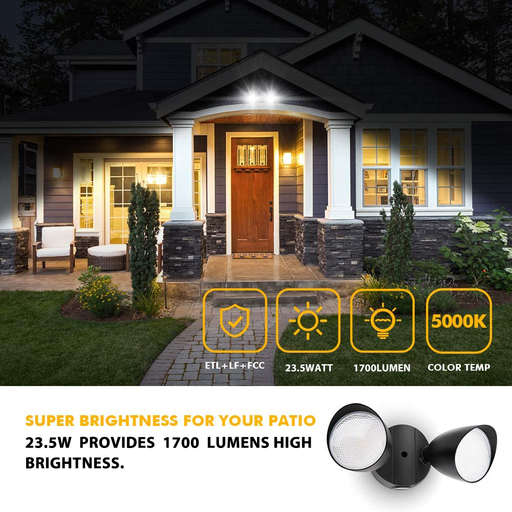
Why This Fits Their Persona: For those prioritising security, reliability is paramount. This mains-powered floodlight provides consistent, bright cool white light to illuminate driveways, side alleys and entry points. The adjustable twin heads allow for precise, wide-angle coverage.
It sidesteps the "flimsy construction" and "unreliable power" pitfalls. The body is made from durable die-cast aluminium, not cheap plastic, and being hardwired, its performance is not dependent on sunlight or battery life.
The dual 360° rotatable heads offer superior customisation for illuminating two different areas at once. Its high IP rating (IP54/IP65) ensures it is built for dependable, long-term outdoor use.
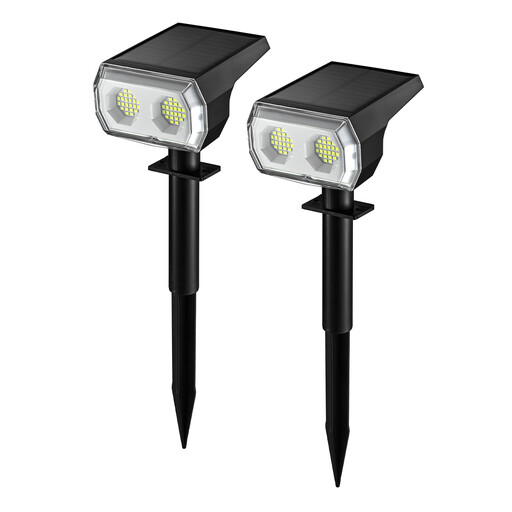
Why This Fits Their Persona: This is for the user who wants to highlight specific garden features—a favourite shrub, a small tree or a water feature—with zero running costs or wiring. The stake design makes it incredibly easy to install and reposition as the garden changes.
By focusing its solar power into a concentrated spotlight beam rather than a long string, it provides a more powerful and reliable output. This design helps overcome the "weak solar" pitfall for targeted illumination.
The set-and-forget functionality with automatic dusk-to-dawn operation makes it a maintenance-free lighting solution. The warm white light adds a touch of class without being overpowering.
We have compiled a complete, real-time list of products that fully satisfy these strict selection criteria and UK safety regulations.
1. How long do solar garden lights last in the UK winter? The performance of solar lights decreases in winter due to shorter daylight hours and frequent cloud cover. A quality solar light might provide 4-6 hours of light on a full charge after a gloomy day, compared to 8-14 hours in summer. To maximise performance, ensure the solar panel is placed in a spot that receives the most direct sunlight possible and is kept clean of dirt or snow.
2. Can I leave outdoor string lights up all year round? You can, provided they have an appropriate IP rating (IP44 minimum, IP65 recommended) and are well-made. Check the product specifications for year-round use. For longevity, it is a good practice to inspect the wiring and bulbs for wear and tear before and after the winter season. Models with shatterproof bulbs and durable, insulated cables are better suited for permanent installation.
3. Are LED garden lights expensive to run? No, LED lights are extremely energy-efficient and cost very little to run. A typical set of LED outdoor string lights uses a fraction of the energy of old incandescent bulbs, meaning their impact on your electricity bill will be minimal, even if used every night. Solar-powered LED lights have no running costs at all after the initial purchase.