
24/7 Customer Support

Free returns

Same-day & Next-day Delivery

Quality Guaranteed

Unlock Your Welcome Offers: FREE Delivery | Up to 80% OFF | Free 30-day JoyPlus trial
Download the APP
Choosing outdoor garden planters involves more than finding a colour that complements your patio. The right planter must suit the available space, support the plant’s root system, cope with typical UK weather and remain practical to move, maintain and water.
From a wooden trough planter for climbing plants to a recycled plastic planter for a balcony, a few checks can help you avoid buying a container that becomes unstable, waterlogged or difficult to look after.
A wood-effect finish can look attractive, but genuine timber and recycled plastic need different types of care. A wooden planter may require a suitable preservative, sealant or paint, while a recycled plastic design generally does not need timber treatment.
Before buying, check the actual construction material, not just the appearance. This is particularly important if the planter will be exposed to rain throughout the year.
A shallow container may be suitable for annual flowers or herbs but unsuitable for shrubs, grasses or small ornamental trees. Similarly, a narrow trough may provide good horizontal planting space without offering enough depth for larger root systems.
Check both the overall dimensions and capacity. A 45L planter, for example, gives you more planting volume than a small decorative pot, but it will also be heavier once filled with compost and watered.
Tall planters and containers with trellises can catch wind, especially when positioned on an exposed patio, balcony or decking area. A planter that looks stable when empty may behave differently when loaded with soil and plants.
Look for a stable base, place the container on a level surface and check how excess water can escape. On balconies and raised decks, also consider the combined weight of the planter, compost, water and mature plants before purchase.
Outdoor planters are commonly made from wood, plastic, recycled plastic, metal or composite materials. Each option has practical differences:
A weather-resistant garden planter should still be positioned sensibly. Extreme weather, standing water and strong winds can affect any outdoor container over time.
Capacity is useful when comparing planters, but it does not tell the whole story. A long, shallow trough may be suitable for grouped flowers, trailing plants and herbs, while a deeper barrel planter may be more appropriate for shrubs or plants with larger root systems.
For mixed displays, consider:
A raised garden planter can reduce the need to bend, while a large outdoor planter may create a stronger visual focal point at an entrance or patio edge.
Measure the intended position before ordering. Allow enough space to walk around the container, open doors and maintain nearby plants. For balcony planters, check the available floor or railing space and avoid obstructing access routes.
Tall designs should be placed where they will not create a trip hazard. A garden planter with trellis should be positioned against a wall or another suitable support when recommended by the product instructions. Do not use the trellis as a climbing frame, seat or hanging structure unless it is specifically designed for that purpose.
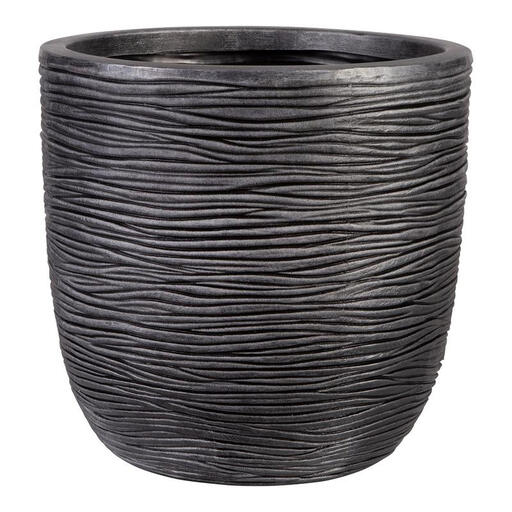
Why This Fits Their Persona: Its compact round shape suits first-time gardeners, small patios, front door areas and modest balcony spaces where a larger container would be impractical.
The recycled plastic construction provides a barrel-style appearance without the regular treatment associated with genuine timber, while its smaller size limits unnecessary compost and space costs.
Oakwood-effect recycled plastic; compact 35cm diameter and 34cm height; suitable for flowers, foliage and smaller shrubs.
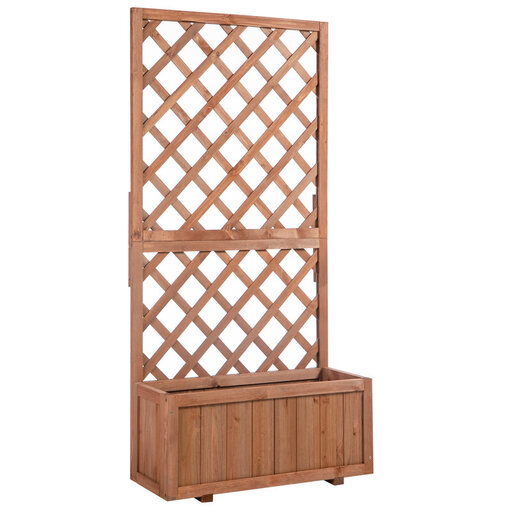
Why This Fits Their Persona: Gardeners wanting a natural timber feature and vertical planting space can use this design on a patio, in a garden or beside a suitable wall.
The stated 45L capacity and listed dimensions make the planting volume clear. The product instructions also identify the need for assembly, wood treatment and a stable, level position.
100% solid wood; 45L planting volume; integrated decorative trellis; surface can be painted or varnished.
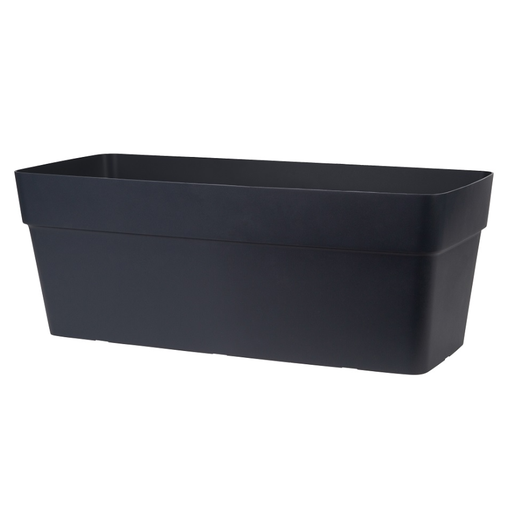
Why This Fits Their Persona: Its elongated format is suited to grouped flowers, herbs and trailing plants along patios, pathways, balcony edges or entrances.
The listed 45L capacity prevents the container from being mistaken for a purely decorative shallow pot. Recycled plastic also avoids timber warping and rot concerns.
60cm long planting space; 45L capacity; charcoal recycled plastic; lightweight format for rearranging displays.
It depends on the plant and available floor area. Smaller patio planters work well for herbs and seasonal flowers, while a 45L planter can support a broader mixed display. Measure the space and check the mature size of the plants before choosing.
Many recycled plastic planters are designed to resist moisture, cracking and UV fading, but product specifications should be checked individually. Positioning, drainage and exposure to severe weather can still affect service life.
Place it on a level, stable surface and position the trellis near a wall or suitable support. Avoid overloading the upper section with heavy decorations and check the fixings regularly. On balconies or exposed patios, consider wind exposure and the full weight of the filled planter before installation.