
24/7 Customer Support

Free returns

Same-day & Next-day Delivery

Quality Guaranteed

Unlock Your Welcome Offers: FREE Delivery | Up to 80% OFF | Free 30-day JoyPlus trial
Download the APP
A jacket labelled “outdoor” can mean anything from a thin training layer to a fully seam-sealed waterproof shell. That broad wording makes comparison difficult, particularly when UK weather can shift from bright sunshine to heavy showers within the same afternoon.
The most common buying mistakes are not always obvious:
The right choice depends on how you expect to use the garment, rather than the number of technical terms on its label.
For wet-weather use, look beyond the word “waterproof”. Check whether the jacket has:
A waterproof shell jacket with sealed seams generally offers more dependable rain coverage than an unlined windbreaker. However, performance can change with washing, abrasion and the condition of the durable water-repellent finish. Follow the care instructions and reapply DWR treatment only where the manufacturer recommends it.
If a product refers to EN 343, this is a European standard associated with protective clothing against rain. Do not assume compliance unless the product listing clearly provides the relevant certification or test information.
Breathability is particularly important for running, hiking and training. Polyester performance fabrics can move moisture away from the skin, while a membrane may allow water vapour to pass through. These features are useful, but comfort also depends on wearing the correct size and leaving enough room for a base layer.
A moisture-wicking sports jacket is often more suitable for gym sessions, football warm-ups and everyday movement than a fully waterproof shell. Double-knit fabric can offer a little more structure and warmth, whereas a thin shell is easier to fold into a rucksack.
For travel, focus on low bulk, secure pockets and a simple layering system. A lightweight packable jacket is convenient when rain is possible but not certain.
A sun protection jacket or UPF jacket may be useful for walking, fishing, running and beach days. Look for the stated UPF rating, fabric coverage, sleeve length and collar design. A high rating on the label does not replace sensible sun protection practices, and coverage can be reduced if the garment is stretched, wet or worn incorrectly.
Fit is equally important. Compare your measurements with the product’s size chart rather than relying only on S, M or L. A unisex outdoor jacket may have broader shoulders or a different hem shape from a traditionally cut men’s or women’s garment.
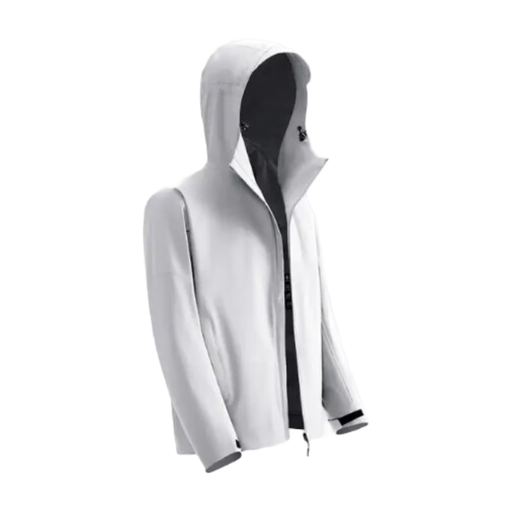
Why This Fits Their Persona: A practical starting point for shoppers wanting one adaptable outer layer for local walks, commuting and light outdoor activities.
Its single-layer hard-shell format is more clearly positioned for wind and wet-weather use than a basic fashion jacket.
Unisex design; stretch outer layer; glacier grey colour for versatile everyday styling.

Why This Fits Their Persona: A considered option for regular walkers, travellers and commuters who want a lightweight men’s waterproof jacket with packable convenience.
The listing specifies a waterproof, fully seam-sealed shell, helping address the gap between water-repellent fabric and rain-ready construction.
Folds into its own pocket; adjustable hood, cuffs and hem; two zipped pockets; made from recycled polyester.
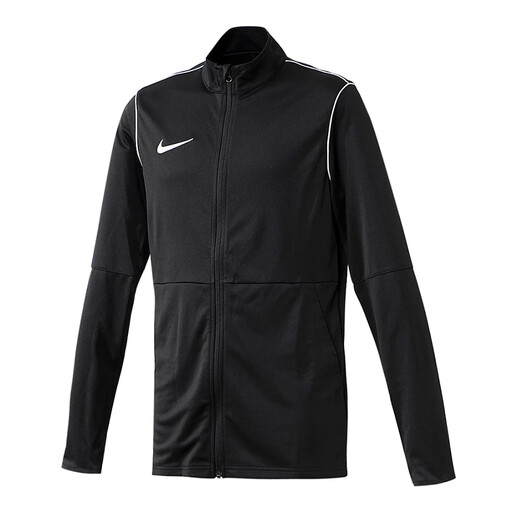
Why This Fits Their Persona: Suitable for gym sessions, warm-ups, casual errands and transitional weather when full rain protection is not the priority.
It is presented as a knit track jacket rather than a waterproof shell, making its intended use clearer and reducing the risk of expecting rain-jacket performance.
225 GSM double-knit polyester; Dri-FIT moisture-wicking technology; ribbed cuffs, collar and hem; two hand pockets.
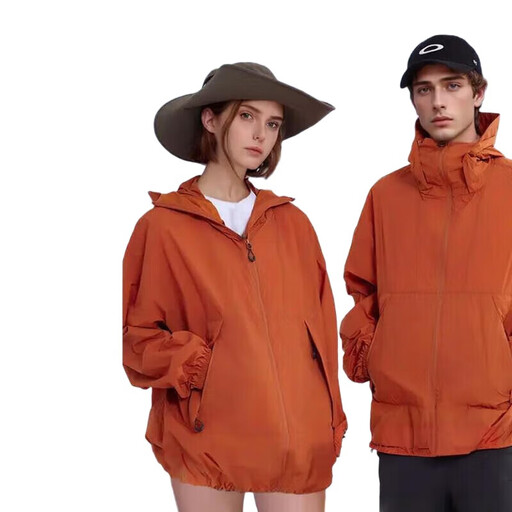
Why This Fits Their Persona: Designed for shoppers planning extended outdoor time in bright conditions, including hiking, running, fishing and beach trips.
The listing identifies a UPF170+ rating and breathable, moisture-managing fabric, rather than relying only on vague “summer” or “cooling” language.
Unisex design; lightweight breathable feel; orange colour may improve visibility; size 2XL listed.
We have compiled a complete, real-time list of products that fully satisfy these strict selection criteria and UK safety regulations.
Not all outdoor jackets are waterproof. A waterproof shell jacket should provide clear information about its membrane or coating, seam sealing and closure design. Windbreakers, track jackets and sun layers may resist light splashes but are not necessarily intended for prolonged rain.
Use a moisture-wicking base layer, add insulation such as a fleece when temperatures fall and finish with a shell if rain or strong wind is expected. Avoid cotton next to the skin during strenuous activity because it can hold moisture and feel cold when damp.
Lifespan depends on frequency of use, abrasion, washing and exposure to weather. A jacket may remain wearable after its water-repellent finish weakens, but rain performance can decline. Store it clean and dry, follow the label instructions and inspect seams, cuffs and zips regularly.