
24/7 Customer Support

Free returns

Same-day & Next-day Delivery

Quality Guaranteed

Unlock Your Welcome Offers: FREE Delivery | Up to 80% OFF | Free 30-day JoyPlus trial
Download the APP
An outdoor LED floodlight can improve visibility around a driveway, garden, garage, patio or entrance, but choosing by headline brightness alone often leads to wasted money. A fitting may look powerful in a product listing yet provide poor coverage, lack suitable weather protection or be awkward to install.
The most common buying pitfalls are straightforward:
For outdoor lighting, compare lumens rather than watts. A 650 lumen fitting may be suitable for a small entrance or pathway, while a 1500 lumen floodlight can provide stronger illumination for a driveway, garage frontage or larger patio. For broad areas and building perimeters, a 2400 lumen floodlight offers a higher output.
Wattage remains useful when considering electricity consumption. A 20W LED floodlight is commonly suited to moderate residential lighting, while a 30W LED floodlight may be more appropriate for larger driveways, gardens or commercial exteriors.
Colour temperature also affects the appearance of the light:
Choose the colour based on the setting. Warm light can be more comfortable around a patio or porch, while cool or natural white light is practical for driveway lighting and garden security lighting.
The Ingress Protection (IP) rating describes resistance to solids and water. The first number relates to particles such as dust, and the second concerns water.
An IP rating does not remove the need for proper mounting, sealed cable connections and suitable electrical installation. For a hardwired fitting, follow the instructions and use a qualified electrician where required.
Beam angle and head adjustment determine how much ground the fitting covers. A wide beam, such as 110°, can spread light across a driveway or building frontage. An adjustable twin-head floodlight lets you direct light towards separate zones, such as a gate and side path.
A motion sensor floodlight can switch on when movement is detected, reducing the time the light remains active. Check the detection range, sensor angle, activation duration and sensitivity controls rather than assuming all sensors operate in the same way.
Solar models avoid mains wiring, but the panel must receive sufficient direct sunlight. Shaded walls, north-facing positions and winter weather can affect charging. For reliable overnight illumination, compare the battery capacity, lighting modes and sensor settings.
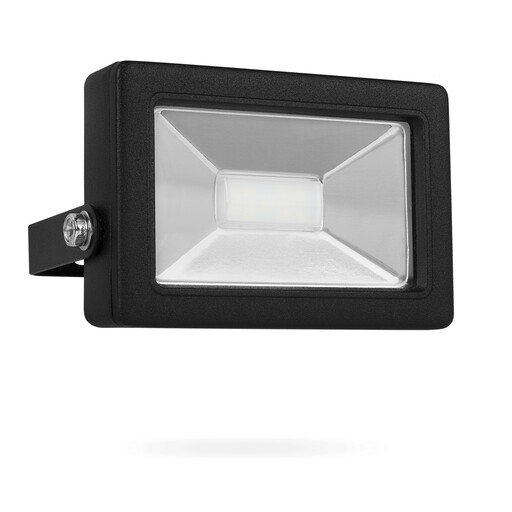
Why This Fits Their Persona: A compact option for homeowners lighting a small entrance, shed, walkway or patio without selecting a high-output fitting.
The listing specifies 650 lumens, 4000K light and an IP65 rating, making the output and weather protection easier to assess than a vague “ultra-bright” claim.
Integrated 10W LED, slim 105 × 134 × 38mm housing and A energy label rating.
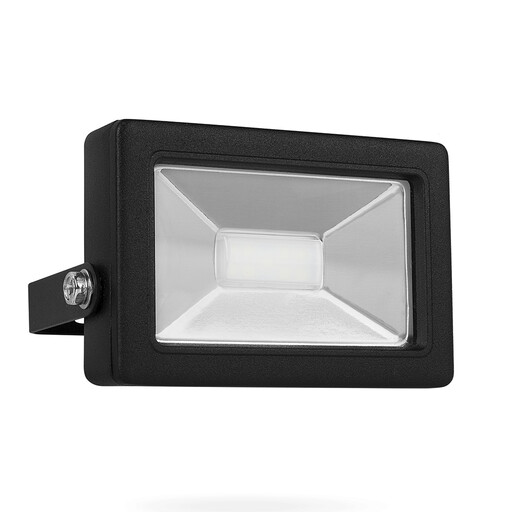
Why This Fits Their Persona: Suitable for buyers wanting a discreet, permanent fitting for a driveway, garage, patio or garden with stronger everyday illumination.
Its specification states 1300 lumens, 4000K light and IP65 protection, so it offers measurable brightness and a clear outdoor rating.
20W integrated LED, 1300 lumens and A energy label rating.
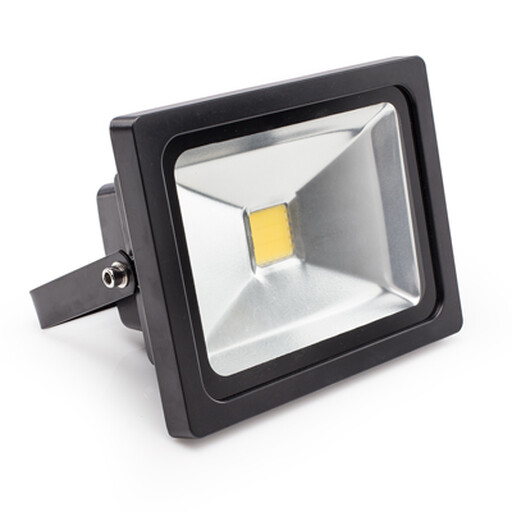
Why This Fits Their Persona: Designed for larger driveways, parking spaces, workshops, gardens and building perimeters where broad coverage matters.
The product gives both its 2400 lumen output and 110° beam angle, helping buyers judge area coverage instead of relying only on a high-wattage description.
30W integrated LED, 2400 lumens, 110° beam angle and IP65 protection.

Why This Fits Their Persona: A practical choice for gardens, yards, porches and garages where avoiding mains wiring is a priority.
Its specification identifies the solar power source, 1800mAh battery, three lighting modes and IP65 rating. Positioning remains important for effective charging.
3000 lumens, 270° three-head coverage and motion detection listed at 60 feet with a 180° angle.
We have compiled a complete, real-time list of products that fully satisfy these strict selection criteria and UK safety regulations.
Running cost depends on wattage, usage time and your electricity tariff. For example, a 20W fitting uses 0.02kWh for each hour it operates, while a 30W fitting uses 0.03kWh. A motion sensor or shorter operating schedule can reduce consumption. Check the lumens as well as wattage so you do not choose an underpowered fitting that must remain on for longer.
Check the stated IP rating and installation instructions. An IP65 floodlight is designed for greater dust and water-jet protection than an IP44 floodlight, but mounting position and cable connections still matter. Do not place the fitting where water can collect, and use appropriate electrical protection for a fixed installation.
Integrated LEDs are designed to avoid routine bulb replacement, but actual service life depends on heat management, operating conditions, power quality and weather exposure. Keep lenses and solar panels clean, ensure fixings remain secure and replace a damaged fitting rather than continuing to use it.