
24/7 Customer Support

Free returns

Same-day & Next-day Delivery

Quality Guaranteed

Unlock Your Welcome Offers: FREE Delivery | Up to 80% OFF | Free 30-day JoyPlus trial
Download the APP
An outdoor LED floodlight can improve visibility around a driveway, garden, garage or entrance, but choosing by headline brightness alone can lead to wasted money. A light that looks suitable online may create glare, cover too little ground or fail to suit the available power supply.
Before buying, look beyond marketing language and check the specifications that affect everyday use.
Wattage indicates energy consumption, not the amount of light produced. A modern 20W LED may provide substantially more light than an older halogen fitting using a higher wattage. Compare lumens instead:
The right level depends on mounting height, beam angle and the area you want to illuminate. More light is not automatically more useful if it shines into neighbouring windows or causes glare.
“Outdoor” does not always mean the same level of protection. An IP44 fitting offers protection against splashing water and may suit a sheltered wall or porch. An IP65 floodlight provides a higher level of protection against dust and water jets, making it more suitable for exposed positions.
However, an IP rating does not remove the need for correct installation. Cable entries, junction boxes and wall fixings must also be suitable for outdoor use. Always follow the instructions, isolate the electricity supply before installation and use a qualified electrician for hardwired work where appropriate.
A motion sensor floodlight can be convenient, but detection range and angle vary. A sensor facing a busy pavement may trigger repeatedly, while one mounted too high or behind an obstruction may miss movement.
Solar security light performance also depends on direct daylight. A shaded north-facing wall, overhanging tree or short winter days can reduce charging. If consistent overnight illumination is essential, a mains-powered LED security light may be more predictable.
Lumens describe the visible light output. Colour temperature is measured in Kelvin:
A wide beam angle can cover more ground, while adjustable twin-head spotlight designs allow light to be directed towards separate areas. For example, a 110° beam can be useful for broader wall-mounted coverage, whereas two independently adjustable heads can help reduce dark spots.
Mains-powered floodlights generally provide consistent output but may require wiring to a suitable supply. Solar models avoid electrical wiring and can be practical for sheds, garden gates or remote areas, provided the panel receives enough sunlight.
A smart floodlight camera combines illumination with video monitoring. Check compatibility before buying: some models require a particular smart-home platform, a neutral wire and an ongoing cloud subscription for selected functions.
Measure the wall space and check the cable route before ordering. Consider whether the light will shine towards a road, neighbour’s property or bedroom window. Keep lenses and solar panels clean, and periodically check fixings after severe weather.
Integrated LEDs do not normally require bulb replacement, but the complete fitting may need replacing if the LED module eventually fails. Look for clear warranty information and retain the installation instructions.
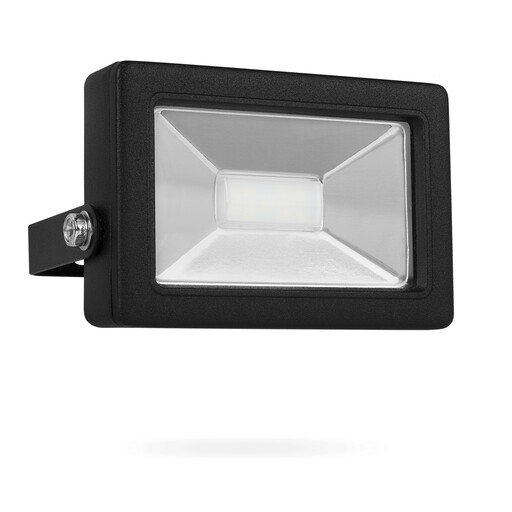
Why This Fits Their Persona: Its compact format suits a back door, shed, small garden or narrow driveway where moderate illumination is sufficient.
The 650-lumen output is clearly specified, avoiding vague claims based only on wattage. Its IP65 rating is stated for outdoor use.
Integrated 10W LED, 650 lumens, 4000K natural white light and compact 105 × 134 × 38mm dimensions.
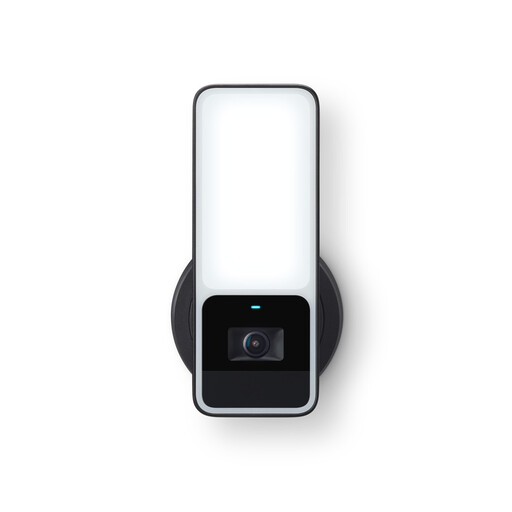
Why This Fits Their Persona: Suitable for Apple-home households wanting lighting and visual monitoring at an entrance, driveway or garden.
The specification identifies its Apple HomeKit Secure Video requirement, AC power, neutral and earth wire requirements and IP55 rating.
1080p video, 157° field of view, infrared night vision, two-way audio and an integrated dimmable floodlight.
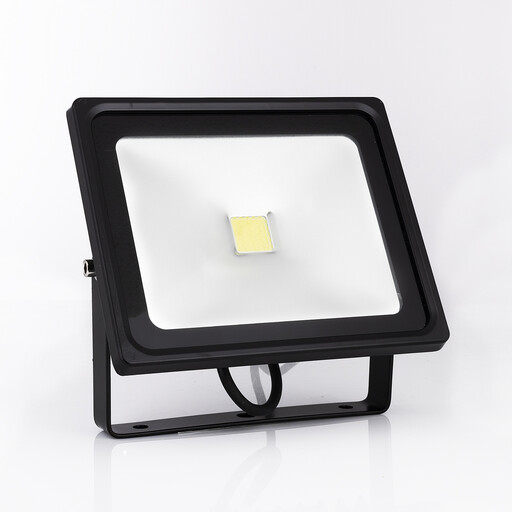
Why This Fits Their Persona: Designed for larger driveways, gardens, parking areas, gardens and commercial exterior spaces requiring broad coverage.
Its 2,400-lumen output and 110° beam angle give measurable information about coverage, rather than relying on a vague “high performance” description.
30W integrated LED, 2,400 lumens, 110° coverage and IP65 protection for exposed outdoor mounting.

Why This Fits Their Persona: A practical option for gardens, garages, patios and gates where running mains cable would be inconvenient.
The product specifies its 60-foot detection distance, 180° sensor angle, 1,800mAh battery and need for direct sunlight.
Solar operation, three lighting modes, three adjustable heads, 3,000 lumens and IP65 protection.
We have compiled a complete, real-time list of products that fully satisfy these strict selection criteria and UK safety regulations.
For a small entrance or pathway, 600–700 lumens may be adequate. Medium spaces often suit 1,300–1,500 lumens, while broad driveways and commercial areas may need around 2,400 lumens or more. Beam angle and mounting position are equally important.
An IP65-rated fitting is designed to resist dust and water jets, making it suitable for many exposed outdoor applications when installed correctly. It is not intended for immersion. Use weather-resistant cable connections and follow the manufacturer’s mounting instructions.
LEDs generally use less electricity for a comparable light output, but running cost depends on wattage, operating hours and your electricity tariff. A 20W fitting used for five hours consumes 0.1kWh per day, while a 30W fitting used for the same period consumes 0.15kWh. Motion or dusk-to-dawn controls can help limit unnecessary operating time.