
24/7 Customer Support

Free returns

Same-day & Next-day Delivery

Quality Guaranteed

Unlock Your Welcome Offers: FREE Delivery | Up to 80% OFF | Free 30-day JoyPlus trial
Download the APP
Choosing the right outdoor lighting can transform your garden, patio or balcony from an overlooked space into a welcoming extension of your home. However, the market is flooded with options, and it's easy to make a purchase you'll regret after the first spell of British weather. Many products promise durability and brightness but fail to deliver, leaving you with dim, water-damaged lights and wasted money.
As the Joybuy Product Recommendation Officer, my role is to help you navigate these choices by highlighting the practical factors that matter. Before you buy, be aware of these common pitfalls:
To avoid these issues, focus on a few key specifications. Understanding these will empower you to select lighting that is fit for purpose and built to last.
The Ingress Protection (IP) rating is the most reliable indicator of how well a light is protected against solids (like dust) and liquids (like rain). It consists of two numbers.
For any waterproof outdoor lights intended for exposed areas of your garden, look for a minimum rating of IP65.
Your choice between solar, mains or battery power will depend on your needs for convenience, brightness and reliability.
Here are a few options that align with different needs, selected based on their specifications and suitability for UK homes.

Why This Fits Their Persona: Perfect for someone who wants beautiful garden ambiance without the fuss of wiring or electricity bills. The flexible copper wire can be easily wrapped around trees, fences or pergolas for instant decoration.
It directly counters the "weatherproof" myth with a stated IP65 waterproof rating, making it suitable for year-round outdoor exposure. It also addresses the solar disappointment with an upgraded panel designed for 8-14 hours of runtime.
Zero running costs and no installation required. The set includes two 12-metre strands, offering excellent coverage for the price. Features 8 lighting modes to change the mood.

Why This Fits Their Persona: For those who host gatherings on their patio or in the garden, these mains-powered festoon lights provide the reliable, warm and stylish illumination needed to create a perfect party atmosphere.
Being mains-powered, it delivers consistent brightness that won't fade during an evening event, unlike unreliable solar options. The bulbs are made from shatterproof ABS plastic, a much safer and more durable choice than traditional glass.
The ability to connect multiple strings allows for easy expansion to cover larger spaces. They are also compatible with dimmer switches, giving you full control over the brightness and mood.
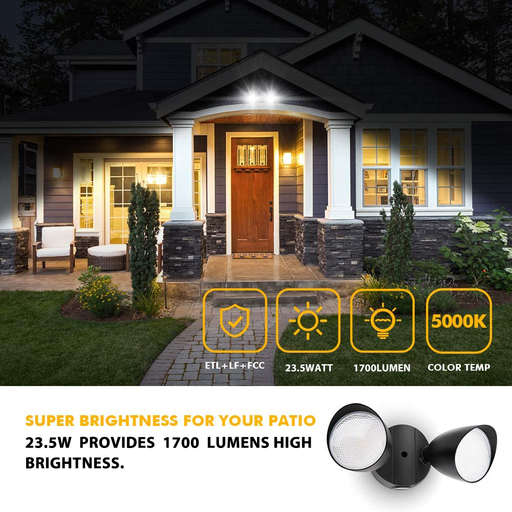
Why This Fits Their Persona: This is for the homeowner who prioritises safety and function. It's a robust, mains-powered floodlight designed to illuminate driveways, side alleys and back gardens for clear visibility and deterrence.
It avoids the solar trap by using a reliable mains connection, essential for security applications. The die-cast aluminium construction and IP54 rating ensure it is built to withstand the elements, unlike flimsy plastic models that can fail quickly.
The dual-head design allows each light to be rotated 360°, providing customisable and wide-ranging coverage. The integrated LED means no bulbs to replace, offering a long-term, low-maintenance security solution.
We have compiled a complete, real-time list of products that fully satisfy these strict selection criteria and UK safety regulations.
The performance of solar garden lights in winter depends heavily on the quality of the solar panel and battery. High-quality models with efficient panels can still charge on overcast days, though their runtime may be reduced compared to summer. Expect around 4-6 hours of light per night from a good set, which is often sufficient for decorative purposes. Cheaper models may struggle to provide more than an hour or two of dim light.
If the outdoor wall light is mains-powered and needs to be wired directly into your home's electrical circuit, then yes, you must hire a qualified electrician for the installation. This is a legal requirement for safety under UK building regulations (Part P). However, many solar-powered or battery-operated wall lights are designed for DIY installation and do not require an electrician.
An IP44 rated light is protected from splashes of water, making it suitable for sheltered areas like a covered porch where it won't be exposed to direct, driving rain. An IP65 rated light is protected against low-pressure jets of water from any angle, meaning it can withstand heavy downpours and is suitable for installation in exposed areas of your garden or on an open wall. For long-term durability in the UK, IP65 is the more reliable choice for unsheltered locations.