
24/7 Customer Support

Free returns

Same-day & Next-day Delivery

Quality Guaranteed

Unlock Your Welcome Offers: FREE Delivery | Up to 80% OFF | Free 30-day JoyPlus trial
Download the APP
Outdoor motion sensor lights can improve visibility around a driveway, garden path, garage or patio without leaving a lamp switched on all night. However, product listings often focus on headline lumen figures and dramatic coverage claims while leaving practical details unclear.
For UK homeowners, landlords, property managers and small businesses, the right choice depends on more than brightness. Detection range, weather protection, installation requirements and running costs all affect whether your lighting remains useful through dark winter evenings and wet weather.
A high lumen rating indicates more visible light output, but it does not show how evenly that light is distributed. A single fixed head may create a bright central spot while leaving the edges of a driveway or garden poorly lit.
For wider areas, look for adjustable heads, a broad beam angle or multiple light panels. Solar security lights with several heads can provide more flexible coverage than a compact lamp with a high advertised lumen figure.
Solar lighting depends on daylight exposure, panel size, panel condition and seasonal weather. A south-facing location with several hours of unobstructed light is more suitable than a shaded wall beneath trees or an overhanging roof.
Winter performance may also differ from summer performance. Check the battery capacity and allow space to clean the panel regularly. A solar flood light should not be selected solely because it has a large LED count or an attractive product photograph.
An IP rating is useful only when you understand what it covers. IP65 generally indicates protection from dust and low-pressure water jets, but it does not mean the product can be submerged or installed in any exposed position without consideration.
The mounting location still matters. Water can collect around cable entries, brackets and wall joints, particularly when a fitting is installed incorrectly. For mains-powered LED outdoor wall lights, follow the supplied instructions and use a suitably qualified installer where fixed wiring is required.
Lumens describe light output, while beam angle describes where that light goes. For a small porch, a lower-output wall lamp may provide comfortable visibility. For a driveway or larger garden, outdoor security flood lights with adjustable heads and a wider beam can reduce dark patches.
Also check the motion sensor’s stated range and angle. A sensor advertised with a long detection distance may still perform differently depending on mounting height, obstructions, temperature and the direction a person approaches from.
Useful questions include:
For exposed gardens, garages and patios, look for a clearly stated IP rating, robust housing and suitable mounting hardware. IP65 outdoor lighting can be appropriate for many wall-mounted locations, but check whether the entire product, rather than only a particular component, carries the rating.
ABS and polycarbonate housings can help reduce weight and resist everyday outdoor use. Tempered glass solar panels may offer additional protection from surface wear, although the panel should still be kept clean and free from leaves, dust and bird deposits.
Solar flood lights generally avoid mains wiring and can be practical for sheds, side passages and garden walls. They need a secure mounting point and direct sunlight. Mains-powered exterior wall sconces may provide consistent operation but can require electrical installation and suitable cable routing.
For landlords and business premises, consider access for maintenance, the risk of glare to neighbours and whether the lamp can be removed without damaging the wall. A motion sensor can reduce unnecessary operating time, but sensitivity and timer settings should be adjusted after installation.
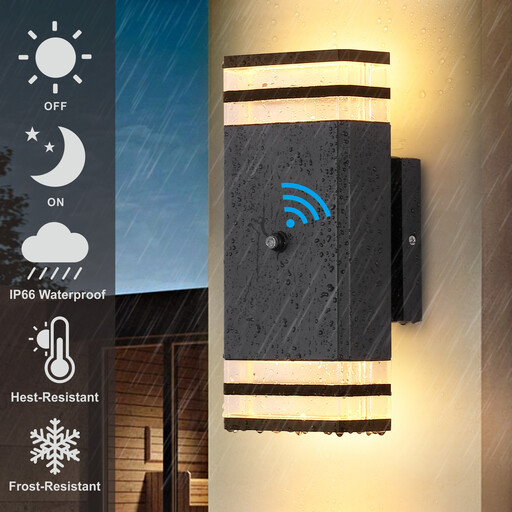
Why This Fits Their Persona: A two-light format can suit buyers who need matching illumination for a porch, front entrance, side passage or small garden area without selecting separate fittings.
The motion-sensor design avoids relying on an always-on lamp, while the stated IP65 construction is intended for outdoor wall use. Confirm installation details before purchase.
Two matching wall lights; stated IP65 waterproof design; suitable for entrances and smaller outdoor zones.
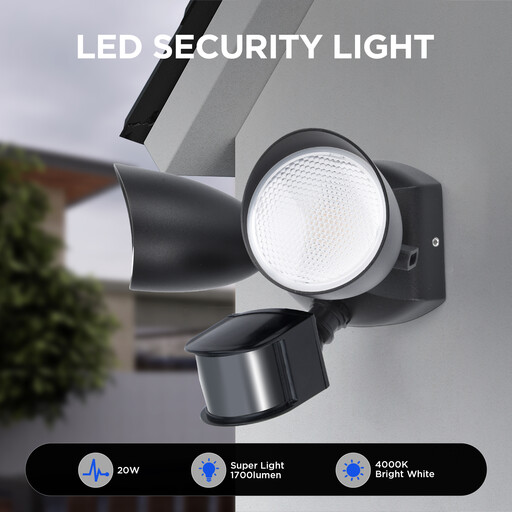
Why This Fits Their Persona: This mains-style wall flood light is suited to users prioritising consistent illumination for a patio, garden or garden area rather than relying on available sunlight.
Its published 20W power rating and 1700-lumen output give buyers clearer comparison points than vague descriptions such as “ultra-bright”.
1700 lumens; 4000K light; integrated twin heads and sensor; suitable for wall-mounted outdoor coverage.

Why This Fits Their Persona: With three heads and a broad stated coverage range, this model is aimed at driveways, garages, gardens and larger garden areas where a compact wall lamp may leave gaps.
The listing specifies a 60-foot detection distance, 180° sensor angle, 270° head coverage and three modes, giving more practical information than a lumen figure alone.
302 LEDs; stated 3000-lumen output; 1800mAh battery; IP65 rating; two-year warranty and no-wiring installation.
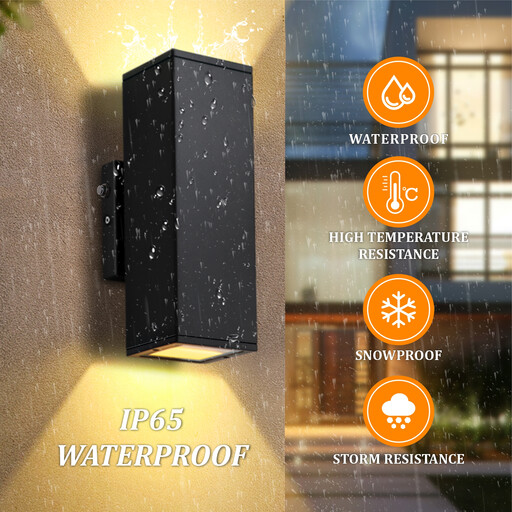
Why This Fits Their Persona: The up-and-down light format and matte black square design suit front doors, porches and patios where appearance matters alongside movement-triggered lighting.
The 2700K colour temperature offers a warmer appearance than cool security lighting, while the listed waterproof outdoor design supports use in covered or exposed entrance areas.
Warm 2700K LED light; up-and-down illumination; 27cm square matte black housing; motion sensor and stated ETL certification.
We have compiled a complete, real-time list of products that fully satisfy these strict selection criteria and UK safety regulations.
Solar models use stored daylight and do not add to household electricity consumption. Wired LED models generally use less power than older halogen floodlights, but the actual cost depends on wattage, activation frequency and timer duration. Motion-only settings can limit unnecessary operation.
There is no single figure for every product. Shorter daylight hours, cloud cover, shading and cold temperatures can reduce charging and nightly runtime. Choose a location with unobstructed daylight, clean the panel regularly and select a model with an appropriate battery capacity for the area.
No. IP65 indicates resistance to dust and water jets under specified conditions, not complete protection from flooding or immersion. Follow the mounting instructions, protect cable connections and avoid placing the fitting where water can pool. Mains-powered installations should be handled in line with UK electrical safety requirements.