
24/7 Customer Support

Free returns

Same-day & Next-day Delivery

Quality Guaranteed

Unlock Your Welcome Offers: FREE Delivery | Up to 80% OFF | Free 30-day JoyPlus trial
Download the APP
As pickleball continues to capture the enthusiasm of players across the UK, the market has filled with equipment choices. However, not all pickleballs are created equal, especially when playing outdoors. Many players find their new balls cracking after a single cold-weather game or wobbling unpredictably in a slight breeze. These common issues often stem from a few avoidable purchasing pitfalls.
Before you spend your money, be aware of these frequent traps:
To ensure your next purchase is built for performance and longevity on UK courts, focus on a few core technical specifications. Understanding these details will help you see past the marketing hype and select a ball that delivers a consistent and enjoyable game.
The material of a pickleball is fundamental to its performance and durability. For outdoor play, you will often encounter balls made from PE (Polyethylene). PE pickleball balls are generally harder and more rigid, which allows for a faster, more responsive game. This hardness also contributes to their durability on abrasive outdoor surfaces like tarmac or concrete.
Another material used is TPE (Thermoplastic Elastomer), which is slightly softer and more flexible. While also durable, TPE balls can offer a bit more forgiveness and a slightly lower bounce, which some players prefer for control. The key is to ensure the material is specified as weather resistant pickleballs, meaning it's formulated to resist becoming brittle or soft in typical UK temperatures.
The number and size of the holes in a pickleball are not arbitrary; they are engineered for specific environments. The standard for outdoor pickleballs is a 40 hole pickleball design. These balls feature 40 smaller, precisely drilled holes. This pattern is designed to minimise the effect of wind, allowing the ball to fly in a truer, more predictable path during outdoor rallies. In contrast, indoor balls typically have 26 larger holes, as they don't need to contend with wind resistance.
A critical factor for longevity is the ball's construction. Many lower-quality balls are made by fusing two halves together, creating a seam that becomes a weak point. These are prone to splitting or cracking upon impact. Seamless pickleballs, on the other hand, are created using a single-piece rotational moulding process. This method produces a more uniform and durable ball that can withstand repeated hard hits without breaking.
Finally, ensure the ball conforms to the standard 74mm outdoor pickleballs diameter. This regulation size ensures a consistent playing experience that aligns with official game standards, making them suitable for everything from casual pickleball practice balls to competitive matches.
Based on these essential criteria, we've matched a few options to different player profiles to help you find the right fit.
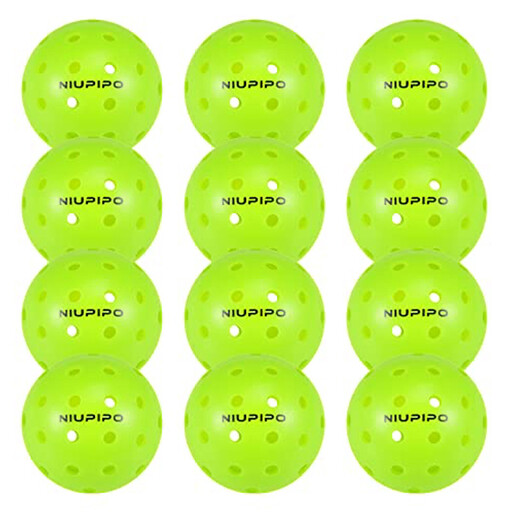
Why This Fits Their Persona: For those who play several times a week or manage club supplies, this 12 pack pickleballs set offers excellent value. It ensures you always have regulation-compliant balls ready for drills and matches without needing to purchase them individually.
Its seamless, single-piece PE construction directly counters the pitfall of cracking. This design is far more resilient than seamed balls, especially during intense play or in colder weather.
The combination of weather-resistant PE material and a 40-hole pattern provides a consistent, true flight path and reliable performance across different outdoor conditions.
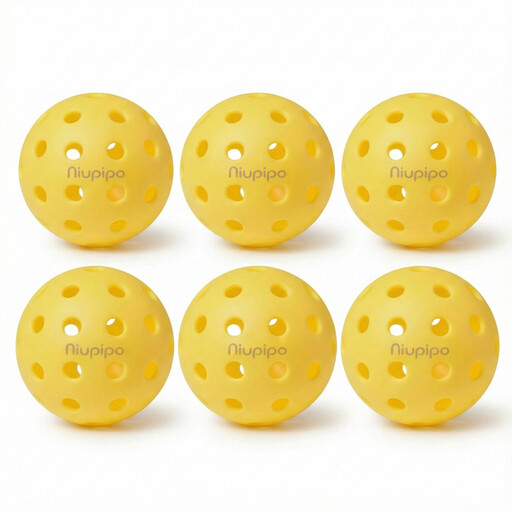
Why This Fits Their Persona: Ideal for players who enjoy a game at the local park on weekends. This 6-pack provides enough high-quality balls for recreational matches without the commitment of a bulk purchase.
This ball avoids the "fair-weather" trap with its durable TPE material, which is specified to perform reliably in both cold and hot temperatures, preventing cracking or warping during seasonal play.
The seamless, one-piece moulding process ensures a consistent bounce and enhanced durability, offering a significant upgrade over cheaper, seamed alternatives.
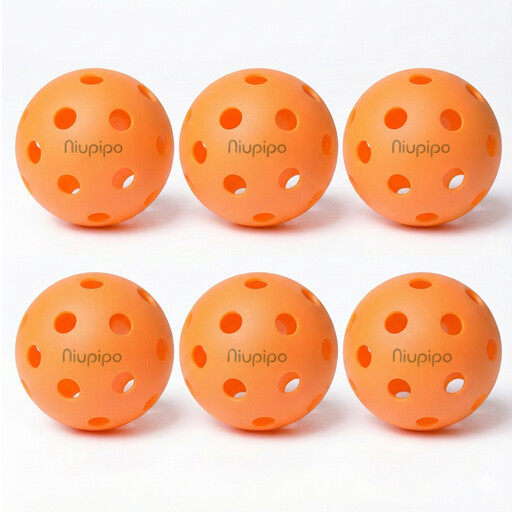
Why This Fits Their Persona: For players who primarily use indoor courts at community centres or gyms. This ball is specifically engineered for the controlled environment of indoor play, offering a different feel and performance profile.
This product helps you avoid the "Indoor Impostor" trap by being clearly designed for its purpose. Its 26-hole pattern is unsuitable for outdoor wind, making it a clear choice for indoor-only use.
The softer TPE material and larger holes provide a consistent, slightly slower flight and a reliable bounce on smooth indoor surfaces like wood or polyurethane courts.
We have compiled a complete, real-time list of products that fully satisfy these strict selection criteria and UK safety regulations.
The lifespan of an outdoor pickleball depends on the court surface, intensity of play and the ball's material. On a rough outdoor court, a high-quality, seamless PE ball might last for 10-15 games before performance degrades. It's advisable to inspect your balls regularly for any signs of cracking or for becoming out-of-round, as both will affect play.
It is not recommended. Indoor pickleballs are lighter and have 26 larger holes, which makes them highly susceptible to wind. Even a light breeze can send the ball off course, making for a frustrating and inconsistent game. Furthermore, their softer plastic may not withstand the abrasive nature of outdoor court surfaces.
For a pickleball, 'weather resistant' refers to the material's ability to maintain its structural integrity and performance characteristics across a range of temperatures. It means the plastic won't become overly brittle and prone to cracking in the cold, nor will it become too soft and lose its bounce in the heat. This is a crucial feature for reliable year-round play in the UK.