
24/7 Customer Support

Free returns

Same-day & Next-day Delivery

Quality Guaranteed

Unlock Your Welcome Offers: FREE Delivery | Up to 80% OFF | Free 30-day JoyPlus trial
Download the APP
Choosing the right outdoor planters can transform a patio, balcony or garden, but it is easy to fall into common traps. Many products look appealing on the shelf but fail to withstand a typical British winter or prove impractical for everyday use. As a Joybuy Product Recommendation Officer, my role is to help you see past the marketing and focus on the features that deliver genuine value and longevity. This guide will highlight the key pitfalls to avoid and the essential factors to consider before you buy.
Before we explore what makes a good planter, let's look at the common issues that lead to disappointment and wasted money.
To ensure your planters are a long-term asset, focus on these three core parameters.
The material of your planter dictates its weight, durability and maintenance needs. While traditional terracotta and wood have their charm, they often require more care to protect them from the UK's damp and frosty climate.
Modern materials offer a practical alternative. High-quality plastic planters, particularly those made from recycled plastics, provide an excellent solution. They are naturally weather resistant planters, standing up to frost and UV rays without cracking or fading. Furthermore, they are available in a huge range of finishes, including convincing stone effect planters and wood effect planters, giving you the desired aesthetic without the associated drawbacks of weight or rot. These lightweight planters are ideal for balcony planters and for anyone who enjoys rearranging their patio pots with the seasons.
Consider both the location and what you intend to plant.
Always check the base of a planter before buying. The presence of drainage holes is non-negotiable for most outdoor plants. If there are no holes, ensure there are designated areas that can be easily drilled out. The weight is also a key practical feature. A lightweight design allows you to move plants to catch the sun, bring them indoors for winter or simply refresh your garden layout without strain.
Based on these practical criteria, here are a few options from our catalogue matched to different gardening styles and needs.
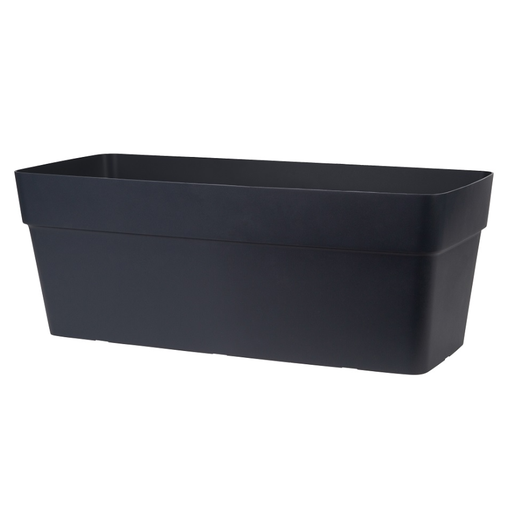
Why This Fits Their Persona: This trough's modern design and narrow footprint are perfect for making the most of limited balcony or patio space. It is ideal for creating a compact herb garden or a line of colourful annuals without overwhelming the area.
It directly solves the weight deception. Made from lightweight recycled plastic, it is easy to position on a balcony where weight is a primary concern. Its UV-stable material also prevents the fading common in cheaper plastics.
The space-efficient trough shape is highly practical for narrow areas. It is also made from recycled materials, offering a more sustainable choice.
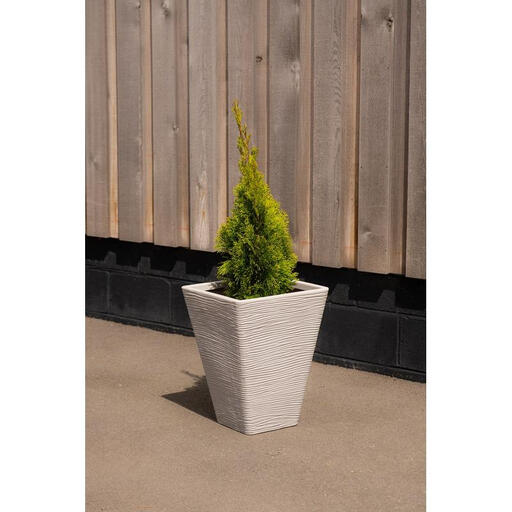
Why This Fits Their Persona: For those who love the timeless look of carved stone but not the associated weight and cost. This large planter makes a statement framing a doorway or on a patio, providing a classic aesthetic that complements both traditional and contemporary gardens.
This is a prime example of a stone effect planter that sidesteps the weight pitfall. It is also frost-proof and UV-resistant, ensuring it will not crack or degrade like real terracotta or low-quality plastics, avoiding the weather-resistance trap.
Delivers the visual impact of a heavy stone planter with the convenience of lightweight plastic. It is durable enough for year-round outdoor use in the UK climate.
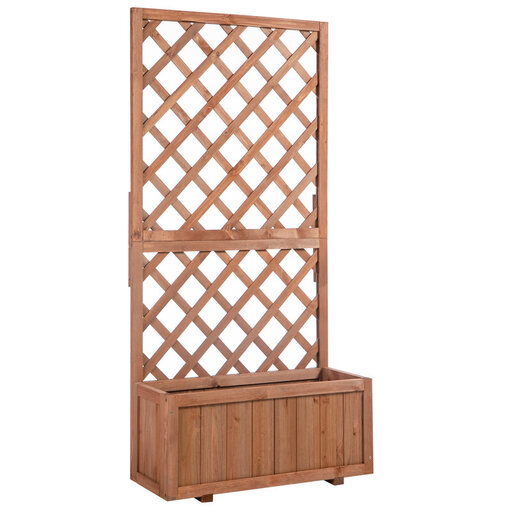
Why This Fits Their Persona: This is a purpose-built solution for growing climbing plants, vegetables or flowers vertically. It is perfect for adding green height to a patio wall, screening an unsightly area or simply maximising growing potential in a compact garden.
While made of solid wood, which can be a pitfall, it is designed as a complete system. It avoids the trap of needing to buy a separate, often ill-fitting trellis. The product information advises on proper maintenance to ensure its longevity.
The integrated trellis provides immediate support for climbing plants. Its generous 45L capacity offers ample room for healthy root development.
We have compiled a complete, real-time list of products that fully satisfy these strict selection criteria and UK safety regulations.
Always check for pre-drilled drainage holes. If the planter does not have them, look for indented circles on the base, which are designated weak points designed for easy drilling. For very large pots, adding a layer of gravel or broken terracotta at the bottom before the soil can help prevent the drainage holes from becoming clogged with silt over time.
While traditional stone is very durable, its weight makes it impractical for many. For an optimal balance of durability and convenience, high-grade, UV-stabilised recycled plastic is an excellent choice. This material is designed to be frost-proof, preventing the cracks that can appear in terracotta and cheaper plastics during winter. It also resists fading from the sun and will not rot like untreated wood.
Yes, modern plastic planters are very suitable for growing vegetables. If you have any concerns, check that the material is listed as food-safe. The most important factor is choosing the right size for your crop. Trough planters are excellent for shallow-rooted plants like salad leaves, radishes and herbs, while large garden pots are necessary for deeper-rooted vegetables like tomatoes, potatoes and carrots.