
24/7 Customer Support

Free returns

Same-day & Next-day Delivery

Quality Guaranteed

Unlock Your Welcome Offers: FREE Delivery | Up to 80% OFF | Free 30-day JoyPlus trial
Download the APP
Choosing outdoor planters can seem straightforward until a container arrives too shallow, becomes difficult to move, or leaves plants sitting in water after heavy rain. Product pages often focus on appearance while overlooking drainage, filled weight and long-term maintenance.
Before buying garden planters, watch for three common traps:
The right choice depends on your available space, the plants you want to grow and how often you expect to rearrange your display.
Match the container to the root system rather than choosing by appearance alone.
Remember that larger containers become substantially heavier when filled with compost and wet soil. Check that paving, decking, a balcony or a raised platform can safely support the combined load.
Good drainage is essential in the UK, where prolonged rainfall can leave containers saturated. Check whether the planter has drainage holes or a recessed base, and confirm whether you need to create or open drainage points.
For practical setup:
A drainage layer does not replace drainage holes. If the container has no outlet, water can accumulate around the roots regardless of the material used.
Material affects appearance, weight and maintenance.
Colour also matters. Charcoal and stone finishes can provide a simple backdrop for colourful flowers, while oakwood-effect barrel planters suit rustic or cottage-style planting.
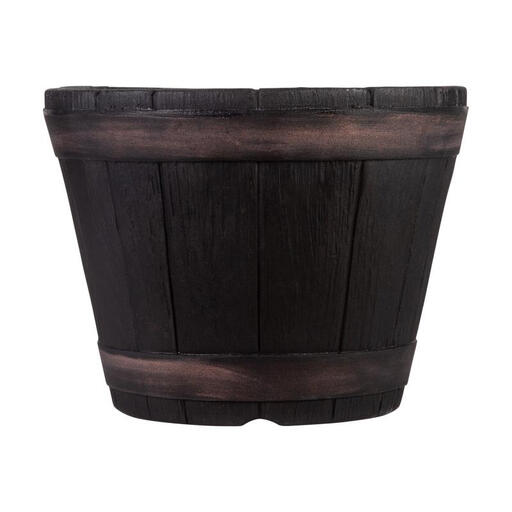
Why This Suits Their Needs: Its compact 34cm diameter suits a first patio, entranceway or small garden display, while the oakwood effect adds character without the visual weight of solid timber.
The recycled plastic construction avoids the routine treatment associated with real wood and is described as resistant to rot, weather exposure and UV fading.
Recycled plastic; lightweight construction; suitable for flowers, herbs and decorative planting.
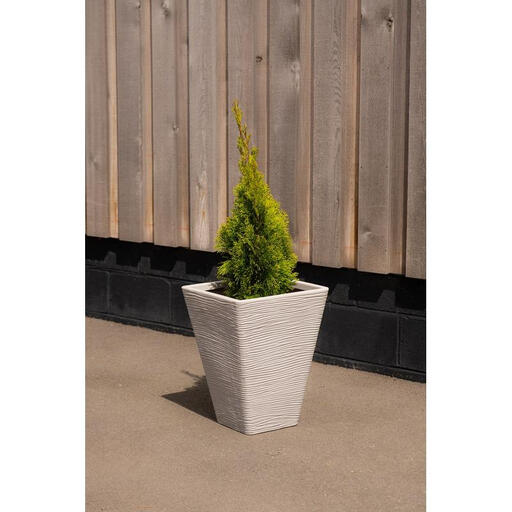
Why This Suits Their Needs: The 40cm-wide, 52cm-high square profile creates a structured feature for patios, conservatories, entrances and contemporary garden layouts.
Its stated recycled plastic build provides a stone-style appearance without the handling difficulty associated with a solid stone container.
Stone finish; lightweight format; described as resistant to cracking, frost damage and UV fading.
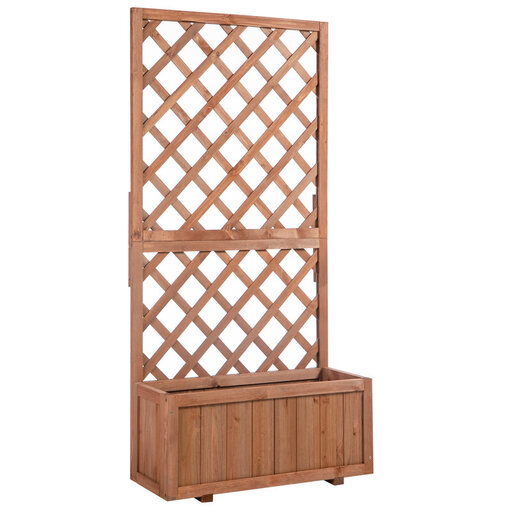
Why This Suits Their Needs: Gardeners growing climbing plants, herbs, flowers or vegetables can use the 45-litre trough with its tall trellis for vertical planting.
The product information clearly states that assembly is required and that timber should be inspected and treated, helping buyers plan for maintenance rather than overlooking it.
Solid wood construction; 45-litre capacity; topped trellis for climbing plants and decorative support.
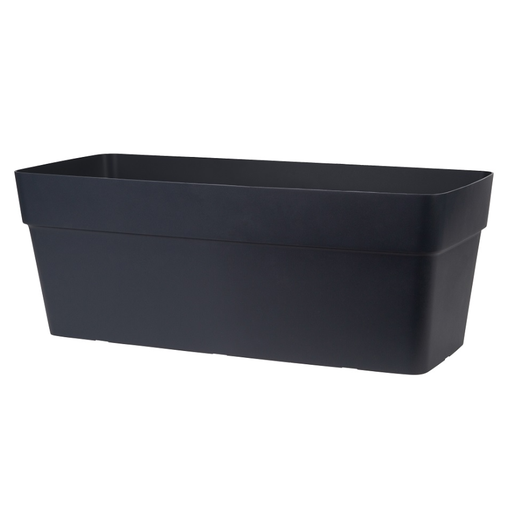
Why This Suits Their Needs: The 60cm by 25cm footprint fits narrow balcony edges, patio walls, pathways and decking where round pots may waste space.
Its stated lightweight recycled plastic construction is easier to reposition, while the recessed base supports drainage when used with suitable soil.
45-litre capacity; charcoal finish; long rectangular planting area for herbs, flowers and trailing plants.
We have compiled a complete, real-time list of products that fully satisfy these strict selection criteria and UK safety regulations.
Once you have selected a container, position it according to the plant and the site:
For renters, recycled plastic and lightweight planters offer easier seasonal rearrangement and removal. For homeowners creating a permanent border, wooden planters or larger stone-effect containers can provide a more fixed visual structure.
Usually, yes. Drainage helps prevent waterlogging after rainfall. Check the product specification before purchase and use a suitable saucer or liner indoors. If you are adding drainage holes yourself, follow the product instructions and place the container where excess water will not damage surfaces.
Lifespan depends on material, exposure, plant weight and maintenance. Recycled plastic planters generally require less routine treatment than timber, while wooden planters should be checked and protected with an appropriate preservative or sealant. Extreme frost, standing water and high winds can affect any outdoor container.
They can be, but filled weight is the key consideration. Calculate the approximate weight of the planter, compost, water and mature plants, then check your building or landlord guidance. Measure the balcony width and keep containers away from unsecured edges. Narrow trough planters may provide useful planting space without occupying as much floor area as wide pots.