
24/7 Customer Support

Free returns

Same-day & Next-day Delivery

Quality Guaranteed

Unlock Your Welcome Offers: FREE Delivery | Up to 80% OFF | Free 30-day JoyPlus trial
Download the APP
Choosing outdoor planters is not simply a matter of matching a colour to your garden furniture. The wrong container can become difficult to move, hold too much water or look tired after repeated exposure to rain and sunlight. Whether you are furnishing a patio, decorating a front entrance or growing flowers and herbs on a balcony, a few practical checks can prevent wasted money.
Real timber can bring warmth to a garden, but it may warp, split, rot or require regular treatment when left outdoors. Stone and ceramic can provide visual weight, yet larger containers are often difficult to reposition and may be vulnerable to cracking in cold conditions.
Wood-effect planters and stone-effect planters made from recycled plastic offer a way to achieve a similar appearance with less routine upkeep. However, check the product description carefully: “wood effect” describes the finish, not necessarily the material.
A planter’s external dimensions do not tell you how much usable planting space it provides. Thick walls, tapered shapes and internal structures may reduce the space available for compost and roots. Consider the plant’s mature size, root depth and expected spread before buying.
A shallow container may suit seasonal flowers or herbs, while shrubs and small ornamental trees generally need a deeper planting area. For narrow spaces, trough planters can provide a practical alternative to several round pots.
Waterlogged compost can damage roots, particularly during the UK’s wetter months. Before planting, check whether the container has drainage holes or whether you need to add them according to the manufacturer’s guidance. Use a saucer or suitable tray indoors to protect flooring.
Lightweight garden planters are convenient, but they may be more vulnerable to strong winds when empty or filled with tall plants. On balconies and raised decking, also consider the combined weight of the planter, compost and water, and follow any building or landlord restrictions.
Recycled plastic planters are often easier to move than traditional stone, concrete or timber containers. Look for clearly stated features such as resistance to moisture damage, rot, cracking, fading or UV exposure. These details indicate how the planter is intended to perform, but they do not remove the need for sensible positioning and seasonal care.
For year-round displays, weather-resistant planters can reduce maintenance. Still, inspect the base regularly, keep drainage clear and avoid dragging a filled container across paving.
Measure the space first, including access routes, doorways and the area needed for watering. A listed capacity can also help you estimate compost requirements. For example, the Strata Soho trough has a stated capacity of 45 litres, with dimensions of 60cm high? No—the listed dimensions are 30cm high, 60cm wide and 25cm deep. This makes it more suitable for grouped planting than for a large deep-rooted specimen.
For balconies, compare the planter footprint with the available floor space and leave room to walk safely. For entrances, ensure the container does not obstruct doors, paths or visibility.
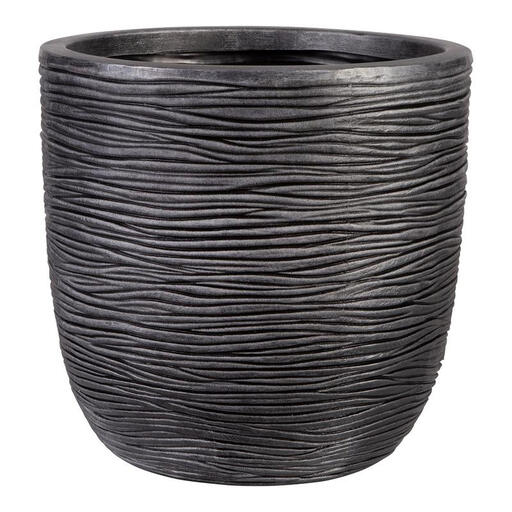
Why This Fits Their Persona: Its compact 35cm diameter suits first-time gardeners furnishing a doorstep, small patio or compact outdoor corner without committing to a large container.
The recycled plastic construction avoids the warping, rotting and moisture absorption associated with untreated timber.
Oakwood-effect styling, lightweight recycled plastic and a round form suited to flowers, herbs and decorative foliage.
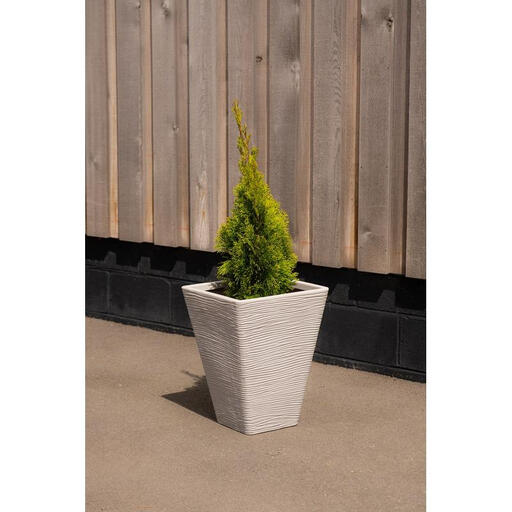
Why This Fits Their Persona: The 52cm height and neutral stone finish suit shoppers creating a defined entrance display, contemporary patio arrangement or layered garden feature.
It provides the visual character of stone without the same handling difficulty associated with a solid stone container.
Recycled plastic construction, stone-effect appearance and stated resistance to weather, UV fading and frost damage.
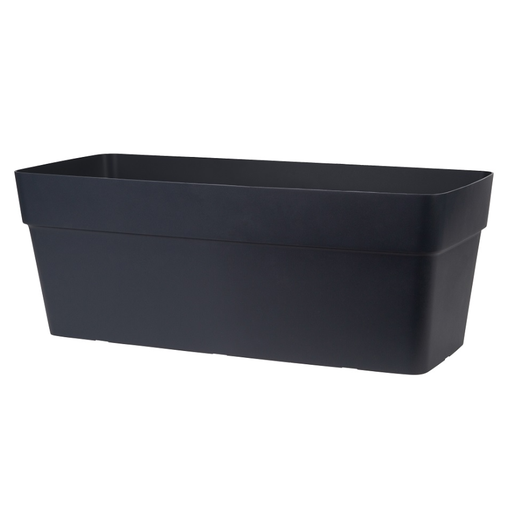
Why This Fits Their Persona: Its 60cm-long planting space is suited to repeat displays along patio walls, balcony edges, pathways or beneath windows.
The elongated footprint uses narrow space efficiently, while its recessed base supports drainage when used with suitable compost.
45-litre stated capacity, charcoal finish, recycled plastic construction and suitability for flowers, herbs and trailing plants.
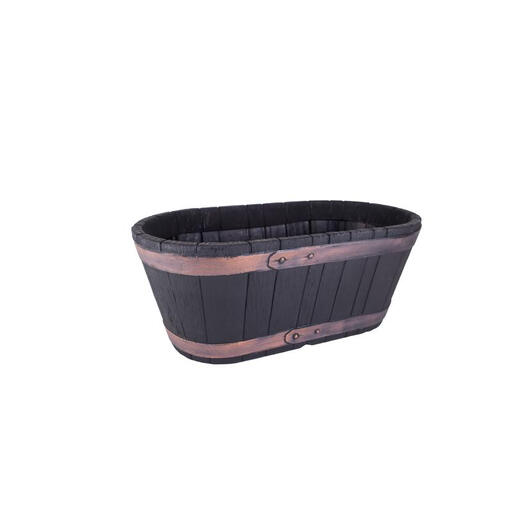
Why This Fits Their Persona: The long barrel-style profile works well for cottage borders, decking, front entrances and mixed flower or herb displays.
The wood-effect finish delivers a timber-inspired appearance without the listed risks of warping, rot and regular wood treatment.
60.5cm length, recycled plastic material and an oakwood-effect finish designed for decorative outdoor planting.
We have compiled a complete, real-time list of products that fully satisfy these strict selection criteria and UK safety regulations.
Use compost suited to the plant rather than filling every container with ordinary garden soil, which can become dense in a pot. Place a layer of suitable drainage material only where appropriate, and do not block drainage holes. Group plants with similar watering and light requirements to reduce maintenance.
For patio planters and balcony planters, position heavier containers in a sheltered area and avoid placing them where strong wind could create a tipping risk. A trough can be more stable when planted with low-growing varieties, while taller plants may need support.
Indoors, use a liner or saucer where recommended and check that excess water cannot damage flooring. Rotate containers occasionally if plants grow towards a single light source.
They can be suitable for outdoor use when the product description specifies weather, moisture or UV resistance. Performance still depends on correct drainage, placement and plant selection. Check the stated material and intended use before leaving a planter outside all year.
Flowers, herbs, grasses, foliage plants and some shrubs can grow successfully in containers. Choose the planter depth and width around the plant’s root requirements. Trough planters are practical for herbs and grouped seasonal flowers, while deeper barrel planters can accommodate larger decorative planting.
Confirm that water can drain freely through the base, use suitable container compost and avoid standing the planter in permanently collected rainwater. Empty saucers after heavy rainfall where practical, and raise containers slightly if the location does not drain well.