
24/7 Customer Support

Free returns

Same-day & Next-day Delivery

Quality Guaranteed

Unlock Your Welcome Offers: FREE Delivery | Up to 80% OFF | Free 30-day JoyPlus trial
Download the APP
Outdoor planters can quickly improve a patio, balcony, entrance or garden border, but attractive photographs do not always reveal whether a planter will work in everyday UK conditions. A pot that looks like stone may be difficult to move, while a wooden planter may need regular treatment and still deteriorate in damp weather.
Before buying, focus on how the planter will be used, where it will stand and what maintenance you are prepared to manage. The following guide explains the main buying traps, the specifications worth checking and our top recommendations for different planting needs.
Traditional stone and terracotta can look substantial, but filled containers become considerably heavier. This matters on balconies, raised decking and rented properties where you may need to rearrange displays or remove them before severe weather.
Lightweight garden planters made from recycled plastic can provide a stone or wood effect without the same handling difficulty. However, lightweight does not mean they should be left unsecured in an exposed position. Tall planters and empty containers may need positioning against a wall or adding weight to the base.
Outdoor containers face rain, frost, temperature changes and UV exposure. Real timber may absorb moisture, warp or rot unless it is treated and periodically maintained. Metal can corrode, while some low-quality plastics may become brittle or fade.
Look for clearly stated features such as recycled plastic construction, resistance to moisture and UV exposure and suitability for outdoor use. These terms describe practical product characteristics, but they do not remove the need for sensible placement and occasional cleaning.
A decorative container is not automatically ready for planting. Excess water can collect after heavy rain, especially when a pot has no visible drainage arrangement. Waterlogged compost can damage roots, while a container that is too shallow may restrict larger plants.
Check the internal planting depth, drainage holes or whether a suitable liner is needed. A trough planter may suit herbs and shallow-rooted flowers, while a deeper barrel or tall square tapered planter is more appropriate for shrubs and larger arrangements.
Recycled plastic planters are useful when you want a lower-maintenance alternative to timber, stone or terracotta. They are generally easier to lift and reposition and selected designs are made to resist rot, moisture damage, cracking and fading.
A wood-effect finish can provide the visual warmth of a timber barrel without regular staining. A stone-effect planter can create a more architectural look while remaining easier to handle than a comparable solid stone container. Even with weather-resistant planters, check the product information for placement guidance, particularly for exposed balconies and windy gardens.
Match the shape to the space:
Use compost suited to the plants and avoid filling a large pot with unnecessarily heavy material if the container is placed on a balcony or deck. Raise containers slightly where appropriate to prevent blocked drainage and protect surfaces.
For artificial flowers, faux silk flowers and artificial hanging plants, drainage is less important, but secure positioning still matters outdoors. Some artificial arrangements are more suitable for sheltered locations, so check whether the product is intended for covered outdoor use rather than leaving it exposed all year.
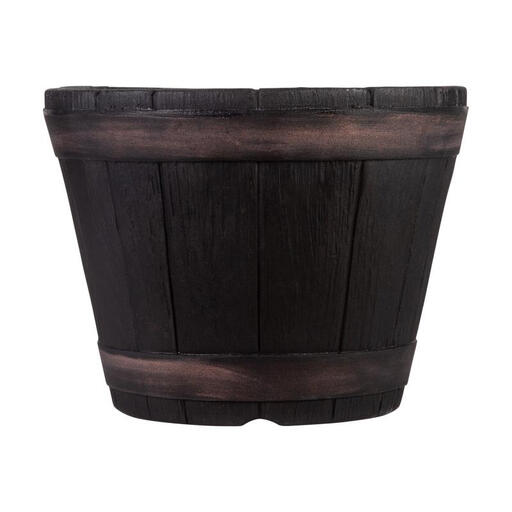
Why This Fits Their Persona: Its compact 34cm diameter suits a first patio, porch or front-door display, while the oakwood effect adds warmth without requiring timber treatment.
Recycled plastic avoids the rot and moisture absorption associated with untreated wood, while its lighter construction makes seasonal repositioning easier.
Recycled plastic; oakwood-effect finish; suitable for shrubs, flowers and decorative container planting.
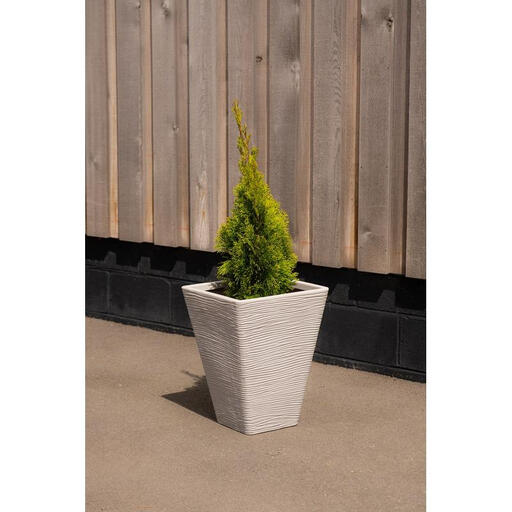
Why This Fits Their Persona: The 52cm height and neutral stone colour create a structured feature for entrances, conservatories, patio corners and contemporary planting schemes.
The stone-effect appearance provides visual weight without the handling demands of solid stone, and recycled plastic is listed as the material.
40cm width; 52cm height; stone colour; suitable for indoor and outdoor decorative planting.
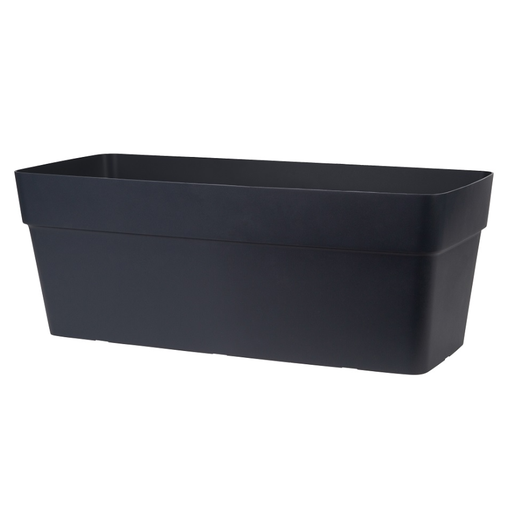
Why This Fits Their Persona: A 60cm-long planting area suits repeated displays beneath windows, along railings, beside paths or across a patio boundary where a round pot would waste space.
The stated 45L capacity and recessed base provide practical planting volume and drainage support, subject to using suitable compost and keeping outlets clear.
45L capacity; 60 x 25 x 30cm dimensions; charcoal recycled-plastic construction; suited to balconies and patios.
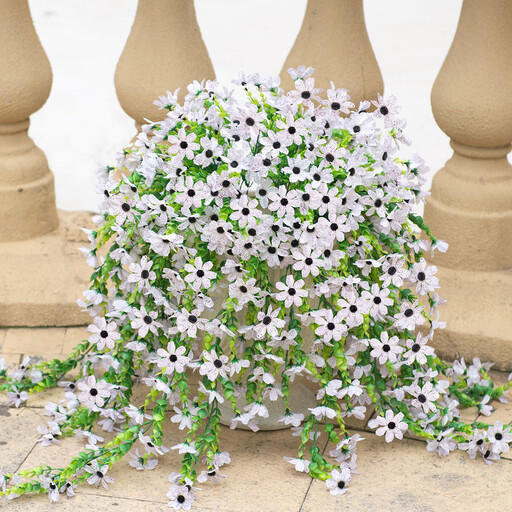
Why This Fits Their Persona: Four flexible bundles add colour to porches, patios, window boxes and balconies without watering or replacing wilted seasonal blooms.
The wired, plastic-wrapped stems can be shaped for different containers, while the listing specifies indoor or covered outdoor use rather than unrestricted exposure.
Four bundles; 72.8cm length; bendable stems; silk daisies and foliage for low-maintenance decoration.
Place containers on a stable, level surface and keep drainage water away from walls, timber decking and external electrical equipment. On balconies, check the property’s rules and consider the fully filled weight, not only the empty planter weight.
Use pot feet or a suitable tray where needed, but avoid blocking drainage outlets. Tall or narrow planters may be more vulnerable to wind, particularly when planted with lightweight foliage. Grouping containers can improve visual balance, but leave enough room to inspect plants and clean around them.
For artificial flowers and garden flower decorations, use flexible stems to create a natural shape and secure arrangements inside the planter. Artificial hanging plants can soften railings or porch structures, but should be fastened so they cannot become loose during windy weather.
Lifespan depends on material, exposure, weight and care. Recycled plastic planters do not rot like untreated wood, but prolonged direct sunlight, frost and accidental impact can still affect their appearance over time. Cleaning surfaces and avoiding unnecessary dragging can help maintain them.
They can be suitable, but the key consideration is total loaded weight and secure placement. Check balcony restrictions, use containers appropriate for the available space and avoid positioning tall, light planters where strong winds could move them.
Live plants generally need effective drainage to reduce the risk of waterlogged compost. Check the product details before planting and use a liner, saucer or drainage solution where appropriate. Artificial arrangements do not need drainage for plant health, although outdoor containers may still collect rainwater.