
24/7 Customer Support

Free returns

Same-day & Next-day Delivery

Quality Guaranteed

Unlock Your Welcome Offers: FREE Delivery | Up to 80% OFF | Free 30-day JoyPlus trial
Download the APP
Outdoor security cameras can help you monitor a driveway, garden, porch, garage, shopfront or rental property from your phone. However, product descriptions often focus on headline features while leaving out practical limitations. A high-resolution camera may still produce unclear footage if it faces a bright security light, while a wireless model may need frequent charging if it receives heavy motion activity.
This guide explains the specifications that matter, common buying traps and suitable options for different UK households and small businesses.
A 4K security camera records more pixels than a 2K or 1080p model, but higher resolution does not automatically mean clearer identification. Lens quality, lighting, image processing, positioning and digital zoom all affect what you can see.
For a small porch, a 1080p or 2K security camera may be sufficient. A larger driveway or shop entrance may benefit from 4K, particularly when you need to crop or enlarge footage. Check the camera’s field of view as well as its resolution.
A wireless outdoor security camera normally still needs a reliable Wi-Fi connection and a power source. Battery models require recharging, while plug-in cameras need an outdoor-safe power connection. Solar models can reduce charging, but panels still need clear exposure to daylight and occasional cleaning. Shaded walls, winter cloud and dirt can affect charging performance.
Also check Wi-Fi compatibility. Some cameras operate only on 2.4GHz networks, while dual-band models support both 2.4GHz and 5GHz Wi-Fi. A 2.4GHz connection may offer better range through walls, whereas 5GHz can provide faster local transmission at shorter distances.
Cloud storage may involve a recurring charge, different retention periods or restrictions on advanced features. If you want a no monthly fee security camera, check whether recordings can be saved to a microSD card, built-in memory or a compatible hub.
Local storage can reduce ongoing costs, but the camera may be vulnerable if it is stolen or damaged. A practical setup may combine local recording with optional cloud backup, depending on the value of the property and the footage required.
An IP66 waterproof security camera is protected against dust and powerful water jets, but it should not be submerged. IP65 offers protection against water jets at a lower level. Neither rating makes the power adapter or exposed socket safe to leave in standing water.
Mount the camera securely on a stable surface, route cables away from walkways and protect outdoor connections in a suitable waterproof junction box. Avoid pointing the lens into neighbours’ windows or areas where people reasonably expect privacy. UK data protection and privacy obligations may apply when recording beyond your own property.
A fixed camera may suit a narrow entrance, while a PTZ security camera can pan and tilt to cover a wider area. A 360° security camera may reduce blind spots, but the stated coverage depends on mounting height, obstructions and whether the camera physically rotates or uses multiple lenses.
Motion detection can be triggered by people, vehicles, animals, rain or moving foliage. Look for customisable activity zones and person detection if you want to reduce unwanted alerts. Two-way audio and a built-in siren can be useful for communicating with visitors or drawing attention to activity, but they should not be treated as a substitute for secure locks, lighting or an alarm system.
Infrared night vision shows scenes in monochrome, while a colour night vision camera generally needs ambient light or an integrated spotlight. Check the stated night-vision range and consider whether the camera will face headlights, reflective surfaces or complete darkness.
Confirm the maximum microSD capacity, whether a card is included and whether continuous recording is supported. Event-only recording uses less storage, while 24/7 recording may require a larger card and a continuous power supply.
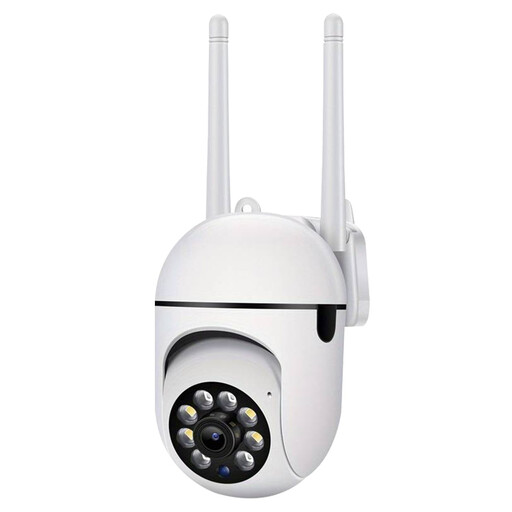
Why This Fits Their Persona: A practical option for monitoring a porch, side passage or small garden without moving to a multi-camera system.
It supports SD card and cloud storage, helping buyers consider local recording before committing to a paid service.
1080p video, 355° horizontal and 90° vertical movement, two-way audio, motion detection and three night-vision modes.
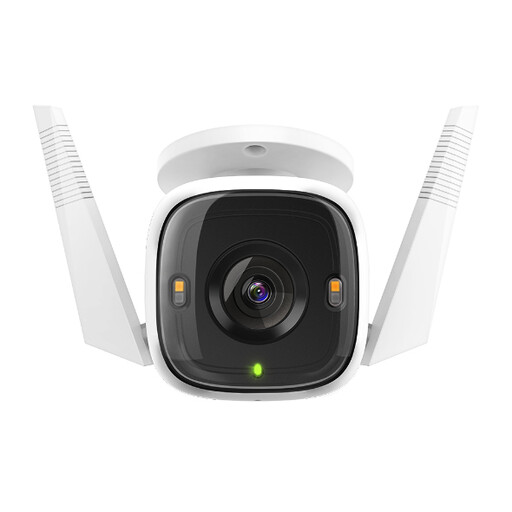
Why This Fits Their Persona: Suitable for homeowners who want app alerts and flexible installation around a driveway, garden or entrance.
It offers microSD recording with support up to 256GB, while cloud storage is optional rather than the only stated route.
2K QHD resolution, IP66 rating, dual-band Wi-Fi, Ethernet connectivity, person and vehicle detection and activity zones.
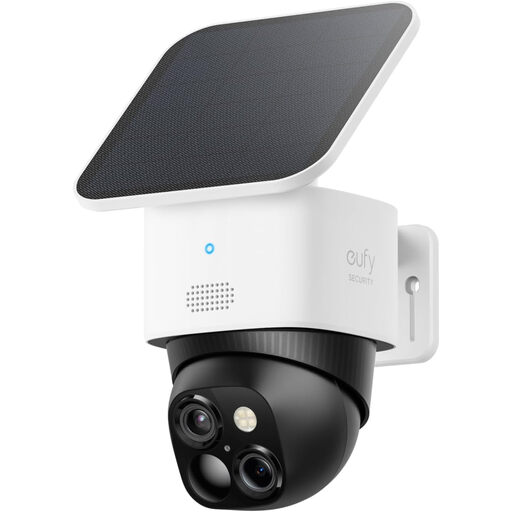
Why This Fits Their Persona: A solar-powered choice for homeowners and landlords who prefer a wire-free installation across a porch, garden or driveway.
The removable solar panel reduces reliance on manual charging, although panel placement and daylight exposure remain important in the UK.
3K capture, 360° coverage, dual-camera views, 8× zoom, Wi-Fi connectivity and a battery-powered solar design.
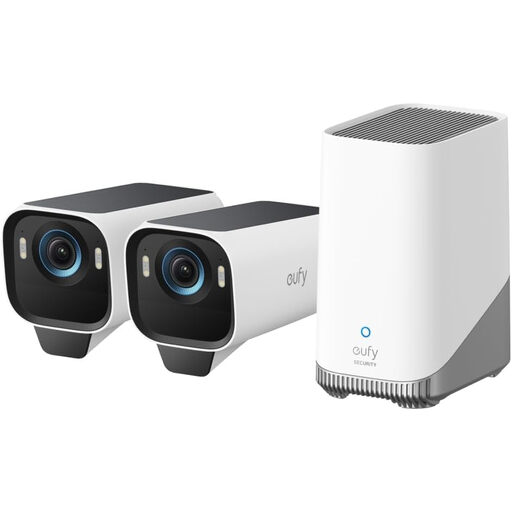
Why This Fits Their Persona: Designed for users covering multiple outdoor zones who place greater value on high-resolution footage and expandable local storage.
It lists 16GB of on-device storage and expandable local storage up to 16TB, helping reduce dependence on a monthly cloud plan.
4K video, solar panels, colour night vision, dual motion detection and a two-camera kit for wider property coverage.
We have compiled a complete, real-time list of products that fully satisfy these strict selection criteria and UK safety regulations.
Most smart home security cameras use Wi-Fi for live viewing, alerts and app configuration. Some models also include Ethernet, which can provide a more stable connection. A camera may continue recording locally during a temporary internet outage, but remote access and notifications may not work.
Lifespan depends on battery wear, weather exposure, charging conditions, storage media and installation quality. Keep solar panels clean, use the supplied power accessories and inspect seals and cables periodically. Battery-powered cameras may need more frequent attention than plug-in models.
Some cameras support local recording without a monthly charge, but optional cloud services may still cost extra. Check whether key features, storage duration, artificial intelligence detection or multi-camera access require a subscription before purchasing.