
24/7 Customer Support

Free returns

Same-day & Next-day Delivery

Quality Guaranteed

Unlock Your Welcome Offers: FREE Delivery | Up to 80% OFF | Free 30-day JoyPlus trial
Download the APP
Choosing an outdoor security light can feel like a simple task, but a few common missteps can lead to a purchase that is ineffective, unreliable or simply not right for your property. Many lights promise complete security, but often fail when it comes to the realities of British weather or the specific layout of your home. Before you buy, it's worth understanding the pitfalls that can leave you with a poorly lit garden and a sense of false security.
One of the most frequent issues is overlooking weather resistance. A light that isn't properly sealed will quickly fail in the face of persistent UK rain and damp, leading to short-circuits or rust. Another common trap is buying a light with a fixed, overly sensitive motion sensor. This results in constant false alarms from passing cats or swaying tree branches, which is not only annoying but also defeats the purpose of a security alert. Finally, many focus solely on maximum brightness, ignoring the light's colour temperature, which can result in a harsh, clinical glare rather than clear, usable illumination.
To make a smart choice, you need to look past the marketing buzzwords and focus on a few core technical details. Understanding these will ensure your new outdoor wall light with sensor performs exactly as you need it to.
For any waterproof outdoor light in the UK, the IP (Ingress Protection) rating is non-negotiable. This two-digit number tells you how well the light is protected against solids (first digit) and liquids (second digit).
exterior wall lights that will face driving rain, IP65 is a much more reliable standard.An effective LED security light is about more than just being bright. You need to balance brightness (Lumens) with colour temperature (Kelvin).
porch light with motion sensor where you also want to create ambiance.Most motion sensor outdoor light models use a PIR (Passive Infrared) sensor. This detects the heat signatures of moving objects like people or animals. A quality PIR security light should offer adjustability in three key areas: sensitivity (to avoid false triggers), duration (how long the light stays on) and range (the distance at which it detects movement). This customisation is crucial for tailoring the light's behaviour to your specific environment.
To help you find the right fit, we've matched some options to different homeowner needs.
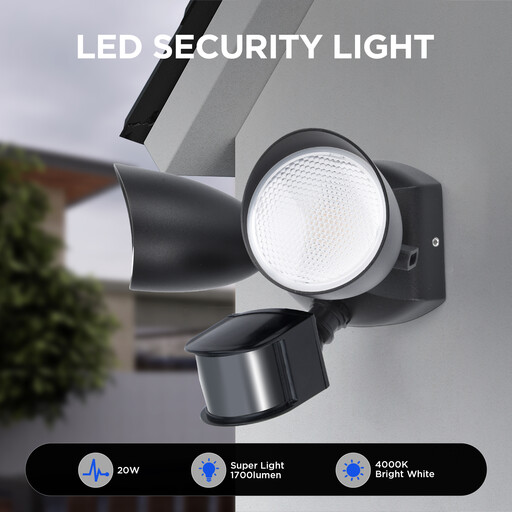
Why This Fits Their Persona: This user prioritises maximum visibility and coverage for large areas like a back garden, driveway or side alley. They need a powerful, no-fuss light designed purely for security illumination.
It avoids the "wrong colour" trap by using a 4000K neutral white light, which is ideal for clear identification, unlike overly warm lights. The twin-head design offers adjustability to prevent dark spots.
High brightness at 1700 lumens effectively illuminates large spaces. The adjustable twin heads allow for precise aiming of light to cover wide or awkward angles.
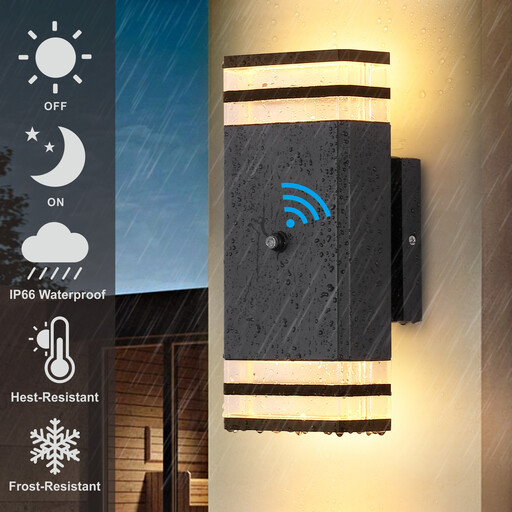
Why This Fits Their Persona: This user is updating their home's exterior and wants a cohesive, modern look. They need functional garden security lights that also enhance the property's aesthetic, and a twin pack offers great value for outfitting both the front and back.
It directly counters the weatherproofing pitfall with a robust IP65 rating, making it suitable for exposed walls that bear the brunt of British weather, ensuring longevity.
The modern, minimalist design complements contemporary homes. The two-pack provides a cost-effective way to create a uniform lighting scheme around the property.
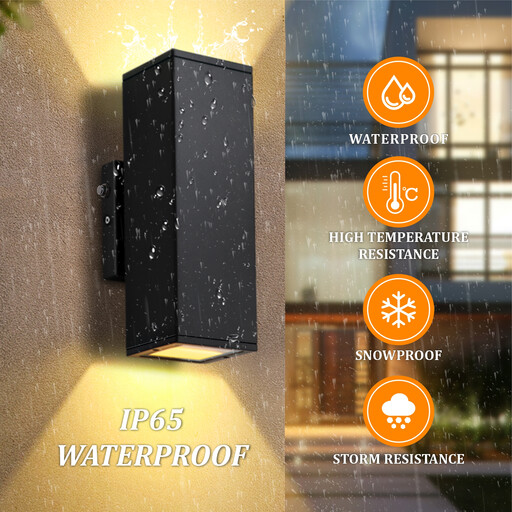
Why This Fits Their Persona: This user wants their porch, patio or deck to feel like an extension of their living space. Security is important, but so is creating a warm, inviting atmosphere for relaxing or hosting guests.
It avoids the "harsh glare" pitfall by using a 2700K warm light. This provides motion-activated security without the stark, industrial feel of high-Kelvin floodlights, preserving the area's ambiance.
The up-and-down lighting effect creates a sophisticated architectural feature. Its waterproof construction ensures it is a durable and stylish choice for any modern home's exterior.
We have compiled a complete, real-time list of products that fully satisfy these strict selection criteria and UK safety regulations.
Modern LED security light models are highly energy-efficient. A typical 20W LED light, if activated for one hour per day, would use approximately 7.3 kWh of electricity over a year. Based on current average UK electricity prices, this would cost only a few pounds annually, making it a very affordable security measure.
For maximum effectiveness, install your light between 2 to 3 metres (6 to 10 feet) high. Aim the sensor downwards and across the likely path of an intruder, not directly at the street, to minimise false triggers from traffic. Common locations include above garage doors, overlooking back gardens, along side passages and near front or back doors.
If you are replacing an existing light and are comfortable with basic electrical work, you may be able to install it yourself after turning off the power at the consumer unit. However, for new installations or if you have any doubts, UK regulations strongly recommend hiring a qualified electrician to ensure the work is safe and compliant with Part P of the Building Regulations.