
24/7 Customer Support

Free returns

Same-day & Next-day Delivery

Quality Guaranteed

Unlock Your Welcome Offers: FREE Delivery | Up to 80% OFF | Free 30-day JoyPlus trial
Download the APP
Choosing the right outdoor security lights for your UK home can feel like a complicated task. With so many options available, it is easy to end up with a light that either fails after a single wet winter or turns your garden into a space with all the charm of a high-security facility. Many homeowners find their purchase doesn't live up to its promises, leading to wasted money and a false sense of security.
As a Joybuy Product Recommendation Officer, my role is to help you navigate the market. This guide cuts through the clutter to focus on what truly matters, helping you select a durable and effective lighting solution. We will look at the common pitfalls to avoid and the key features that ensure your investment is a sound one.
Before you buy, be aware of these frequent mistakes that can lead to disappointment:
To ensure your outdoor lighting is fit for purpose, focus on these three non-negotiable specifications.
The Ingress Protection (IP) rating is a crucial indicator of how well a light is sealed against dust and moisture. For outdoor use in the UK, this is not a feature to overlook.
Getting the light right involves balancing brightness (lumens) and colour (Kelvin).
Modern weatherproof outdoor lights predominantly use integrated LED technology. This means the light source is built into the fixture and is not replaceable. While this may sound like a drawback, these LEDs have lifespans of 30,000 hours or more, providing years of maintenance-free operation. They are also highly energy-efficient, consuming a fraction of the power of old halogen bulbs. A mains powered security light with an integrated LED offers a reliable, set-and-forget solution that keeps running costs low.
Based on these practical criteria, here are some options matched to different homeowner needs.
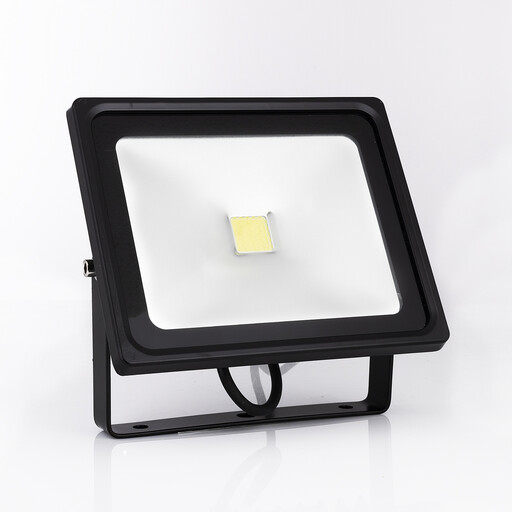
Why This Fits Their Persona: This user needs to illuminate a large area like a wide driveway, back garden or building perimeter. Their priority is maximum visibility and deterrence, making brightness and durability the most important factors.
Its IP65 rating ensures it withstands direct rain, avoiding the common pitfall of water damage. The high 2400 lumen output is specifically for security, not ambient decoration, providing clear, wide coverage.
Delivers a powerful 2400 lumens with a wide 110° beam angle for excellent coverage. The energy-efficient 30W LED keeps running costs low compared to traditional floodlights.
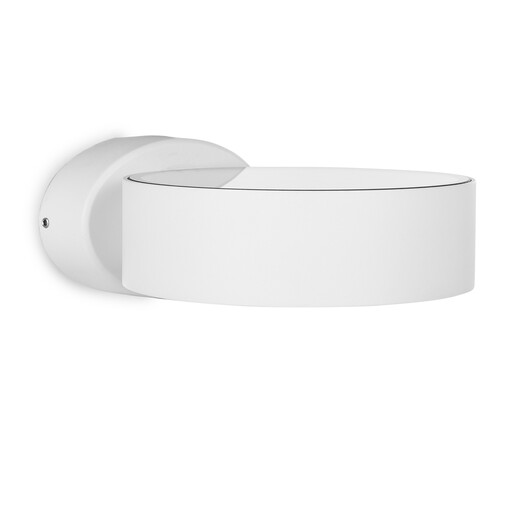
Why This Fits Their Persona: This user wants to enhance the ambiance of their patio, entrance or garden seating area. Style and creating a warm, welcoming atmosphere are more important than intense brightness.
It produces a warm white light, avoiding the harsh, clinical glare of a high-Kelvin security light. This makes it perfect for social spaces. Its IP44 rating is appropriate for wall-mounting in less exposed areas.
The modern up-and-down lighting effect adds a stylish architectural feature to exterior walls. The integrated LED has a long lifespan of up to 30,000 hours for minimal maintenance.

Why This Fits Their Persona: This user needs a dependable, no-fuss light for general safety and visibility around a back door, garage or pathway. They want a balance of good brightness, energy efficiency and all-weather durability.
It avoids the trap of low-cost, unreliable lights by offering a robust IP65 rating and an efficient integrated LED. This ensures it will last through UK winters and won't inflate electricity bills.
A versatile 1500 lumen output provides strong visibility without being overpowering. The 4000K natural cool white light is excellent for task and security applications, offering clear definition at night.
We have compiled a complete, real-time list of products that fully satisfy these strict selection criteria and UK safety regulations.
In the UK, electrical work in certain areas of the home, including outdoors, is covered by Part P of the Building Regulations. While a competent person with the right experience can perform the installation, it is often recommended to hire a qualified electrician. This ensures the work is safe, compliant with all regulations and properly certified, which can be important for home insurance purposes.
The running cost is very low. For example, a 20W LED floodlight (0.02 kilowatts) running for 5 hours every night would use 0.1 kWh per day. Based on an average electricity rate of 25p per kWh (as of mid-2026), this would cost approximately 2.5 pence per day, or less than ?10 for an entire year of use. This is a significant saving compared to older 150W halogen floodlights.
The difference is significant, especially for UK weather. An IP44 light is protected against splashes, making it suitable for a sheltered porch. However, it is not designed to withstand sustained or jet-like water exposure from a heavy downpour or a hose. An IP65 light is sealed against dust and can resist water jets, making it far more durable for installation on exposed walls, garages or posts that face the elements directly. For long-term reliability, IP65 is the preferable standard for most security applications.