
24/7 Customer Support

Free returns

Same-day & Next-day Delivery

Quality Guaranteed

Unlock Your Welcome Offers: FREE Delivery | Up to 80% OFF | Free 30-day JoyPlus trial
Download the APP
An outdoor sun lounger can turn a patio, garden or poolside area into a more comfortable place to read, relax or enjoy warm weather. However, attractive product photos and phrases such as “all-weather” or “luxury comfort” do not always reveal whether a lounger will suit your space or routine.
Before buying, look beyond appearance. The frame, adjustment mechanism, folded dimensions, fabric and care requirements will have a greater impact on day-to-day use than colour alone. This guide explains the main buying pitfalls and compares suitable options for different UK lifestyles.
A slim patio chaise lounge chair may look stylish but offer limited support, a short seat or a backrest with only one fixed position. If you plan to switch between reading, sitting upright and sunbathing, a multi-position backrest is more useful than decorative detailing.
Check the lounger’s full dimensions and recline range. A full-flat position can be helpful for stretching out, while more upright settings are practical for reading or eating outdoors.
Outdoor furniture still needs protection from persistent rain, standing water and winter conditions. Metal may be stable but can require care if its finish becomes damaged. Hardwood can develop a changed appearance without periodic maintenance, while fabric may collect moisture if stored before it is fully dry.
A quick-drying fabric helps with normal outdoor use, but it does not mean the lounger should be left exposed indefinitely. Follow the manufacturer’s instructions, particularly where the product advises covering or storing it during poor weather.
A garden sun lounger may be comfortable in use but difficult to move through a narrow doorway or store in a shed. Buyers using a lounger on a balcony, beach, campsite or shared garden should check the folded size and net weight before ordering.
Wheels can make a heavier frame easier to reposition around a deck or poolside area. A folding design is generally more convenient for seasonal storage, transport and compact patios.
The number of adjustment levels matters, but so does the actual range. A six-level outdoor recliner with a full-flat setting supports several activities, from sitting upright to lying down. A reclining garden chair with seven positions may provide more incremental control, although the footrest and overall length also affect comfort.
When comparing products, look for:
Aluminium alloy is relatively lightweight and convenient for carrying, while a metal frame can provide a stable feel for regular patio use. Acacia hardwood offers a traditional appearance but requires care, including wiping and occasional oiling according to the product instructions.
Always compare the stated maximum static weight capacity with the intended user. The figures supplied for the products below range from 110kg to 150kg per chair. Place the lounger on a level surface and do not exceed its listed capacity.
Breathable synthetic fabric can feel more comfortable during warm weather and may dry faster after light moisture. A removable cushion adds padding but also introduces another item to clean and store.
For UK use, consider:
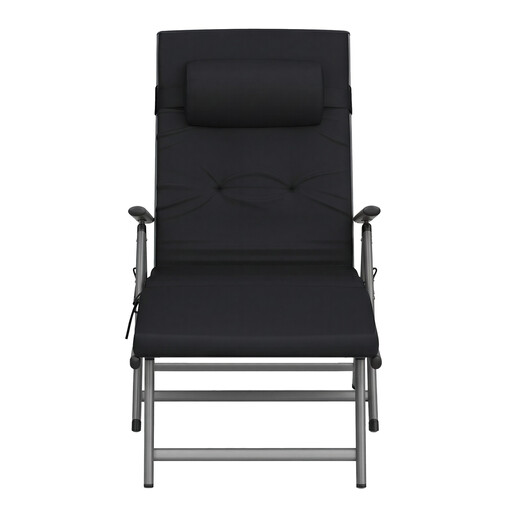
Why This Fits Their Persona: A practical option for someone wanting one portable outdoor lounge chair for a garden, patio, beach trip or camping weekend without a heavy wooden frame.
The foldable aluminium alloy frame and 3.4kg net weight help address storage and transport concerns. The adjustable backrest avoids the limitations of a single fixed angle.
Breathable synthetic fabric, padded armrests, full-recline dimensions of 60x183x97cm and a stated 150kg static weight capacity.
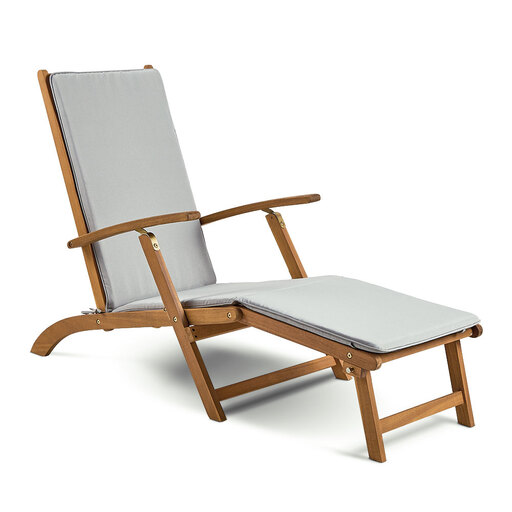
Why This Fits Their Persona: Suitable for homeowners who prefer a traditional hardwood appearance, integrated padding and a dedicated lounger for a patio or garden seating area.
The product specifies seven backrest positions, a removable footstool and a foldable frame, rather than relying on appearance alone. Care instructions also explain how to protect the hardwood.
Acacia hardwood frame, polyester cushion with fixation loops and a 110kg maximum weight capacity. The grey finish works with many neutral outdoor schemes.
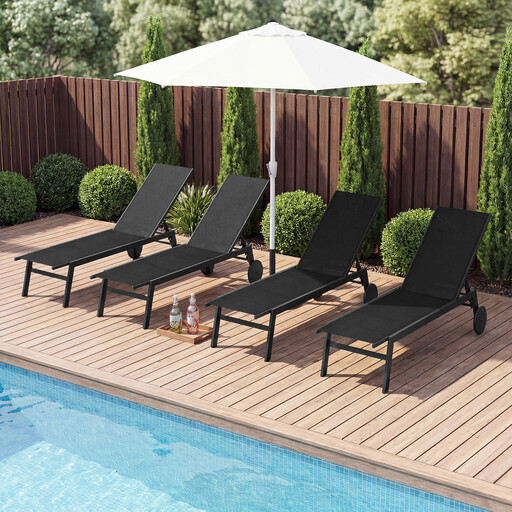
Why This Fits Their Persona: A useful match for couples or households furnishing a poolside, deck or garden where two loungers and easier repositioning are priorities.
Two built-in wheels per chair help with movement, while the six-level backrest includes a full-flat position. The supplied guidance advises avoiding prolonged rain exposure.
Sturdy metal frame, quick-drying fabric, two-chair set and a stated 150kg capacity per lounger. Assembly is required.
We have compiled a complete, real-time list of products that fully satisfy these strict selection criteria and UK safety regulations.
A black sun lounger can create a clean, modern look and may coordinate with dark garden furniture. It can also feel warmer in direct sunlight, depending on the material and fabric.
A grey sun lounger offers a softer neutral appearance and can blend with stone patios, pale decking and lighter cushions. Colour does not determine frame stability or comfort, so prioritise dimensions, materials and care requirements before making a styling decision.
It depends on the construction and the manufacturer’s instructions. Even products designed for outdoor use may require covering or indoor storage during prolonged rain. Dry fabric fully before folding it away, and avoid leaving hardwood in standing water.
Allow room for the chair’s full reclined length, plus clearance to walk around it safely. The listed products measure between approximately 141cm and 190cm in their usable configurations. Check the folded dimensions too if the lounger will be stored in a shed or brought indoors.
A folding garden chair can be convenient for poolside, beach and camping use when its frame is stable, its weight is manageable and the fabric is suitable for outdoor conditions. Check the ground before use, keep the chair level and do not exceed its stated static weight capacity.