
24/7 Customer Support

Free returns

Same-day & Next-day Delivery

Quality Guaranteed

Unlock Your Welcome Offers: FREE Delivery | Up to 80% OFF | Free 30-day JoyPlus trial
Download the APP
Outdoor wall lights can improve visibility around a porch, patio, driveway or garden while adding a considered finishing touch to your property. However, attractive product photography does not always reveal whether a fitting is suitable for the UK weather, compatible with your wiring or economical to run.
Before choosing an LED outdoor wall light or outdoor security light, look beyond appearance and check the construction, installation method and intended coverage. The following guide highlights common buying traps and compares suitable options for different outdoor spaces.
A patterned solar outdoor wall light may create attractive shadows, but it may not provide enough illumination for steps, a driveway or a garage entrance. Conversely, a wall-mounted floodlight can produce broad, bright coverage but may feel excessive beside a front door.
Consider the job first:
“Waterproof outdoor lighting” is a useful search term, but it does not replace checking the product’s IP rating. The first digit relates to protection from solid objects and dust, while the second indicates resistance to water.
For exposed locations, verify the stated rating in the product specifications rather than relying on marketing language. An overhang may offer some shelter, but wind-driven rain can still reach a wall light mounted near a porch or garage.
Solar fittings generally avoid mains wiring, but they need a location that receives useful daylight. A shaded north-facing wall, overhanging tree or nearby building may reduce charging.
Hardwired lights require a suitable electrical connection, secure mounting and weather-protected cable entry. UK homeowners and landlords should use a qualified electrician where installation involves new wiring, junction boxes or work connected to the mains supply.
Look for a clearly stated IP rating and materials designed for outdoor use. Die-cast aluminium, powder-coated finishes and impact-resistant polycarbonate lenses can help a fitting withstand normal outdoor exposure. Even so, inspect seals, cable entries and mounting points during installation.
A black outdoor wall light can suit brickwork, render and contemporary cladding, but dark finishes may show dust, pollen and water marks more readily. Wiping the housing and lens periodically helps preserve light output and appearance.
Lumens indicate visible light output. A decorative garden wall light may need modest output, while a driveway or garage fitting may require considerably more. Colour temperature also affects the atmosphere:
Adjustable heads are valuable where one fixed beam cannot cover both a gate and a pathway. A twin-head floodlight can be angled to reduce dark areas, but avoid directing bright light towards neighbouring windows or public paths.
Integrated LEDs typically avoid regular bulb replacement and use less electricity than traditional halogen fittings, although actual running cost depends on wattage, operating time and your tariff. Motion sensors can reduce unnecessary illumination by switching the light on only when movement is detected.
Solar lights have no direct mains electricity consumption, but their performance varies with daylight, season, dirt on the panel and battery condition. They are often suitable for decorative or low-level pathway illumination, rather than locations where dependable high brightness is essential throughout the night.
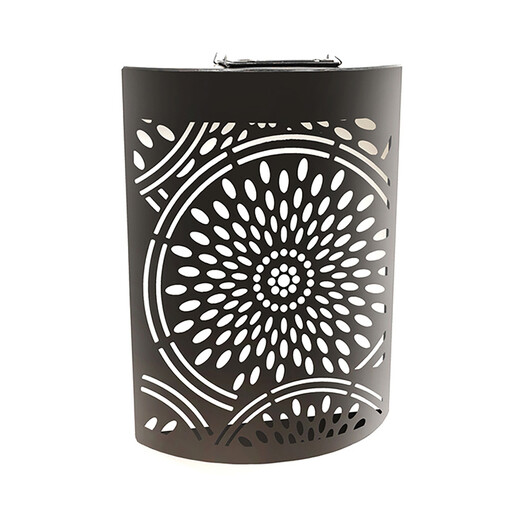
Why This Fits Their Persona: A practical starting point for tenants, landlords or homeowners seeking decorative light without arranging mains wiring. It suits gardens, patios and pathways that receive useful daytime sunlight.
Its solar operation avoids hidden electrician or cabling costs, while the stated metal construction is more suitable for outdoor use than an indoor decorative fitting.
Solar-powered LED operation; curved black Moroccan design creates patterned shadows; wall-mounted installation does not require external wiring.
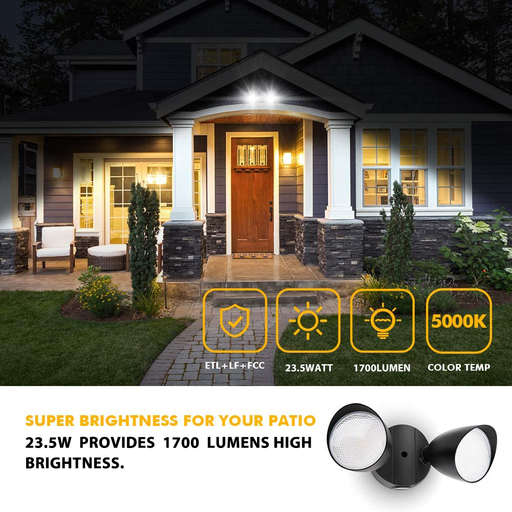
Why This Fits Their Persona: Suitable for homeowners and business owners who want directional coverage for driveways, patios, entrances or exterior walls and are prepared for hardwired installation.
The two independently adjustable heads help avoid relying on a single narrow beam. Its listed IP54/IP65 weather-resistant specification should still be checked against the exact installation position.
360-degree rotation per head; integrated LED beads; die-cast aluminium housing with black powder-coated finish and PC lenses.
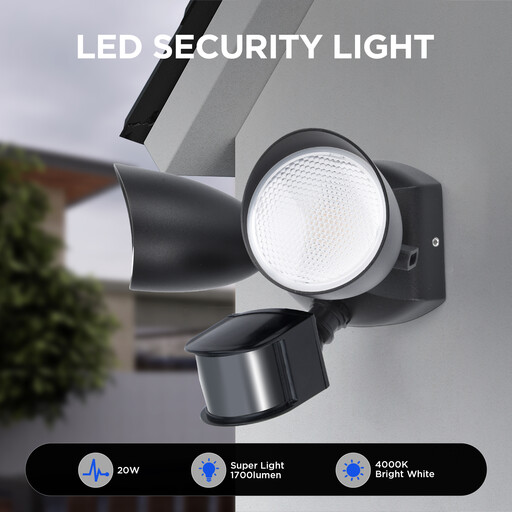
Why This Fits Their Persona: Designed for users prioritising practical illumination around larger gardens, garden areas, garages and perimeter areas where sensor activation and broader coverage are important.
The stated 1700-lumen output and integrated twin heads provide clearer specification details than a vague “high brightness” label. Confirm sensor range and wiring requirements before purchase.
20W integrated LED; 1700-lumen output; 4000K neutral light; twin-head design with a motion sensor.
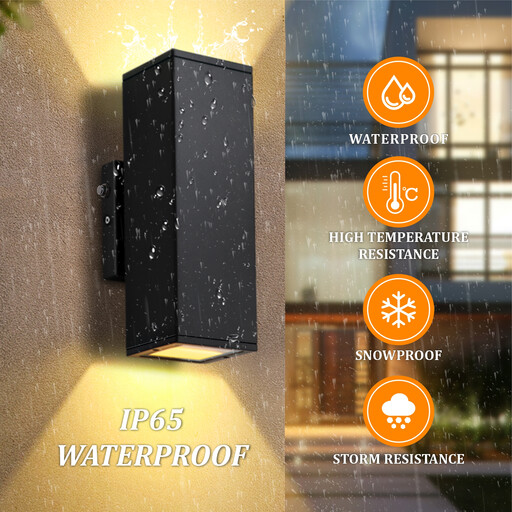
Why This Fits Their Persona: A suitable visual match for a modern porch, patio or garage entrance where warm up-and-down illumination is preferred over a strong floodlight beam.
The listing identifies a 2700K warm light, motion sensing and outdoor use, helping buyers assess atmosphere and operation rather than choosing solely by appearance.
2700K warm LED light; up-and-down wall sconce design; matte black square housing; motion sensor.
We have compiled a complete, real-time list of products that fully satisfy these strict selection criteria and UK safety regulations.
Before fitting outdoor wall lights, check the following:
They can use less electricity than traditional halogen fittings, but running cost depends on wattage, operating hours and your electricity tariff. A motion sensor may reduce operating time, while solar models avoid direct mains electricity use but depend on daylight and battery performance.
There is no single rating for every location. A sheltered porch has different exposure from an open driveway. Check the manufacturer’s stated IP rating and installation instructions, then match the fitting to its position, exposure to rain and method of cable entry.
If installation involves mains wiring, a junction box or a new electrical connection, use a qualified electrician unless you are appropriately competent and able to comply with relevant UK electrical safety requirements. Solar lights are generally simpler to mount, but they must still be securely fixed and positioned safely.