
24/7 Customer Support

Free returns

Same-day & Next-day Delivery

Quality Guaranteed

Unlock Your Welcome Offers: FREE Delivery | Up to 80% OFF | Free 30-day JoyPlus trial
Download the APP
Outdoor wall lights can improve visibility around a porch, driveway, garage or garden, but the wrong product may become an expensive nuisance. A high lumen figure does not automatically mean useful illumination, while a motion sensor can be frustrating if it faces a busy pavement or triggers whenever a cat passes.
Before choosing from the wide range of outdoor wall lights, focus on how the fitting will be powered, how much weather exposure it will receive and whether its light output suits the space. These checks help UK homeowners, tenants, landlords and small business owners avoid common buying traps.
Lumens indicate the amount of visible light produced, but they do not explain how evenly that light is distributed. A 3,000-lumen solar floodlight may suit a driveway or large garden, whereas 500 lumens may be more appropriate for a porch or entrance. Beam direction, mounting height and adjustable heads also affect the result.
For garden wall lights and patio lights, excessive brightness can create glare for residents and neighbours. For security purposes, aim the light towards the ground or access point rather than directly towards windows.
Outdoor products use IP ratings to indicate protection against solid particles and water. IP54 generally provides protection from dust ingress and water splashes, while IP65 indicates a dust-tight enclosure with protection against water jets from any direction. Neither rating means a fitting should be submerged or installed carelessly in a location where water collects.
Check the rating alongside the installation position. A covered porch may be suitable for IP54 outdoor lighting, while an exposed wall facing wind-driven rain may benefit from an IP65 outdoor lighting product.
Solar outdoor security lights avoid mains wiring, but their performance depends on daylight, panel placement and battery capacity. A shaded north-facing wall, winter cloud cover or dirt on the panel can reduce operating time.
Mains-powered fittings provide consistent illumination, but installation involves wiring and may require a qualified electrician, particularly where a new circuit or exterior connection is needed. Tenants should also obtain the landlord’s permission before making permanent electrical changes.
Outdoor wall lights with motion sensor functions are useful for entrances, garages and driveways, but detection range claims should be considered alongside mounting height and the direction of movement. A sensor often detects someone walking across its field more reliably than someone approaching directly.
Look for adjustable sensor heads or lighting heads where possible. A product with a broad detection angle can cover more ground, but sensitivity and activation duration still need to suit the location. Avoid positioning sensors directly towards roads, footpaths or trees that move in strong wind.
For exposed exterior locations, check the IP rating, housing materials and whether the fitting is intended for wall mounting. ABS and PC housings can provide a practical balance between low weight and outdoor durability, while a sealed LED module reduces the need for bulb replacement.
Also inspect the wall surface and cable entry point. Even a suitably rated fitting can develop problems if the backplate is uneven or water can run behind it. Seal and secure the installation according to the manufacturer’s instructions.
A warm white output around 2700K–3000K creates a softer appearance for porches, terraces and entertaining areas. Cooler light can make driveways and access routes appear brighter, but may feel less suitable for relaxed garden settings.
Integrated LED lighting generally uses less power than older conventional lamps, but compare wattage with the stated lumen output. Solar models have no direct mains electricity cost, while wired LED fittings consume electricity only when switched on or activated. Timers, dusk-to-dawn sensors and shorter motion activation periods can help control running costs.
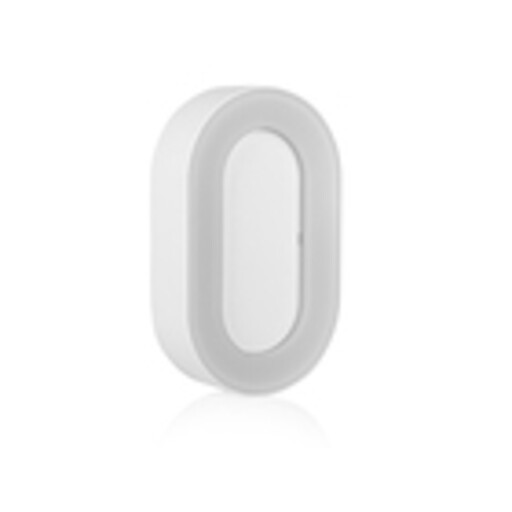
Why This Fits Their Persona: A practical wired option for a porch, entrance, terrace or garage where a compact wall light and consistent everyday illumination are more important than high-intensity security coverage.
Its stated IP54 rating and standard wired installation requirements make the intended use clearer than vague “all-weather” wording. It is not positioned as a substitute for a high-output floodlight.
500 lumens of 3000K warm white light, 10.5W power usage and an integrated LED module rated for up to 30,000 hours.
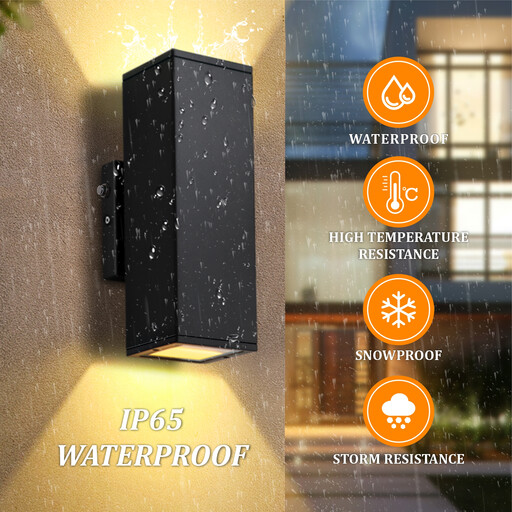
Why This Fits Their Persona: Its up-and-down light format suits homeowners who want a more considered appearance around a porch, patio or garage, alongside motion-activated illumination.
The stated 2700K colour temperature helps buyers choose a warm appearance deliberately rather than relying on an unclear “bright white” description. Confirm the wiring and mounting requirements before purchase.
27cm square matte black design, integrated LED lighting and a built-in motion sensor for targeted exterior use.

Why This Fits Their Persona: Suitable for larger driveways, gardens, garages and other areas where wiring is inconvenient and broad, motion-triggered coverage is useful.
The listing specifies a 60-foot detection distance, 180° sensor angle, three lighting modes and an IP65 rating. Solar output will still depend on direct sunlight and seasonal conditions.
Three adjustable heads provide a stated 270° coverage range, with 302 LEDs, a 3,000-lumen output and an 1,800mAh lithium-ion battery.
We have compiled a complete, real-time list of products that fully satisfy these strict selection criteria and UK safety regulations.
LED outdoor wall lights are generally economical because they use relatively little electricity and can have long operating lives. Actual cost depends on wattage, daily operating time and your electricity tariff. Motion sensors and timers can reduce unnecessary illumination. Solar outdoor security lights do not draw mains electricity during use, although battery performance depends on available sunlight.
For a sheltered entrance, IP54 may be suitable if the fitting is installed according to its instructions. More exposed positions may benefit from IP65 outdoor lighting, which offers dust-tight protection and resistance to water jets. Always consider drainage, wall position and cable entry points rather than relying on the rating alone.
Follow the manufacturer’s stated installation guidance, but avoid mounting the sensor so high that it cannot detect movement effectively. Aim the detection zone across the approach route, reduce direct exposure to busy roads and test the angle after installation. This can help limit false activation while retaining useful coverage.