Everyday crumble bakers
If you usually bake one dish, focus on a cooking mode suited to even baking and on evidence for the exact oven’s temperature control before paying for extra capacity.


For one apple crumble at a time, start with a single oven that fits your kitchen and has a suitable fan or hot-air cooking mode; check the exact model’s heat-distribution evidence rather than relying on an airflow claim. A double oven becomes more useful when you regularly cook dessert alongside other dishes. Before choosing either, confirm the housing dimensions and electrical connection requirements.
If you usually bake one dish, focus on a cooking mode suited to even baking and on evidence for the exact oven’s temperature control before paying for extra capacity.
If you make several crumbles or cook dessert alongside a main course, compare shelf arrangements and whether separate oven cavities would help you manage the dishes.
If the oven must go into existing cabinetry, check the installation dimensions, usable cavity capacity and electrical requirements before comparing optional cooking features.
Choose it when: One cavity covers your usual crumble baking and everyday cooking, and the housing suits a single oven.
Trade-off: One cavity cannot run two dishes at different temperatures independently.
Consider it when: You regularly bake crumble alongside another dish and want separate cooking cavities.
Trade-off: Built-in and built-under double ovens have different fitting requirements and cavity sizes; neither should be assumed to replace a single oven directly.
| Concern | Buying check | Who this matters to |
|---|---|---|
| Even baking | Check the exact cooking modes and look for model-specific heat-distribution and temperature-control results. Which? assesses both in its oven testing. | If I mainly bake one crumble, I want the topping and fruit to cook consistently without relying on an airflow slogan; around 40% of consumers put even baking first. |
| Cooking capacity | Compare cavity capacity, shelf positions and whether you need one cavity or two; Similarly sized ovens can have different capacities. | When dessert often goes in with other food, I need room to manage both dishes; additional capacity is the main concern for around 30% of consumers. |
| Fit and connection | Match the installation diagram to the housing, then check the stated connection and electrical loading. Electrical Safety First notes that connection requirements differ between ovens. | Replacing an oven means little if the new one will not fit or connect safely; for around 20% of consumers, installation is the primary concern. |
| Cleaning and energy information | Compare the exact cleaning method and the applicable energy information; neither establishes how evenly an oven bakes. | After frequent fruit desserts, I would rather limit cleaning effort and compare operating information clearly; these considerations come first for around 10% of consumers. |
Single, built-in double and built-under double ovens can need different housing heights and offer different cavity capacities, even when their fronts look similar.
Measure the opening and compare the exact installation diagram and cavity capacities before ordering.
Electrical Safety First notes that some ovens use a plug while others require hardwiring into a dedicated circuit. An unsuitable connection can create a safety risk.
Check the model’s connection instructions and electrical loading against your kitchen supply; use a qualified electrician where the installation requires one.
A manufacturer’s description explains a feature, not how accurately a particular oven controls temperature. Which? tests heat distribution and control accuracy as separate performance measures.
Identify the cooking modes you need, then compare independent results for the exact model where available.
Steam functions and food sensors may suit a wider baking routine, but they do not resolve an unsuitable housing, electrical connection or cavity size.
Confirm fit, connection, cooking modes and capacity first; consider specialist functions if you expect to use them regularly.
Its built-in single-oven range includes fan-cooking options relevant to baking one crumble at a time.
Its oven range includes hot-air cooking features and double-oven configurations for households managing several dishes.
Selected built-in single ovens combine multilevel cooking with additional baking or cleaning functions.
The HOI4S8HM0XUK is a multifunction single-oven option for buyers comparing cavity size and multilevel cooking.
These built-in ovens cover both a double-oven option for cooking alongside other dishes and single-oven options for everyday crumble baking. Check each model’s cooking modes and installation requirements against your kitchen.
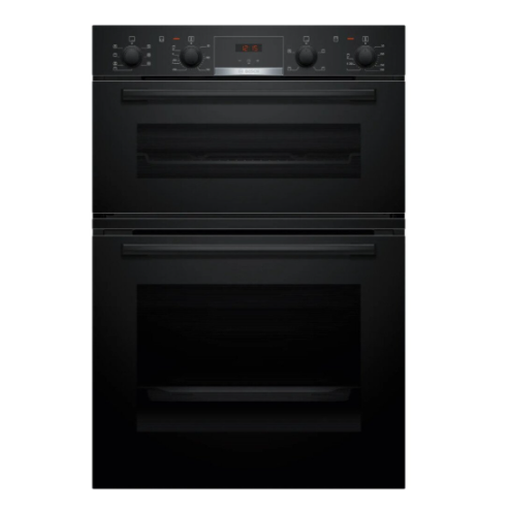 Image unavailable
Consider a double oven if you regularly cook a crumble alongside another dish.
This model is specified for eye-level built-in installation, not under a worktop. Check the housing dimensions and its stated hardwired connection and approximately 5.9 kW load with a qualified installer. For baking consistency, look for heat-distribution results for this exact model.
 Image unavailable
A single oven is worth considering if one cavity meets your usual crumble-baking needs.
Check its cooking modes and model-specific baking results, as well as the housing dimensions. The stated connection is hardwired with a 3.3 kW load; verify the supply and use a qualified electrician for installation.
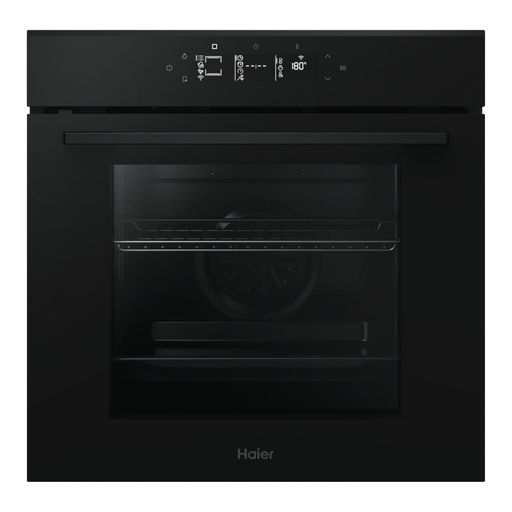 Image unavailable
Consider this single-oven format if you want to compare a 70 L cavity with the space available in your kitchen.
Confirm the exact cooking modes before relying on a dedicated fan setting, and seek model-specific baking results if even heat is your priority. Check the housing and the stated 3.3 kW load and dedicated 16 A hardwired-circuit requirement with a qualified installer.
No, but a suitable fan or hot-air mode is a useful starting point when comparing ovens for even baking. Confirm the exact model’s functions and look for model-specific performance evidence rather than assuming its airflow name guarantees the result.
A single oven is sufficient if one cavity covers your usual cooking; consider a double oven if you regularly prepare dessert alongside other dishes. Check the housing height and each cavity’s capacity, particularly when comparing built-in and built-under designs.
Not necessarily. Electrical Safety First says some ovens use a standard plug and fuse, while others need hardwiring into a dedicated circuit. Check the chosen model’s instructions and your existing supply before ordering, and use a qualified electrician where required.
It may be useful if cleaning baked-on residue is a recurring task. AEG specifies pyrolytic cleaning on selected ovens; check the exact model’s cleaning instructions and whether that function matters enough to you alongside its fit and cooking modes.