Occasional shared-kitchen baker
You make apple slices now and then, rather than needing a new primary oven. Access to the existing fan oven, a suitable tray and an agreed cleaning arrangement matter more than extra capacity.


For occasional apple slices, use the existing shared fan oven if you can arrange a cooking slot and a clean tray. Consider a compact countertop oven when access is unreliable, but confirm permission, clear worktop space, a suitable socket and cleaning responsibilities before buying. A larger or built-in oven makes more sense when you regularly cook several trays or larger meals, provided the kitchen can accommodate it.
You make apple slices now and then, rather than needing a new primary oven. Access to the existing fan oven, a suitable tray and an agreed cleaning arrangement matter more than extra capacity.
You want a compact oven because access to the shared one is unreliable. Before choosing a model, check house rules, worktop clearance, the intended socket and who will clean and store it.
You regularly prepare several trays or other meals as well as apple slices. Usable tray space, cooking across multiple levels and a workable cleaning arrangement are more relevant than the smallest footprint.
Choose it when: You bake occasionally and can agree a cooking slot and cleaning responsibility.
Trade-off: Other users may need the oven at the same time, and you depend on it being clean and available.
Choose it when: You need a dedicated appliance for small batches and can use one in the shared kitchen.
Trade-off: It takes up shared space while offering less tray area than a larger oven.
Choose it when: Regular multi-tray baking or larger meals justify the capacity.
Trade-off: A larger countertop model needs more worktop space; a built-in model needs compatible housing and an agreed installation.
| Concern | What to check | Who this matters to |
|---|---|---|
| Shared space and cleaning | Confirm permission and the intended socket; measure the clear worktop area and agree where the oven will be used and cleaned. | If an extra hot appliance would crowd a shared worktop, I need everyone to agree on its placement and cleaning before I choose features. Around 42% of consumers put shared-space arrangements first. |
| Small-batch baking | Compare usable rack dimensions with your tray or dish; check for a fan setting, suitable temperature control and a timer. | When I bake a personal portion, I need a tray that fits without committing shared space to more capacity than I use. For around 33% of consumers, practical small-batch baking comes first. |
| Repeated or multi-tray batches | Check usable tray area, rack levels and whether the stated airflow capability applies to the exact model; confirm housing requirements for a built-in oven. | If I regularly prepare several trays or larger meals, I need enough usable cooking space to make those sessions practical. That capacity is the primary concern for around 25% of consumers. |
Even a compact oven occupies shared preparation space and adds a hot appliance and cable to the kitchen.
Measure the worktop and storage area, follow the model’s clearance instructions, and agree permission, socket use and cleaning arrangements before ordering.
Slice thickness, tray loading and the oven itself can change how apple slices brown and soften. The British Dietetic Association’s foil-parcel recipe uses 1 cm slices and a specified fan-oven setting; it is not a universal result for every preparation.
Keep slices a similar thickness, avoid crowding the tray and check them as they cook. Follow the method and your oven manual rather than relying on the word “convection” alone.
A capacity figure does not tell you whether your tray, dish or foil parcels fit on the rack.
Compare the usable rack width, depth and height with what you actually intend to bake.
Tefal’s Optimo OF445840 illustrates the compact countertop route: it is a 19 L convection mini oven with a thermostat, timer and supplied baking tray.
Sage’s Smart Oven Air Fryer SOV860BSS4GUK1 illustrates a multifunction countertop option with ten cooking functions, dual-speed convection, LCD controls and an interior light.
Bosch’s HHF113BR0B illustrates the installed fan-oven route. Bosch GB describes its 3D Hotair feature as distributing heat across up to three levels.
This built-in option is relevant to regular batch cooking where the shared kitchen has suitable housing and permission for installation.
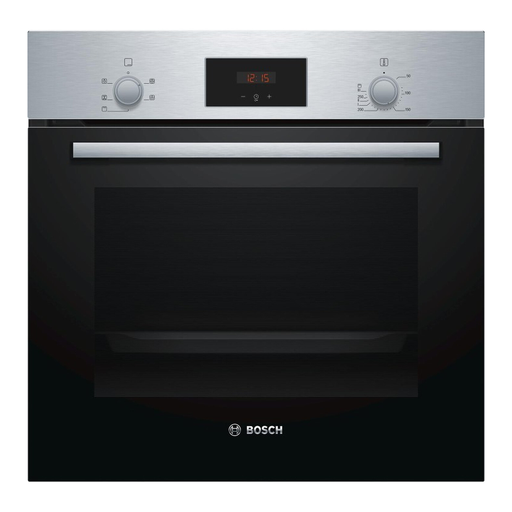 Image unavailable
Consider this model for frequent batches if you have a compatible built-in kitchen. Bosch GB describes its 3D Hotair feature as distributing heat across up to three levels.
Confirm the housing and electrical installation arrangements, permission to install it, and whether your intended tray fits before buying.
For the British Dietetic Association’s foil-parcel recipe, start at 160°C fan for 1 cm apple slices and bake for 20 minutes on a tray. Treat that as a setting for that particular method: check the slices as they cook, follow your oven manual and take care when opening hot foil parcels.
Usually not for occasional apple slices, provided the existing fan oven is available, clean and suitable for your tray. A countertop oven becomes worth considering when shared access is consistently impractical and you have agreed where and how an additional appliance can be used and cleaned.
Check the requirements for your accommodation rather than assuming an annual test applies. Health and Safety Executive guidance says annual portable appliance testing is not automatically needed for every appliance in a low-risk workplace, but that workplace guidance does not establish the requirements for a shared private home. Ask the landlord or kitchen manager about appliance permission and electrical arrangements.