
24/7 Customer Support

Free returns

Same-day & Next-day Delivery

Quality Guaranteed

Unlock Your Welcome Offers: FREE Delivery | Up to 80% OFF | Free 30-day JoyPlus trial
Download the APP
Buying oven baking trays and roasting tins can seem straightforward until a tray warps, food sticks or the dimensions do not fit your oven. UK kitchens also vary considerably, from compact built-in ovens to large range cookers, so a pan that looks generously sized online may be impractical in everyday use.
Before choosing a non-stick baking tray, roasting tin or specialist bakeware, look beyond promotional wording. The most useful comparison points are construction, internal dimensions, cleaning instructions and whether the product suits the meals you actually prepare.
Product listings may show the overall length and width, including rolled edges or handles. The usable cooking surface can therefore be smaller than expected. Measure your oven shelf and check the internal tray dimensions where available, particularly when buying a deep roasting tray or large oven roasting tray.
Leave enough clearance around the pan for hot air to circulate. An oversized tray can also make it difficult to remove food safely when the oven is hot.
“Non-stick” describes the surface, not necessarily the cleaning method. Some pans are dishwasher-safe, while others recommend hand washing and avoiding abrasive cleaners or metal utensils. Repeated exposure to harsh detergents and high dishwasher temperatures may shorten the useful life of a coating, even where occasional dishwasher use is permitted.
Always follow the product’s care guidance. A dishwasher-safe bakeware item can be convenient for busy households, but hand washing may still help preserve the finish.
Thin metal may heat quickly but can be more vulnerable to bending or distortion. Carbon steel baking trays are generally valued for their strength and heat conduction, while aluminium trays are lightweight and useful for disposable or high-volume cooking. Neither material is automatically suitable for every task.
Consider the food, temperature and frequency of use. A lightweight tray may be practical for a party, whereas a substantial carbon steel pan can be more appropriate for frequent roasting.
Carbon steel is a practical option for regular baking and roasting because it is rigid and conducts heat efficiently. Look for a stated thickness or robust construction if you regularly cook heavy joints, potatoes or casseroles. A reinforced rim can make a tray easier to lift when full.
Aluminium is light and distributes heat effectively. Disposable aluminium baking pans are useful for parties, food gifting, batch cooking and occasions when washing up needs to be minimised. Check the packaging for oven temperature guidance, and support flexible foil pans with a solid baking sheet when moving them.
A shallow baking tray suits biscuits, pastries, chips and roasted vegetables. A deeper roasting tin is more suitable for meat, gravy, layered dishes and food that may release liquid. A roasting tin with rack elevates meat above the cooking juices, helping fat drain away while leaving liquid available for gravy.
For baking, specialist shapes can produce more consistent results. A loaf tin is designed for bread and fruit loaves, while a springform cake tin has a removable base or side mechanism to help release delicate cakes without turning them upside down.
Non-stick surfaces can make food release easier and reduce soaking time, but they still require sensible handling. Check whether the coating is described as free from specific substances, whether metal utensils are permitted and whether the pan is dishwasher-safe.
Do not assume that “easy-clean” means maintenance-free. Avoid overheating an empty coated pan, use suitable utensils and allow bakeware to cool before washing unless the manufacturer specifically states otherwise.
For meal preparation, a freezer-to-oven tray can reduce the number of dishes used. However, temperature changes should always follow the manufacturer’s instructions. Do not move a frozen glass or ceramic dish directly into a hot oven unless it is specifically designed for that purpose. Metal trays may also have limits, so check the product guidance rather than relying on general assumptions.
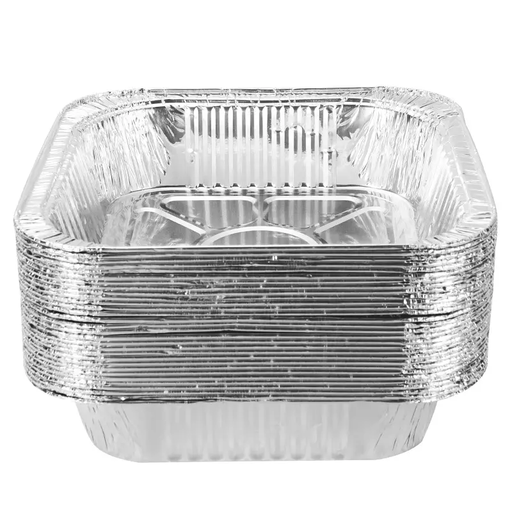
Why This Fits Their Persona: A 30-piece pack suits first kitchens, batch bakers, party hosts and anyone sending home brownies, lasagne or casseroles without needing to recover their dishes.
The stated 7-inch square format makes the size clear, while the disposable aluminium design avoids a large washing-up pile after gatherings.
Food-grade aluminium; pack of 30; suitable for baking, casseroles and serving.
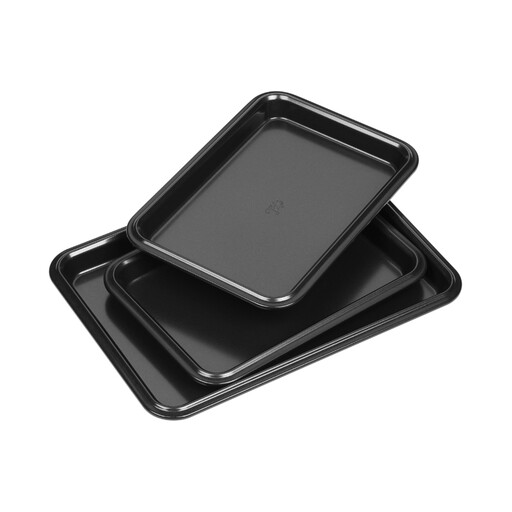
Why This Fits Their Persona: Home bakers wanting several sizes can use the set for biscuits, roasting and smaller portions while stacking the trays in a cupboard.
The listed 1mm carbon steel construction addresses concerns about flimsy trays, while the specified 10-year guarantee gives a clear reference point for ownership value.
Three stackable sizes; double-layer non-stick coating; dishwasher-safe specification.
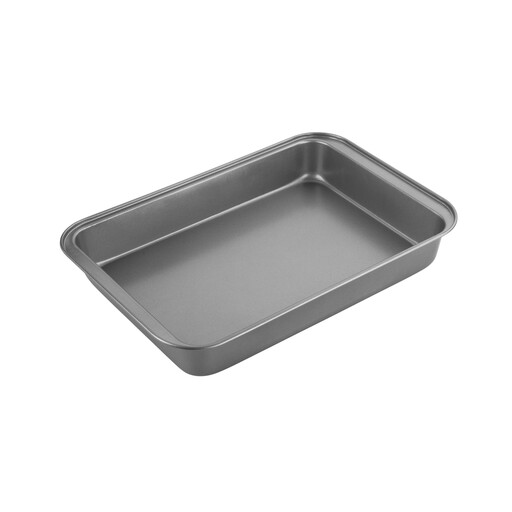
Why This Fits Their Persona: Families preparing substantial Sunday lunches or meal-prep dishes can benefit from the deep-sided format and freezer-to-oven specification.
Its stated 36.5 x 24.5 x 5.5cm approximate size and deep sides make capacity easier to assess before purchase.
Carbon steel construction; deep sides; listed fridge, freezer and oven suitability.
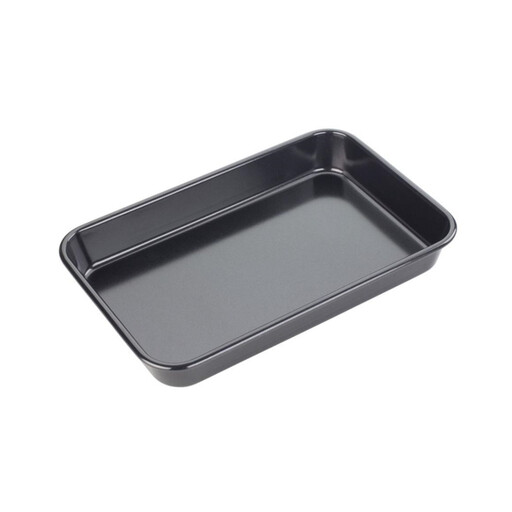
Why This Fits Their Persona: Cooks who regularly prepare roast meat and gravy may value the raised design and pouring lip for handling cooking juices.
The product information identifies heavy-weight carbon steel, a double-layer coating and a 10-year guarantee rather than relying only on vague durability language.
Raised base and pouring lip; listed oven, fridge, freezer and dishwasher suitability.
We have compiled a complete, real-time list of products that fully satisfy these strict selection criteria and UK safety regulations.
Sometimes, but not always. A shallow baking tray is suitable for biscuits, pastries and vegetables, while a roasting tin normally has deeper sides for meat, gravy and larger portions. A rack can also change how food cooks by lifting it above the juices.
Lifespan depends on construction, heat exposure, utensils and cleaning habits. A sturdy carbon steel tray may remain useful for frequent cooking when cared for correctly, while a coated surface can deteriorate sooner if scratched or repeatedly cleaned with abrasive products. Follow the manufacturer’s care instructions rather than relying on a fixed lifespan.
Only if the product information states that it is dishwasher-safe. Some non-stick roasting tins recommend hand washing to protect the coating. When in doubt, use warm soapy water, a soft sponge and non-abrasive cleaning products.