Family batch bakers
You want practical tray space for a family portion of cheese scones and other bakes. If you plan to use more than one shelf at once, check how many levels the particular oven supports.


Choose a single oven if you can bake cheese scones and cook other dishes in sequence; consider a double oven if you regularly need separate cavities for dishes with different timings or temperatures. For scones, check the exact oven’s fan or multilevel settings and temperature-control information before focusing on optional features. Whichever format suits your cooking, confirm the cabinet opening, shelf layout and electrical requirements before ordering.
You want practical tray space for a family portion of cheese scones and other bakes. If you plan to use more than one shelf at once, check how many levels the particular oven supports.
You need to decide whether cooking dishes in sequence in one cavity works for your meals, or whether separate oven cavities would make recurring timing clashes easier to manage.
You bake and roast often enough for residue to make cleaning a meaningful choice. Compare the exact cleaning system rather than assuming a coated cavity and a pyrolytic cycle work in the same way.
Choose when: One cooking cavity is enough and you can schedule scones around the rest of the meal.
Trade-off: Dishes needing different oven temperatures must be cooked in sequence.
Choose when: Scones and another dish regularly need separate cooking spaces at the same time.
Trade-off: The format needs a taller installation space; check the chosen model’s fitting and electrical instructions.
| Concern | What to check | Who this matters to |
|---|---|---|
| Even batch baking | Check the exact fan or multilevel function, permitted shelf levels and available information on temperature accuracy. Good Food’s cheese-scone recipe specifies 220°C conventional or 200°C fan. | If I am making a family batch, I want to know that my trays can be positioned as intended and that the oven holds the selected setting. Around 42% of consumers put baking consistency first. |
| Meal scheduling | Check whether you need two independently heated cavities or can cook dishes in sequence; compare shelf and tray space, not litres alone. | When scones and a main dish need different timings, I would rather avoid planning both around one cavity. For around 33% of consumers, avoiding that clash is the primary need. |
| Cleaning effort | Identify whether the model has a pyrolytic cycle or a coated surface that still needs manual cleaning; read the cycle-preparation instructions. | After frequent baking and roasting, I want the cleaning routine to remain manageable. Keeping that effort down comes first for around 25% of consumers. |
A cavity’s stated volume does not tell you whether your trays or a family-sized dish will fit comfortably on the available shelves.
Compare shelf positions and tray dimensions in the specification and manual for the exact model.
If scones and another dish need different oven settings at the same time, a single cavity means changing the schedule or the cooking plan.
Consider a double oven when separate, simultaneous cooking is a recurring need; otherwise, assess whether cooking in sequence works for your meals.
A smooth or coated surface can still need manual cleaning. A pyrolytic model uses a separate high-heat cleaning cycle.
Check the named cleaning system and its preparation instructions rather than relying on an easy-clean description.
Built-in single and double ovens can differ substantially in height, and electrical connection requirements vary by model.
Measure the cabinet opening, check the installation document’s ventilation and connection requirements, and arrange an installer where the instructions require one.
Bosch is relevant when comparing single and double built-in formats, including models with named hot-air functions.
AEG has built-in single-oven models relevant to buyers comparing multilevel cooking, cleaning systems and optional steam assistance.
NEFF is relevant to buyers considering multilevel fan baking and oven access in a built-in single-oven format.
These choices cover built-in single and double ovens for scones and family meals, plus a freestanding cooker for kitchens where an integrated oven is not the right format. Check each appliance’s fit and cooking functions against your own meal routine.
 No image available
Consider this built-in double-oven format if scones and another family-meal dish regularly need separate cooking spaces. Check the cabinet opening and electrical requirements against the installation instructions.
 No image available
This single-cavity format suits households that can cook scones and other dishes in sequence. Check the available shelf positions, cabinet fit and connection instructions for this model.
 No image available
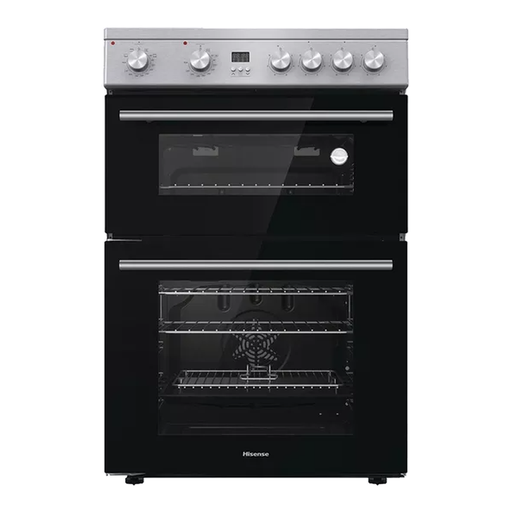
Consider this freestanding cooker if you want two oven cavities and a ceramic hob rather than a built-in appliance. It is not a substitute for an oven that must fit inside an integrated cabinet opening.
 No image available
This built-in double-oven format is worth considering when scones and another dish need separate cooking spaces. The 90 cm format makes checking the cabinet opening particularly important.
 No image available
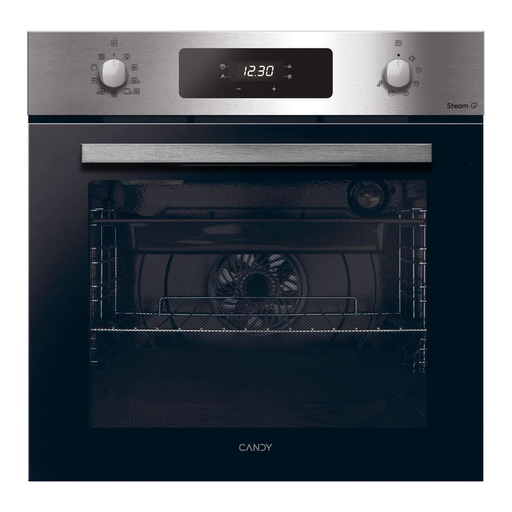
Consider this single oven if you can cook dishes in sequence and a pyrolytic cleaning cycle matters to you. Check its shelf layout and the manual’s cleaning-cycle preparation and installation instructions.
No: a steam-assisted programme is not required by the cheese-scone recipe from Good Food, which gives conventional and fan-oven settings. If you are considering an oven with SteamBake, treat it as an additional model-specific feature and still check the baking settings and shelf layout you need.
Choose a single oven if you can cook dishes in sequence; consider a double oven if scones and another dish regularly need separate cooking spaces at the same time. Which? notes that double ovens allow multiple dishes to cook simultaneously. Confirm that the chosen format fits your cabinet and electrical setup.
No: check the exact cabinet cut-out, appliance dimensions and ventilation instructions. AEG lists 590 × 560 × 550 mm built-in dimensions for the OU5PB40XK single oven, while Bosch lists 888 × 594 × 550 mm appliance dimensions for the MBA578BS7B double oven; the measurements are model-specific.
No: easy-clean enamel can still need manual cleaning. Joybuy’s oven buying guidance distinguishes it from pyrolytic cleaning, which uses a separate cycle to reduce residue to ash. Read the chosen model’s instructions for cleaning and cycle preparation.
Follow the instructions for the exact appliance and its electrical connection. Bosch specifies connection by an electrician for the MBA578BS7B, while NEFF specifies the same for the B4ACF1AN3B; check your chosen model before arranging installation.