Dinner-party coordinators
If the fish pie, sides and dessert compete for oven time, separate cavities or independently controlled zones may help you manage dishes that need different settings.


Choose a full-size fan or multifunction oven if the fish pie is your main oven dish and its cavity fits your pie dish. If you regularly need the pie, sides and dessert cooking at different temperatures or times, consider a double oven or a model with independently controlled zones; check dish clearance, cabinet space and electrical requirements before ordering.
If the fish pie, sides and dessert compete for oven time, separate cavities or independently controlled zones may help you manage dishes that need different settings.
If the pie is the main oven dish, focus on whether your dish fits comfortably, which cooking modes you will use and whether the controls suit your serving schedule.
If bubbling filling and topping spills are your concern, compare the surfaces covered by each cleaning feature and the care they still require.
Start with your cooking schedule: an oven for one main pie solves a different problem from an oven that must run another dish at a separate temperature. Then check the actual space for your pie dish, rather than choosing by litre capacity alone.
Choose it when: The fish pie is your main oven dish and other dishes can be cooked in the same cavity or at another time.
Trade-off: One cavity cannot give the pie and another dish independently controlled temperatures.
Choose it when: Overlapping cooking times regularly call for the pie and another dish to use separate cavities.
Trade-off: A built-in double oven needs a compatible housing space; check the exact model dimensions before replacing a single oven.
Choose it when: You want to divide one oven into independently controlled zones on some occasions and use the full cavity for a larger dish on others.
Trade-off: Your pie dish must fit the zone you intend to use. Samsung UK describes these operating options for its NV7B5775XAK; check the configuration of any other model separately.
| Concern | What to check | Who this matters to |
|---|---|---|
| Coordinating dishes | Check for separate cavities or independently controlled zones, then confirm that each intended dish fits. | If my pie and sides need different settings at the same time, I want to avoid holding up dinner while one finishes. Roughly 45% of consumers would put coordinating dishes first. |
| Pie-dish fit and cooking mode | Compare your dish with usable shelf space and clearance; check the available fan or multifunction modes. | With the pie as my main oven dish, I need room for its dish and a cooking mode I can use with my recipe. Around 33% of consumers would make pie-dish fit and cooking mode their primary concern. |
| Clean-up and controls | Check which surfaces have cleaning features and whether the controls include the timer you need. | After serving guests, I would rather have manageable spills and straightforward timing than another cooking zone. Approximately 22% of consumers would prioritise clean-up and controls. |
Capacity does not tell you whether your pie dish fits a shelf or, in a divided oven, one of its cooking zones.
Measure the outside of your dish and compare it with the model's usable cavity, shelf and zone dimensions before ordering.
Electrical connection and cabinet requirements vary by model. NEFF Home Appliances GB, for example, says its B1GCC0AN0B has no plug and requires connection by an electrician.
Check the exact appliance instructions and cabinet specification, and arrange fitting with a qualified electrician, as Electrical Safety First advises.
Catalytic panels or steam-assisted cleaning do not remove the need to care for the rest of the oven. The surfaces covered differ between models.
Check the panel locations and care instructions, and allow the oven to cool before cleaning.
Claims about airflow or energy use can reflect a manufacturer's specified tests rather than your pie dish, recipe or dinner-party schedule.
Use those claims to identify features worth checking, then compare the exact model's dimensions, cooking modes and product information.
These brands offer relevant oven formats or features, but the details below apply to the named models rather than every oven carrying the brand.
Worth considering if separate built-in cavities and multi-level fan cooking are priorities.
Relevant if you want the option of divided cooking zones within a single oven.
Relevant to shoppers considering a built-in single oven with multi-level hot-air cooking.
Relevant if cleaning features are important alongside the cooking modes of a full-size built-in oven.
Relevant if a full-size, single-cavity fan oven matches your cooking schedule.
These choices include built-in double ovens for cooking dishes on overlapping schedules and single ovens for making the fish pie your main oven dish. The built-under double oven is a separate fit consideration: compare your existing cabinet space before choosing between these formats.
 No image available
Consider this double-oven format if the fish pie and another dish need overlapping oven time. Check that your cabinet accommodates this 90 cm model and that your pie dish fits the cavity you plan to use.
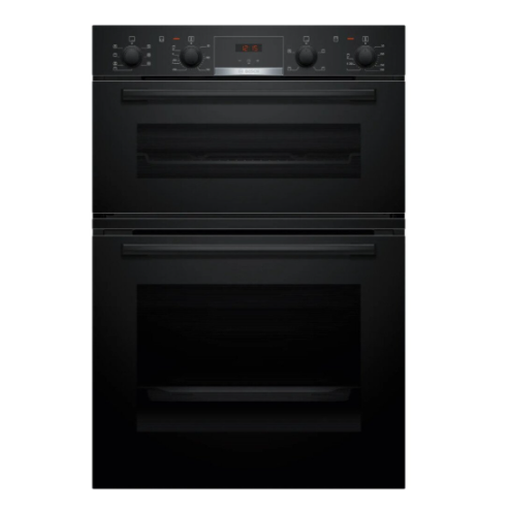 No image available
Its separate cavities are relevant when the pie and another dish need their own cooking space. Bosch Home UK lists 3D Hotair for up to three levels and dimensions of 888 × 594 × 550 mm; confirm cabinet fit and usable pie-dish clearance.
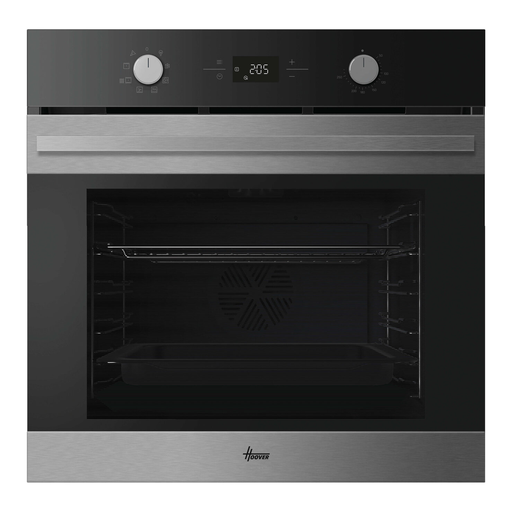 No image available
This single-oven choice is relevant if the fish pie is your main oven dish. Its stated capacity is 70 L, but measure your pie dish and check the usable shelf space before relying on that figure for fit.
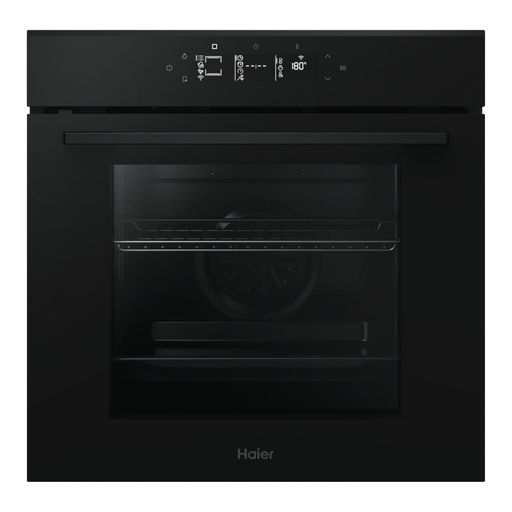 No image available
This 70 L single oven suits a schedule where the pie is the main dish using the cavity. Check internal dish clearance and confirm the temperature settings and timer in the exact model documentation before choosing it for your recipe.
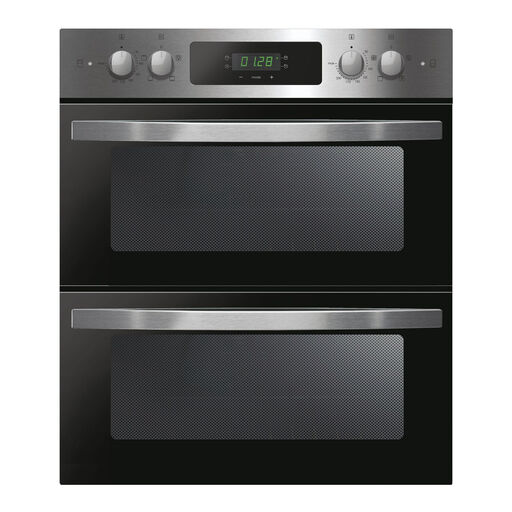 No image available
Consider a built-under double oven if you need separate cooking spaces without moving to a tall built-in housing. For this model, confirm cabinet and electrical fit, each cavity's cooking functions, and room for your pie dish.
No: a full-size single oven can suit you if the pie is the main oven dish and you can schedule sides separately. Consider a double oven when dishes regularly need separate cavities at the same time, and check that your housing accommodates its dimensions.
Yes, if the model provides independently controlled zones and both dishes fit their intended spaces. Samsung UK describes separate temperature and time settings for the upper and lower zones of its NV7B5775XAK; confirm those features on any other oven you consider.
Check the exact model's connection, power and cabinet requirements before ordering. Electrical Safety First advises having an oven fitted by a qualified electrician; ask your installer which requirements apply to the work at your address.
For an oven covered by UK energy-labelling rules, check its energy label and product information sheet alongside its dimensions and cooking functions. GOV.UK sets out the label and information-sheet requirements for products in scope; an energy class alone does not tell you whether your pie dish will fit or how your recipe will cook.
No. Catalytic features apply to specified surfaces, not automatically to the whole oven. Check which panels the model has, let the appliance cool before cleaning and follow its care instructions.